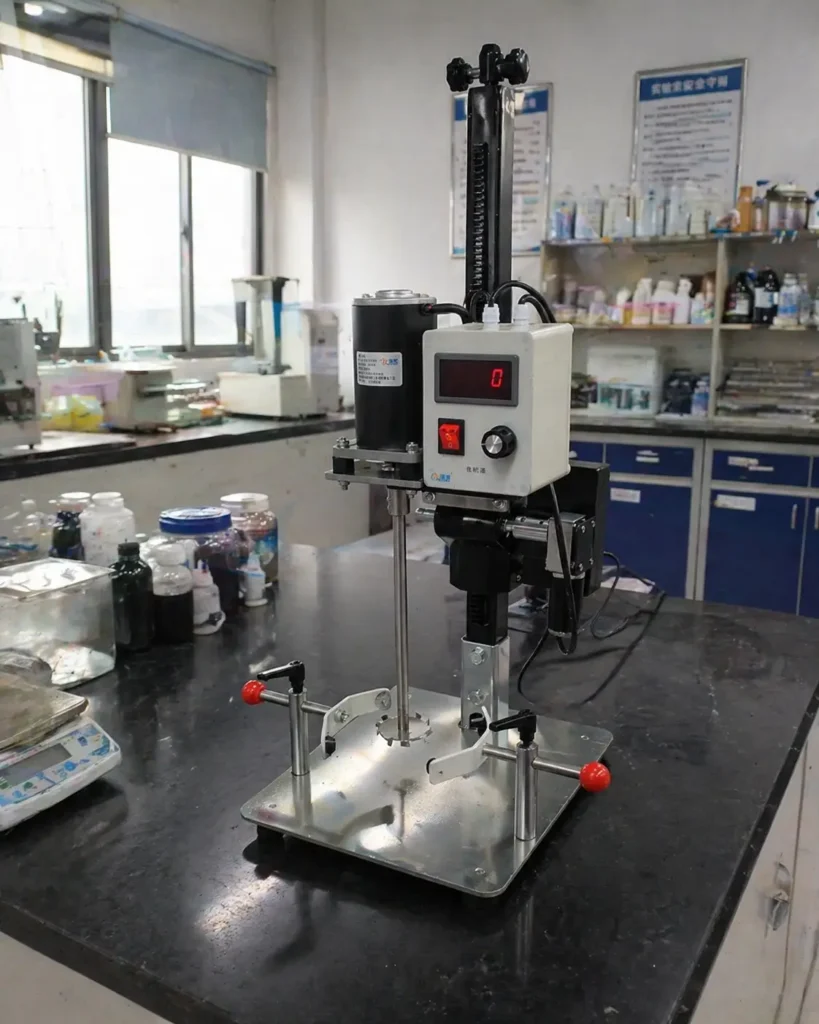
Finding the right balance between power and flexibility in a laboratory setting can be incredibly frustrating. If you have ever struggled with stubborn agglomerates in a small batch or felt limited by bulky, stationary machinery, you are definitely not alone. When working on initial formulations, R&D teams need equipment that moves as quickly as their ideas. That is exactly where a benchtop high shear lab disperser becomes an absolute game-changer for your daily workflow.
Instead of wrestling with oversized industrial equipment for a 500ml sample, a compact, agile system allows you to achieve high-shear particle size reduction right at your benchtop. Let’s dive into how this single piece of equipment can elevate your mixing precision and efficiency.
Table of Contents
- Why Choose a Benchtop High Shear Lab Disperser?
- Essential Features of a Lab-Scale Disperser
- Mastering the Dispersion Process: Best Practices
- From Lab Bench to Production: The Scaling Secret
- Frequently Asked Questions (FAQ)
- References & Resources
Why Choose a Benchtop High Shear Lab Disperser?
In product development, flexibility is everything. Whether you are blending cosmetic emulsions, dispersing pigments into a specialized coating, or working with advanced nanotechnology, large-scale mixers are simply too clumsy for trial phases. Utilizing a dedicated benchtop high shear lab disperser gives you the precise control needed to experiment with raw materials without wasting expensive ingredients.
Unlike massive production units, these compact systems are designed for rapid cleanup and quick changeovers. They allow you to run multiple tests in a single afternoon, adjusting speeds and blade depths on the fly to observe immediate changes in viscosity and particle distribution.
Moreover, modern laboratory environments demand space optimization. A benchtop-friendly, lightweight design means you can easily move the unit between different workstations or store it away when performing other physical testing protocols, keeping your lab organized and efficient.
Essential Features of a Lab-Scale Disperser
Not all benchtop mixers are created equal. When evaluating a portable lab scale disperser, you should look closely at the motor performance, speed control reliability, and shaft adaptability. A high-quality unit should offer variable speed controls reaching up to 8,000 RPM or more, giving you the high tip speed necessary to break down tough agglomerates effectively.
Figure 1: Digital variable speed controls allow for precise adjustment during sensitive lab trials.
Another crucial factor is the ease of switching dispersion blades. Depending on your material’s initial state, you might need a classic sawtooth blade for aggressive shearing, or a specialized impeller for gentler blending. For a comprehensive look at available laboratory and pilot-scale machinery designs, exploring a dedicated industrial mixing equipment catalog can provide great insight into what configurations match your specific application.
Mastering the Dispersion Process: Best Practices
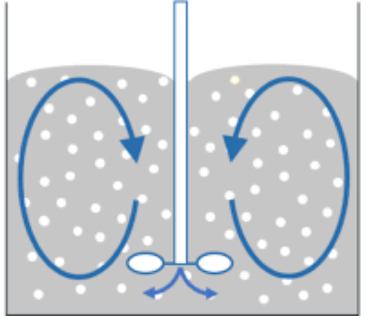
Getting the most out of your benchtop high shear lab disperser requires a solid understanding of fluid dynamics. A common mistake is placing the blade directly in the center of the vessel, which can create a massive, unstable vortex that sucks in excessive air, leading to unwanted bubbles in your formula.
Pro Tip: Position your disperser shaft slightly off-center. This disrupts the symmetrical flow pattern, eliminates the deep air-trapping vortex, and forces the material through the high-shear zone much more efficiently.
Additionally, pay close attention to the geometric ratios of your setup. Ideally, the diameter of your dispersion blade should be approximately one-third of the diameter of your mixing vessel. Keeping the blade positioned about one blade-diameter off the bottom of the container ensures ideal flow turnover without leaving dead zones at the base.
From Lab Bench to Production: The Scaling Secret
Succeeding on a benchtop scale is incredibly satisfying, but the ultimate goal of most lab work is commercial scale-up. This transition is where many developers hit a wall. A formula that behaves beautifully in a 1-liter beaker can completely separate or fail to disperse when mixed in a 500-liter tank if the core mechanics are misinterpreted.
To avoid these headaches, it helps to understand how flow rates and tip speeds translate across different machine sizes. Reading an engineering-focused guide to selecting small and medium dispersers can give you a clear roadmap on how to maintain consistent shear stress and energy input when graduating from a small portable lab scale disperser up to pilot and medium-sized batch production lines.
Frequently Asked Questions (FAQ)
What is the difference between a high-speed disperser and a regular lab mixer?
A standard lab mixer or overhead stirrer is designed for simple blending and macro-mixing, focusing on moving the bulk fluid. A high-speed disperser utilizes high tip speeds to create intense localized shear forces, which are necessary to physically break down solid agglomerates and reduce particle sizes.
What container sizes work best with a benchtop high shear lab disperser?
Most portable laboratory units are optimized for volumes ranging from 200ml up to 5 liters. Always ensure your container is tall enough to handle the fluid movement without spilling over when the motor ramps up to higher speeds.
How do I prevent heat buildup during high-speed shearing?
High-shear mixing naturally introduces mechanical energy into the fluid, which converts into heat. For temperature-sensitive formulations, it is highly recommended to use a water-jacketed mixing vessel connected to a cooling circulator to maintain a stable environment.