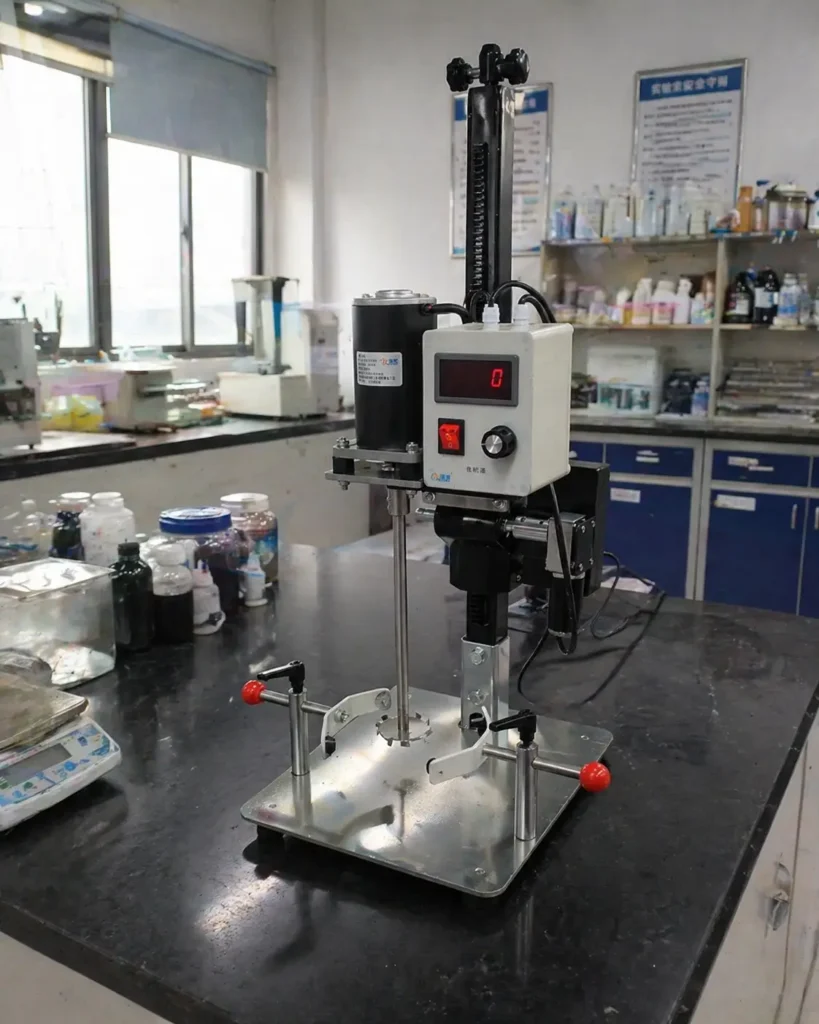
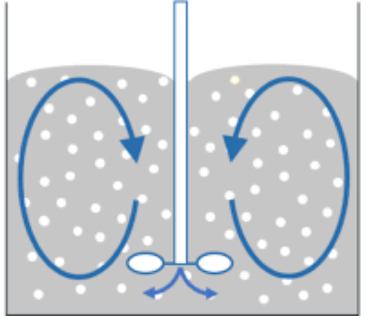
Setting up your lab or factory? Choosing the right equipment is a big deal. One of your most important choices is finding the best small disperser lifting methods. A good lift keeps your team safe, makes mixing easier, and helps your machine last longer. Whether you mix thin paints or thick coatings, knowing your options makes daily work a breeze.
Table of Contents
Understanding Small Disperser Lifting Methods
In industrial mixing, you need to easily move the mixing disk up and down. Small disperser lifting methods decide how fast you can swap tanks, clean the shaft, or tweak the height while mixing. If your lift is clunky or hard to pull, it simply slows you down.
Electric vs. Manual Small Disperser Lifting Methods
At YAKU, we know every workspace is different. Most small disperser lifting methods fall into two main groups: Electric and Manual. Your choice really just comes down to your budget, how often you mix, and your setup.
The Power of Electric Lifting
Electric lifts use a motor or hydraulic pump. Just push a button, and the mixing head moves up or down. This is one of the best small disperser lifting methods if you run dozens of batches a day. It takes away the heavy lifting and lets you adjust the height safely while running. The catch? They cost more upfront, need a power outlet, and require a bit more maintenance.
Deep Dive into Manual Small Disperser Lifting Methods
For many small labs and pilot plants, manual lifts are the top pick. They are budget-friendly, practically maintenance-free, and don’t rely on electronics that can break in dusty rooms. Within the manual group, two small disperser lifting methods dominate the market.
Traditional Chain Lifting: A Reliable Classic
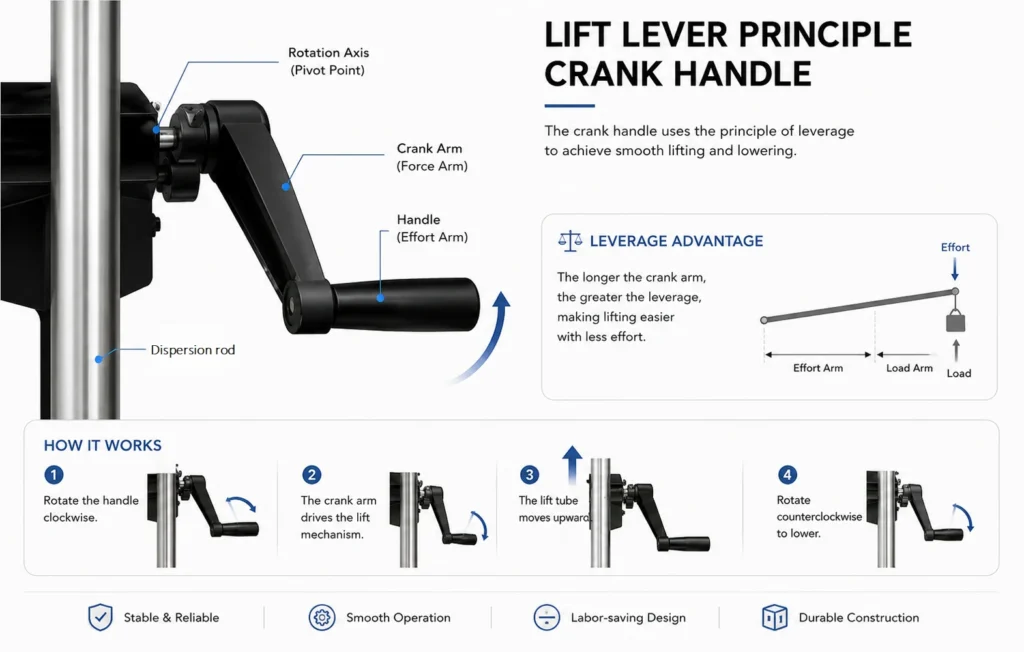
Chain lifts use a counterweight or crank. You turn a handwheel, and the chain pulls the motor up. It’s tough and reliable, but it can be slow and takes some physical work. It’s a solid choice, but there are better options out there now.
Rail Gear Lifting: The Game Changer
When looking for the easiest small disperser lifting methods, rail gear lifting takes the crown. It uses a simple rack-and-pinion gear and a long lever handle.
You just pull the lever, and the gear smoothly moves the heavy mixing head. You can basically do it with one hand! With no electronics to break or chains to snap, it’s fast, tactile, and super reliable. It gives you the low cost of a manual lift but feels almost as effortless as an electric one.
How to Choose the Best Small Disperser Lifting Methods
Pick the lift that fits your daily work. Running high-volume batches all day? Go electric. Want something affordable, reliable, and super easy to use? The manual rail gear lift is unmatched.
To see these in action, check out our full range of dispersers here.
Still unsure? Read our guide to selecting medium and small dispersers. It covers everything from viscosity to motor sizes so you can make the right choice.
Frequently Asked Questions (FAQ)
What are the most common small disperser lifting methods?
Why is the rail gear lifting method considered so convenient?
Are manual small disperser lifting methods safe?
References & Further Reading
- How levers work: Lever Principle (Wikipedia)
- Mixer basics: Industrial Mixers Overview