A liquid chemical mixing machine is the beating heart of modern manufacturing. Whether you are producing advanced coatings, agricultural chemicals, or everyday consumer liquids, the quality of your final product depends entirely on how well your ingredients are blended.
In the fast-paced industrial world, efficiency is everything. Relying on outdated fluid mixing technology can lead to inconsistent batches, wasted materials, and slowed production times. Upgrading to the right equipment not only saves money but also significantly improves product stability.
Why Every Factory Needs a Reliable Liquid Chemical Mixing Machine
Fluid dynamics can be incredibly complex. When mixing different chemical compounds, variables like viscosity, shear force, and temperature all play critical roles. A standard industrial agitator might work for basic water-like substances, but advanced chemical formulas require precise engineering.
Using a dedicated liquid chemical mixing machine ensures that active ingredients are uniformly distributed. This is especially vital in sectors like the ag chemical mixing system industry, where a poor mix can lead to ineffective crop protection. For factories dealing with thick paints or adhesives, a robust paint mixing machine is necessary to prevent clumping and settling.
To see a full range of advanced solutions tailored for these challenges, you can explore comprehensive industrial mixing equipment designed to handle various viscosities and batch sizes.
Types of Liquid Chemical Mixing Machines
Not all mixers are created equal. Depending on your production scale and material requirements, you will need a specific type of setup.
1. Laboratory Scale Mixers
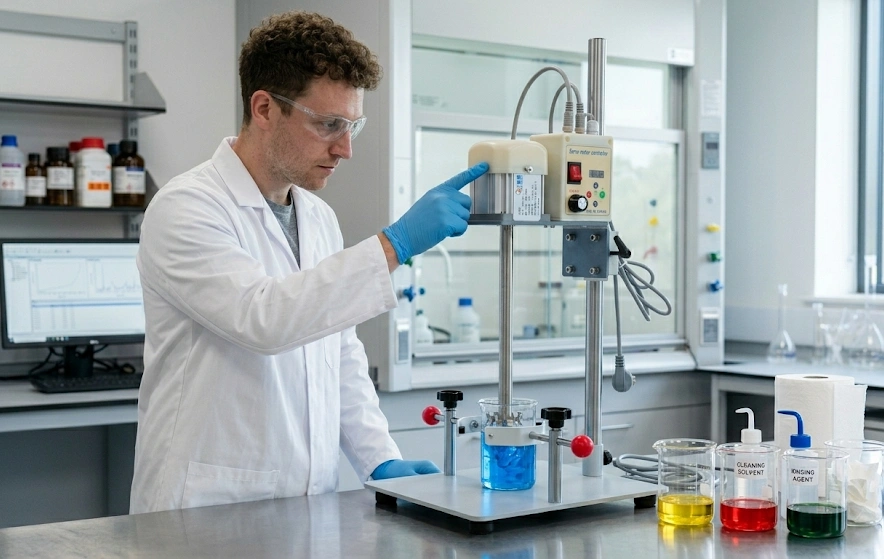
Before moving to full-scale production, chemical formulas must be perfected in the lab. A small mixing machine allows chemists to test formulations without wasting large amounts of raw materials. High-quality lab dispersers provide the high shear necessary to mimic industrial conditions on a smaller scale.
2. Vacuum Dispersing Mixers
When mixing certain liquid chemicals, air bubbles can become trapped in the fluid. This compromises the quality and volume of the final product. A vacuum-enabled liquid chemical mixing machine removes the air during the agitation process. This is critical for high-end coatings and resins. You can learn more about how vacuum dispersers improve product density and shelf life.
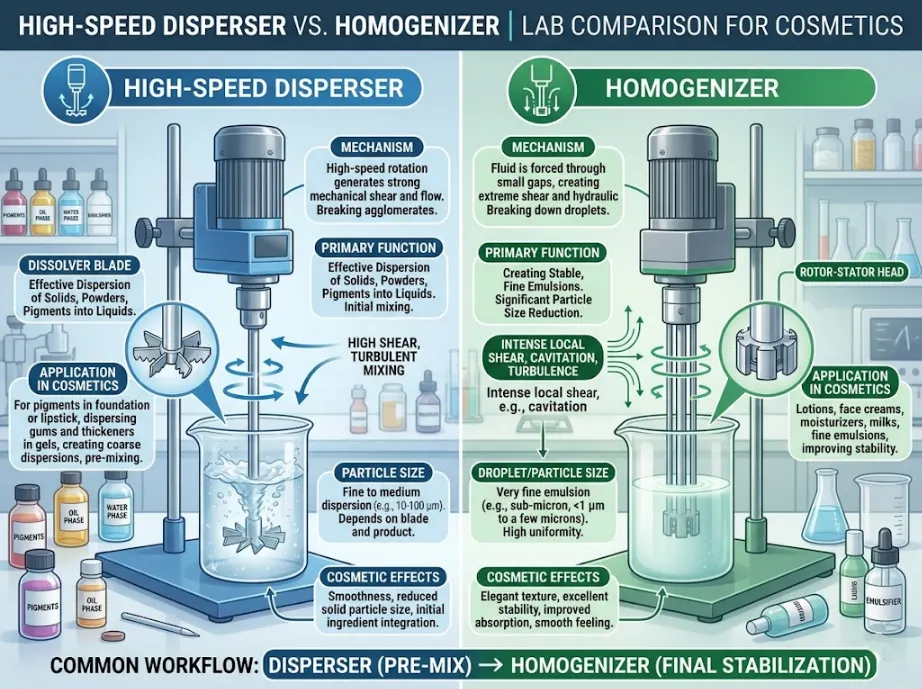
3. High-Speed Dispersers
For breaking down solid particles into a liquid base, high-speed dispersion is key. These large chemical mixers utilize specialized blades that create intense shear forces, ripping particles apart and blending them seamlessly into the liquid.
Essential Components of a Liquid Chemical Mixing Machine
Understanding the anatomy of your equipment helps in optimizing its use. The most critical part of the system is the chemical mixing tank with agitate features. The tank must be built from high-grade stainless steel to resist chemical corrosion.
Inside the tank, the dispersing disc does the heavy lifting. The design of the teeth on the disc dictates the flow pattern and shear rate. Because these parts experience extreme wear and tear, having access to durable dispersing discs and replacement parts is essential for minimizing downtime.
5 Proven Tips for Best Liquid Chemical Mixing Machine Performance
Operating an industrial chemical mixer requires skill and attention to detail. Here are five proven strategies to get the most out of your equipment:
- Start Slow: Always start the liquid mixer agitator at a low speed to prevent splashing. Gradually increase the RPM as the material begins to flow.
- Position the Blade Correctly: The dispersing blade should generally be placed about one-third of the way up from the bottom of the tank. This creates the optimal vortex for fluid mixing.
- Monitor Temperatures: High shear mixing generates heat. Keep a close eye on the temperature to prevent degrading heat-sensitive chemicals.
- Perform Routine Maintenance: Check the drive belts, bearings, and shaft for wear. A well-maintained liquid chemical mixing machine will last decades.
- Train Your Operators: The best mixing machine is only as good as the person running it. Investing in operator training ensures safety and consistency across batches.
Finding the Right Partner for Fluid Mixing Technology
Investing in a new liquid chemical mixing station is a major decision. The industrial mixer machine price can vary widely based on motor power, tank capacity, and automated features.
It is always recommended to work with an experienced manufacturer who understands the specific nuances of the chemical industry. At Yaku Mixer, we pride ourselves on delivering top-tier engineering for global clients. To understand our commitment to quality, feel free to read more about us.
Staying updated on the latest fluid mixing technology trends is also a great way to maintain a competitive edge. Check out our industry blog for the latest insights, tips, and case studies.
Frequently Asked Questions (FAQ)
What is a liquid chemical mixing machine used for?
It is used to blend, disperse, emulsify, and homogenize different chemical ingredients into a uniform liquid product. They are widely used in paint, ink, agriculture, and pharmaceutical manufacturing.
How do I choose the right size for my liquid chemical mixing machine?
The size depends entirely on your batch requirements. A small mixing machine is perfect for R&D or niche products, while large industrial mixers are needed for high-volume, continuous production.
What makes a vacuum mixer different from a standard liquid chemical mixing machine?
A vacuum mixer operates in a sealed environment that pulls air out of the tank while mixing. This prevents oxidation and removes bubbles, resulting in a denser, higher-quality liquid mixture.
References
- American Institute of Chemical Engineers (AIChE). “Advances in Fluid Mixing Technology.” https://www.aiche.org/
- ScienceDirect. “Industrial Applications of High-Shear Mixers.” https://www.sciencedirect.com/
- Wikipedia. “Fluid Dynamics in Industrial Agitation.” https://en.wikipedia.org/wiki/Fluid_dynamics