A simple look at the three ways small factories mix powder and liquid, and where they each fall short.
Powder keeps clumping. Your worker stirs by hand, or with a hand drill, for ten minutes and still finds lumps. The next batch looks a little different from the last one.
This happens in paint shops. It happens in food kitchens, supplement labs, glue workshops, and small chemical plants. Any place that mixes powder into liquid runs into this problem.
There are really only three ways to mix. Let’s look at what each one actually costs you.
Option 1: Mixing by Hand
This is where almost every small shop starts. A stick, a paddle, a bucket. No cost to set up.
But hand mixing can’t break down fine powder well. Clumps stay hidden inside the liquid. Every worker stirs a little differently, so every batch comes out a little differently too.
It also takes time. Real time, every single batch, that your worker could spend doing something else.
Option 2: A Hand-Held Drill Mixer
This is the next step up. Cheap, easy to find, faster than stirring by hand.
But a drill was built to drive screws, not mix chemicals. It has no speed control that stays steady. Your arm gets tired holding it in the liquid for minutes at a time. And it still leaves clumps in thicker materials.
Workers using a drill also can’t repeat the same speed twice. One batch gets mixed fast, another gets mixed slow, just based on how tired the worker is that day.
Option 3: Big Automated Production Lines
Large factories often go the other way. A full automated line, built for huge volume.
This works well if you’re making thousands of liters a day. But it’s expensive. It takes months to build and set up. And for a small shop making small batches, most of that machine sits unused.
Many small factory owners look at big automated systems, then walk away because the cost and complexity don’t match their real batch size.
The Middle Ground Most Shops Don’t Know About
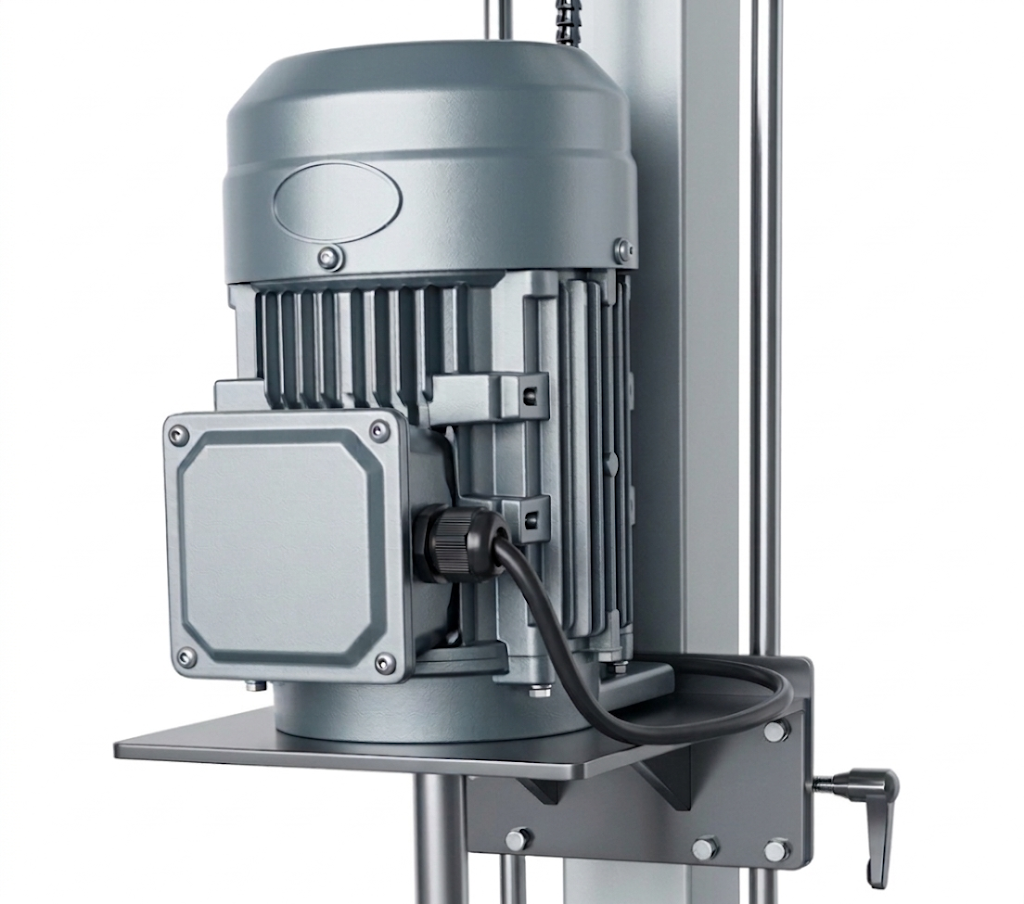
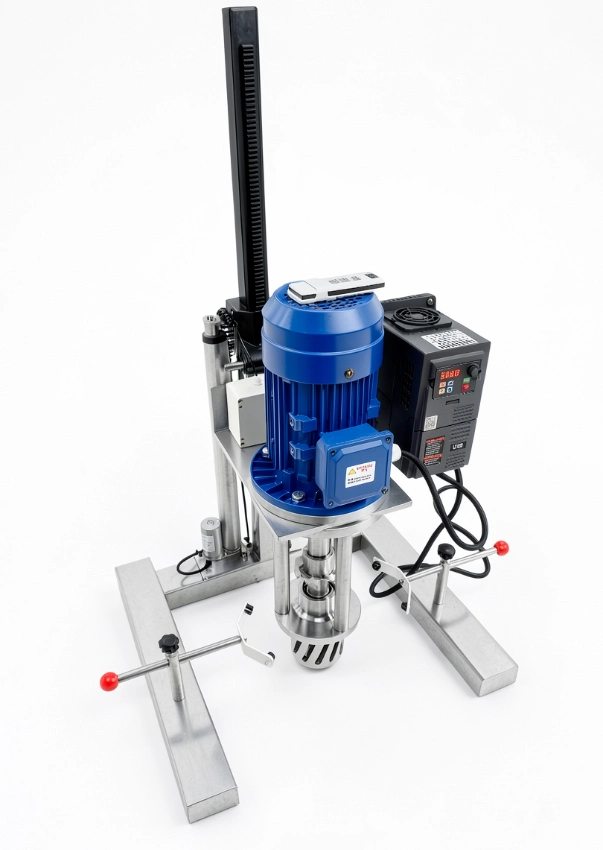
Between a drill and a full production line, there’s a third option: a small or medium disperser. It’s built just for this job. Not for driving screws. Not for thousands of liters a day.
You don’t need training to use one. Turn a knob to set the speed. Watch the number on the display. That’s it.
A paint company in Malaysia used to mix samples by hand and with hand drills. Results varied worker to worker. After switching to a small disperser with a digital display, they could repeat the same speed and time on every batch. No training needed. Just turn the knob and go.
This matters in more industries than most people realize. Food, pharma, health supplements, chemicals, new materials — anywhere powder meets liquid, this same problem shows up. You can compare this option against a regular agitator to see the real difference in how well each one breaks down clumps.
Why We Focus Only on This Middle Ground
We don’t build giant production lines. We don’t sell drills. We build one thing well: small and medium dispersers that are easy enough to use on day one, with no manual, no training, and no guesswork.
If you’re not sure what size fits your batch, this sizing guide can help you match the right model before you buy.
Small Wrap-Up
Hand mixing is free but slow and uneven. A drill is cheap but tiring and unreliable. A full production line is powerful but too big and too costly for most small shops. A small disperser sits right in the middle — simple to run, and steady from batch to batch.
Still mixing by hand or with a drill? Tell us what you’re mixing and how much, and we’ll show you a simpler way.