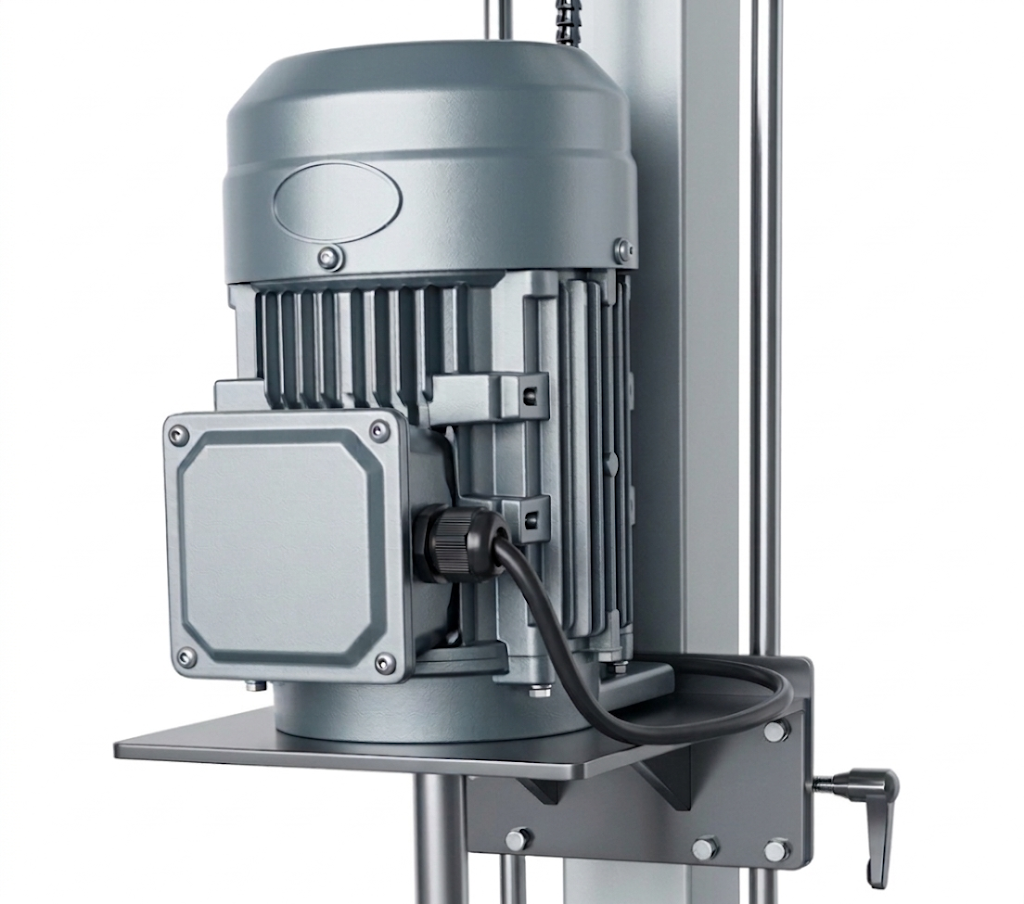
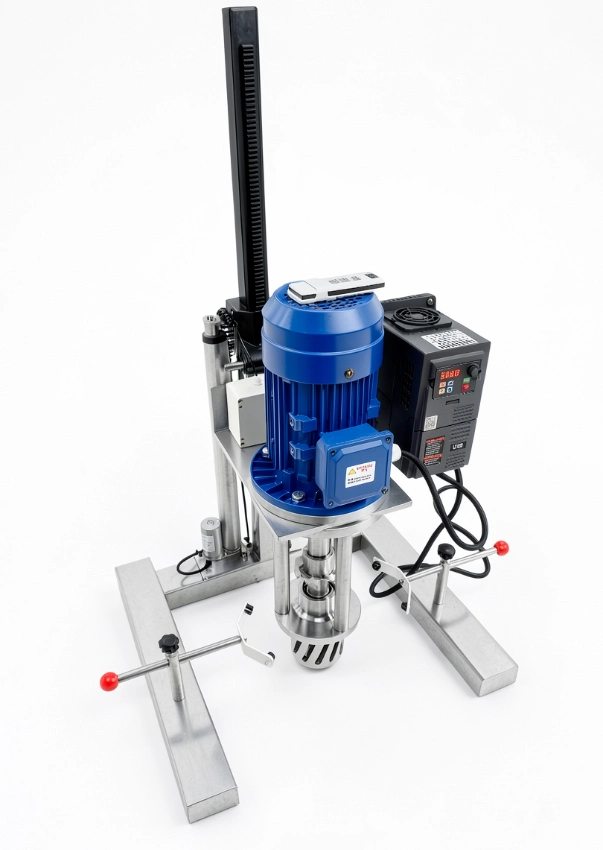
A 5-gallon high-speed disperser for paint may suit lab work, color matching, pilot batches, and small production runs. But pail size alone cannot tell you which machine to buy. You also need to check the paint viscosity, working volume, pail dimensions, dispersing disc, and motor load.
Five US gallons is about 18.9 liters. This does not mean you can safely process 18.9 liters of paint in a 5-gallon pail. The paint needs space to move. You may also need room to add pigment, powder, resin, or other ingredients.
Quick answer: Check the working volume, not only the pail capacity. A machine rated near 20 to 25 liters may work with a 5-gallon pail, but the final choice depends on your paint and process.
A 5-Gallon Pail Is Not a 5-Gallon Working Batch
There are three different volumes to consider:
- Pail capacity: the total amount the pail can hold.
- Starting volume: the liquid in the pail before you add pigment or powder.
- Working volume: the amount that can move safely during dispersion.
Do not fill the pail to the rim. A full pail leaves no space for powder addition or material movement. It also increases the risk of splashing. Measure the inside diameter and height of the pail before choosing the shaft and disc.
Can It Handle Your Paint?
The answer depends on the paint. A thin water-based coating is easier to move than a thick pigment paste or high-solids coating. Two batches can have the same volume but place very different loads on the motor.
Send these four details first:
- Paint type: water-based, solvent-based, primer, coating, or color paste.
- Approximate viscosity: measured at the normal processing temperature when possible.
- Batch size: the minimum and maximum amount processed in each run.
- Pail size: inside diameter, height, and opening diameter.
If you do not know the viscosity, read this guide to measuring liquid viscosity. You can also send a short video showing how the paint pours or moves during stirring.
Check These Five Machine Details
1. Motor
Do not select motor power from batch size alone. Viscosity, solids content, disc size, speed, and run time all affect the load. The material may become harder to move after powder is added.
2. Dispersing Disc
The disc must match the pail diameter and the paint. A disc that is too small may not move the full batch. A disc that is too large may overload the motor or be difficult to control. See the available dispersing discs and parts.
3. Shaft Length
The disc must reach the correct working depth without touching the pail bottom. Confirm the pail height, shaft length, and lift stroke before ordering.
4. Speed Control
Maximum RPM is not enough to judge performance. Disc diameter, material flow, temperature, and motor load also matter. Variable speed lets the operator start slowly, add powder, and increase speed when the batch is ready.
5. Lift and Pail Clamp
A manual lift may be enough for occasional batches. An electric lift is easier when pails are changed often. Also check how the pail will be held in place during operation.
Water-Based and Solvent-Based Paint
Water-based and solvent-based paints may need different machine configurations.
| Check | Water-Based Paint | Solvent-Based Paint |
|---|---|---|
| Process | Viscosity, solids, powder addition, and target result | Viscosity, solids, solvent, and target result |
| Electrical | Confirm voltage and frequency | Confirm voltage plus hazardous-area requirements |
| Machine | Check motor, disc, shaft, lift, and pail | Review the complete motor and electrical control system |
Do not choose a solvent-paint machine only because the motor is described as explosion-proof. The full machine must be checked against the site’s hazardous-area classification and local rules. Read more about explosion-proof disperser selection.
When Is This Size a Good Choice?
A 5-gallon paint disperser is often considered for:
- Paint formulation and product development
- Color matching and customer samples
- Pilot batches before scale-up
- Small custom orders
- Quality-control batches
A standard high-speed disperser may not suit very thick materials, vacuum deaeration, or processes that need a slow wall scraper. In those cases, compare a vacuum disperser or a multi-shaft mixer.
What Should You Send for Model Selection?
- Paint name and application
- Water-based or solvent-based
- Viscosity and solids content
- Minimum and maximum batch size
- Pail inside diameter and height
- Required result
- Run time and batches per day
- Voltage, phase, and frequency
- Material-flow video
This information helps the supplier check the motor, disc, shaft, lift, and pail as one system. You can then compare quotations based on the same process requirements.
Frequently Asked Questions
Can I process 5 gallons of paint in a 5-gallon pail?
Usually, you need some empty space for material movement and powder addition. Confirm the working volume instead of filling the pail to its total capacity.
How much motor power do I need?
There is no single answer for every 5-gallon batch. Motor power depends on viscosity, solids, disc size, speed, and run time.
Can I use my existing pail?
Possibly. Send the pail dimensions so the supplier can check the shaft, disc, lift, clearance, and clamping method.
Do I need an explosion-proof machine?
This depends on the material and the site’s hazardous-area classification. Have the complete machine reviewed for the local safety requirements.
Need Help Choosing a 5-Gallon Paint Disperser?
Send YAKU your paint type, viscosity, working volume, pail dimensions, voltage, and a short material video. We can review a suitable high-speed disperser configuration for your process.