
Laboratory High-Speed Dispersers
Lab High-Speed Dispersers for R&D and Small-Batch Testing
Compact dispersing equipment for sample preparation, formulation development, quality control and university or enterprise laboratories.
- Reference working range from 1 to 10 liters
- Options for manual lift, electric lift and digital speed display
- Configurable shaft, dispersing disc and vessel fixture
Built for Laboratory Dispersion Work
High-speed shear helps incorporate powders, pigments and additives into compatible liquid systems while controlled operating parameters support meaningful formulation comparisons.
Faster Sample Preparation
Reduce manual mixing effort during initial formulation and sample preparation work.
Comparable Test Conditions
Use defined speed and processing time to compare material behavior across trials.
Better Scale-Up Information
Evaluate viscosity, tool choice and operating behavior before moving to larger equipment.
Common Laboratory Applications
Suitable for compatible liquid-solid dispersion, wet mixing, material testing and formulation development.
Paints & Coatings
Pigment dispersion, formula trials, color matching and fineness testing.
Inks & Pigments
Color paste preparation, pigment wetting and dispersion tests.
Cosmetics
Cream, lotion, gel and compatible personal-care formulation trials.
Chemicals & Adhesives
Resins, emulsions, adhesives and chemical liquid sample work.
Laboratory Disperser Configurations
Select the operating style according to testing frequency, tool changes and the level of process control required.
Basic Lab Disperser
For straightforward sample preparation and low-to-medium-viscosity laboratory mixing.
Chuck-Type Disperser
For laboratories that frequently replace shafts or test different dispersing tools.
Digital Display Disperser
For teams that require clear speed readings and more repeatable experimental settings.
Electric-Lift Disperser
For regular laboratory use where convenient, controlled lifting is important.
What We Need to Recommend a Model
These four details help determine motor power, speed range, shaft, dispersing disc and fixture.
Material
Name, solid content, powder ratio and whether it is corrosive or flammable.
Viscosity
Approximate viscosity and whether it changes during processing.
Working Volume
Minimum and maximum volume plus container diameter and height.
Process Target
Target fineness, processing time or expected sample result.
Available Laboratory Dispersers
Review the current models below. Final configuration should be confirmed according to your material and test conditions.
-
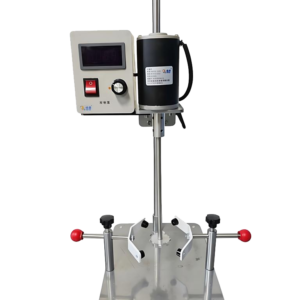
-
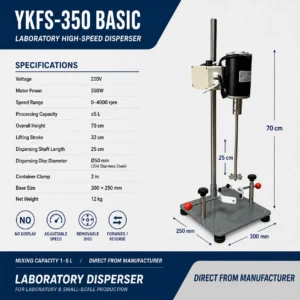 explosion-proof-series
YKFS-350 Basic Laboratory High-Speed Disperser
-
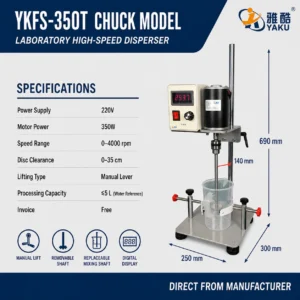 explosion-proof-series
YKFS-350T Chuck Type Laboratory Disperser
Frequently Asked Questions
What working volume is suitable for a laboratory disperser?
The reference range is approximately 1–10 L, but the actual usable volume depends on viscosity, vessel dimensions, motor power and dispersing-disc diameter.
Can one machine test different materials?
Yes, provided the wetted parts and selected tools are compatible. Viscosity, solid content, corrosiveness and required fineness should be reviewed for each material.
When should I choose an electric-lift model?
It is useful for frequent testing or when smoother, more convenient vertical movement is preferred during regular laboratory work.
Can YAKU recommend the shaft and dispersing disc?
Yes. Provide the material, viscosity, batch volume, vessel size and process target so the working tools can be evaluated with the machine.
Need Help Selecting a Laboratory Disperser?
Send your material, viscosity, working volume, container size and target fineness for a configuration discussion.
Request a Model Recommendation