Producing high-performance lithium-ion batteries starts long before the cell is assembled. The quality of the lithium battery slurry — a carefully engineered mix of active materials, conductive additives, and binders — directly determines the electrochemical performance, cycle life, and safety of the final battery. Yet achieving a lump-free, agglomerate-free, uniformly dispersed slurry is one of the most persistent challenges in battery manufacturing.
In this guide, we reveal 7 proven disperser secrets that leading battery manufacturers use to achieve perfect electrode coatings, reduce defect rates, and scale up production with confidence.
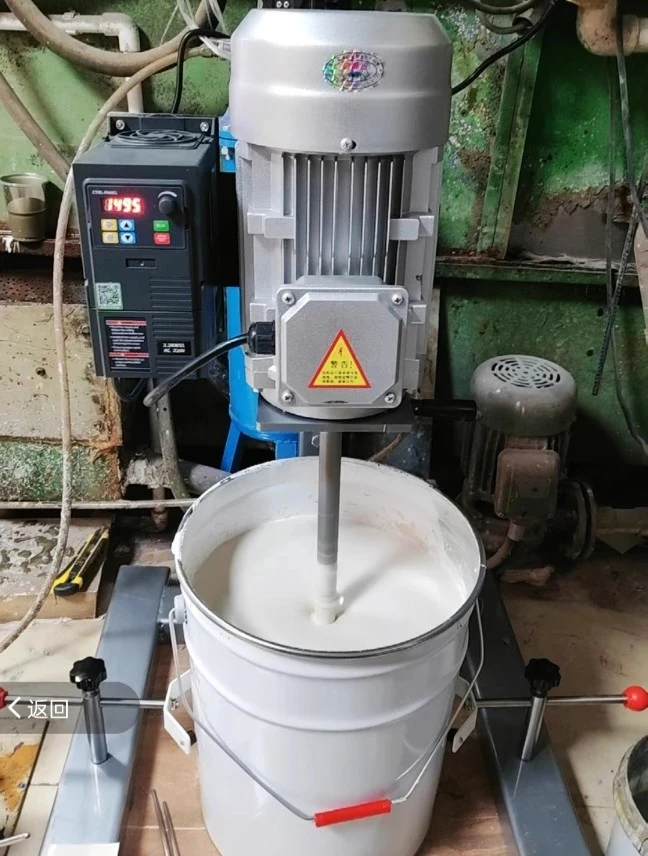
Table of Contents
- Why Slurry Dispersion Quality Makes or Breaks Battery Performance
- Secret 1: Choose the Right Disperser Type for Your Slurry Viscosity
- Secret 2: Master the Mixing Sequence to Prevent Agglomeration
- Secret 3: Optimize Tip Speed and Power Density
- Secret 4: Control Temperature During Dispersion
- Secret 5: Vacuum Degassing Eliminates Costly Bubble Defects
- Secret 6: Scale-Up from Lab to Production Without Losing Quality
- Secret 7: Choose the Right Disperser Partner for Long-Term Success
- FAQ
- References
1. Why Slurry Dispersion Quality Makes or Breaks Battery Performance
Poor dispersion leads to:
- Agglomerates — localized regions of poor conductivity, increasing internal resistance
- Non-uniform coating thickness — causing soft shorts and capacity fade
- Binder segregation — weak adhesion between active material and current collector
- Air bubbles — pinhole defects in the coating, leading to lithium plating risks
2. Secret 1: Choose the Right Disperser Type for Your Slurry Viscosity
Lithium battery slurries span a wide viscosity range: from approximately 1,000 mPa·s for low-solid-loading R&D trials to over 10,000 mPa·s for production-scale cathode coatings. Choosing the wrong disperser type is the number one mistake we see in battery startups.
| Disperser Type | Best For | Viscosity Range (mPa·s) | Key Advantage |
|---|---|---|---|
| High-Speed Disperser (HSD) | Standard cathode/anode slurries | 1,000 to 8,000 | Cost-effective, easy to clean |
| Planetary Mixer + Disperser | High-solid slurries (over 60%) | 5,000 to 15,000 | Excellent for thick pastes |
| Vacuum Disperser | Thin-coating, high-energy-density cells | 1,000 to 10,000 | Bubble-free slurry, critical for NMC 811 |
| Bead Mill (for conductive paste) | Nanoscale carbon dispersion | 500 to 3,000 | Achieves D50 under 200 nm |
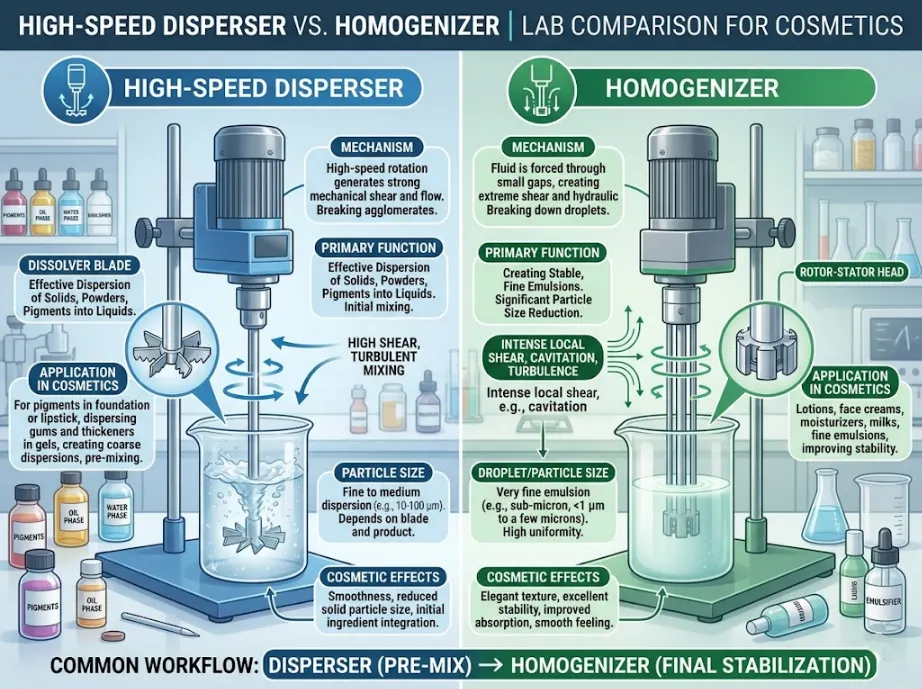
Pro Tip: For most standard lithium-ion battery slurries (NMC or LFP cathode, graphite anode), a high-speed disperser with sawtooth blades running at 20 to 25 m/s tip speed delivers the best balance of shear rate and throughput. Explore our YAKU disperser product line.
3. Secret 2: Master the Mixing Sequence to Prevent Agglomeration
Even the best disperser cannot fix a poorly designed mixing sequence. Adding all raw materials at once is a recipe for irreversible agglomeration — especially with nanoscale conductive carbon and PVDF binder.
The proven sequence for cathode slurries (NMP-based):
- Step 1: Dissolve PVDF binder in NMP solvent (heat to 60 to 80 degrees Celsius if needed for full dissolution).
- Step 2: Add conductive carbon (Super P, KS-6) gradually under high-speed dispersion (tip speed 20 to 25 m/s). Disperse for 30 to 60 minutes.
- Step 3: Add active material (NMC, LFP, LCO) in 3 batches to avoid viscosity spikes.
- Step 4: After all solids are added, disperse at 20 m/s for 2 to 3 hours. Monitor temperature closely.
- Step 5: Degas under vacuum before transferring to the coating machine.
This stepwise method prevents particle re-aggregation and ensures the binder uniformly coats each active particle — critical for cycle life.
4. Secret 3: Optimize Tip Speed and Power Density
Tip speed (m/s) — not just RPM — determines the shear rate acting on the slurry. For lithium battery slurries, the optimal tip speed range is:
- Cathode slurries: 20 to 25 m/s
- Anode slurries (water-based): 15 to 20 m/s (lower to avoid foam)
- High-solid conductive paste: 25 to 30 m/s
Power density (kW per liter of slurry) is equally important. Too little power means incomplete de-agglomeration; too much generates excess heat, degrading NMP solvent or causing binder precipitation.
| Parameter | Lab Scale (1 to 5 L) | Pilot Scale (100 to 500 L) | Production Scale (over 1,000 L) |
|---|---|---|---|
| Tip Speed (m/s) | 20 to 25 | 20 to 25 | 20 to 25 |
| Power Density (kW/L) | 0.3 to 0.5 | 0.15 to 0.3 | 0.08 to 0.15 |
| Blade Diameter / Tank Diameter | 0.4 to 0.5 | 0.4 to 0.5 | 0.4 to 0.5 |
| Mixing Time (hours) | 2 to 3 | 3 to 4 | 4 to 6 |
Notice that power density decreases with scale — this is normal and reflects the better heat management and longer mixing times at production scale. What must stay constant is tip speed and the blade-to-tank diameter ratio.
5. Secret 4: Control Temperature During Dispersion
Dispersion generates heat. For NMP-based cathode slurries, the exotherm can push the temperature above 40 degrees Celsius, causing:
- NMP solvent evaporation (changing solid content)
- PVDF binder precipitation (if temperature exceeds 60 degrees Celsius)
- Increased risk of gel formation in water-based anodes
Best practice: Use a jacketed mixing tank with circulating chilled water to keep slurry temperature between 25 to 35 degrees Celsius. For lab-scale dispersers without jacketed tanks, dispense in 15-minute intervals with 5-minute cooling breaks.
Also monitor: NMP boiling point is 202 degrees Celsius — not a direct boiling risk, but NMP evaporation at elevated temperatures changes the solid content and viscosity.
6. Secret 5: Vacuum Degassing Eliminates Costly Bubble Defects
Even with perfect dispersion, entrained air is a silent killer of battery quality. Micro-bubbles (under 100 micrometers) trapped in the slurry become pinholes in the electrode coating after doctor-blade or slot-die coating.
These pinholes cause:
- Localized current density spikes leading to lithium plating
- Reduced active material loading
- Coating line downtime for die cleaning
Vacuum dispersers are strongly recommended for:
- (1) High-energy-density cathode formulas (NMC 811, NCA)
- (2) Silicon-alloy anodes (high surface area causes high air entrapment)
- (3) Thin-coating applications (under 80 micrometers) where any pinhole is catastrophic
Learn more about our vacuum disperser solutions.
7. Secret 6: Scale-Up from Lab to Production Without Losing Quality
Many battery companies nail the formulation at 1 L lab scale, only to see coating quality deteriorate when they scale to 500 L or 2,000 L production batches. The root cause is almost always non-geometric scale-up of the dispersion process.
Critical scale-up rules:
- Keep tip speed constant (20 to 25 m/s at all scales)
- Maintain power density per liter within 20 percent of lab value
- Use the same blade type and blade-to-tank ratio (0.4 to 0.5)
- Adjust mixing time: production batches need 1.5x to 2x the lab mixing time due to larger thermal mass
Also read: Scale Up From Lab Disperser To Production: 5 Proven Steps.
8. Secret 7: Choose the Right Disperser Partner for Long-Term Success
Selecting the right disperser is not just about equipment specs — it is about application expertise. A good disperser manufacturer will:
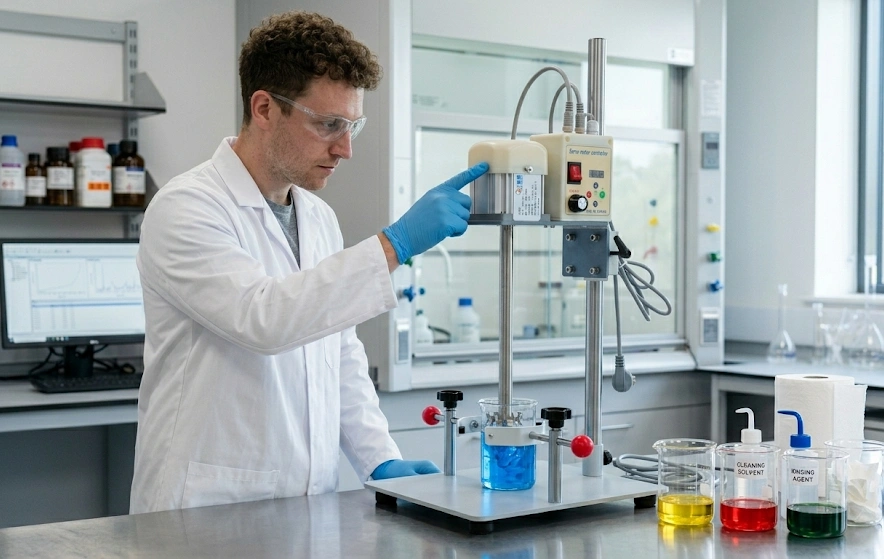
- Provide lab-scale trials with your actual slurry formula before purchase
- Offer customizable blade designs (sawtooth, pitched-blade, anchor) for different slurry rheologies
- Support scale-up with pilot equipment and process consultation
- Deliver quick spare parts and responsive service (critical for 24/7 production lines)
At YAKU, we have helped over 200 battery material companies worldwide optimize their slurry dispersion process. From 1 L lab mixers to 3,000 L production systems, our dispersers are engineered for the specific demands of lithium-ion battery manufacturing — high repeatability, easy cleaning, and explosion-proof options for NMP-based solvents.
Contact our team today to discuss your slurry dispersion challenges.
FAQ Lithium Battery Slurry Dispersion
Q1: What is the ideal particle size distribution after dispersion for lithium battery slurry?
A: For cathode slurries, the D50 should be under 10 micrometers, with no agglomerates larger than 50 micrometers. Anode slurries (graphite) can tolerate slightly larger D50 (up to 20 micrometers) but require excellent dispersibility to avoid graphite flake damage.
Q2: How do I prevent NMP solvent loss during dispersion?
A: Use a closed-lid mixing tank with a condenser to recover NMP vapor. For lab-scale dispersers, cover the tank with aluminum foil and minimize dispersion time above 40 degrees Celsius.
Q3: Can I use the same disperser for both cathode (NMP-based) and anode (water-based) slurries?
A: Technically yes, but thorough cleaning (including disassembly of the blade and shaft) is critical to avoid cross-contamination. Many manufacturers dedicate separate dispersers for cathode and anode to eliminate this risk entirely.
References
- YAKU Disperser Product Line: https://yakumixer.com/product/
- Scale-Up From Lab Disperser To Production: https://yakumixer.com/scale-up-from-lab-disperser-to-production-5-proven-steps-for-amazing-results/
- Vacuum Disperser Solutions: https://yakumixer.com/product/vacuum-disperser/
- Contact YAKU Team: https://yakumixer.com/contact/
This article is part of YAKU Technical Blog series on dispersion equipment for battery manufacturing. For more guides, visit our Technical Blog.