You do not need a complete automated line to scale up paint production. Start with repeatable small batches, buy the equipment that removes your current bottleneck, and delay automation until sales are steady.
For most small paint businesses, the practical first investment is a correctly sized variable-speed disperser, a compatible vessel, basic measuring tools, and a written batch procedure. A bigger motor or tank will not help if the formula, vessel geometry, dispersion process, or quality checks are still inconsistent.
The Short Answer
- Prove the formula and demand with small, repeatable batches.
- Calculate capacity from real orders, not from hoped-for sales.
- Buy the correct disperser and vessel before buying automation.
- Keep basic quality checks consistent for every batch.
- Add milling, filling, or automatic feeding only when the process requires it.
1. Find the Real Bottleneck Before Buying Equipment
Ask one simple question: What is stopping us from producing more saleable paint today?
The answer may not be the mixer. It could be slow powder addition, inconsistent weighing, long cleaning time, insufficient vessel capacity, poor pigment dispersion, manual filling, or too many color changes.
| Current problem | Possible first improvement | Do not assume |
|---|---|---|
| One batch takes too long | Review powder charging, disc size, vessel geometry, viscosity, and speed | A larger motor automatically shortens the process |
| Paint quality changes between batches | Standardize weighing, order of addition, speed, temperature, and mixing time | A bigger tank fixes an unstable procedure |
| Demand is higher than current output | Calculate the number of saleable batches needed per day | You need a fully automatic line immediately |
| Cleaning causes too much downtime | Use removable tools, dedicated vessels, or a better changeover sequence | Higher capacity always improves daily output |
| Required fineness is not reached | Confirm whether a milling stage is required after pre-dispersion | More dispersing time always replaces grinding |
If batch quality is already inconsistent, first read why paint can look different from one batch to another.
2. Scale in Small Steps Instead of Making One Large Jump
Moving directly from a small lab beaker to a large production tank creates unnecessary risk. The larger batch may circulate differently, heat faster, trap more air, or overload the disperser as viscosity rises.
A lower-risk approach is to use three stages:
- Lab batch: prove the formula, order of addition, and quality test.
- Pilot batch: check circulation, temperature, dispersion time, motor load, and cleaning.
- Small production batch: verify that the process is repeatable under normal daily working conditions.
Do not copy the laboratory rpm directly to a larger machine. Disc diameter changes tip speed and flow. Vessel diameter, liquid depth, disc position, viscosity, and motor power must be reviewed together.
Budget rule: Choose a machine that covers your proven batch range with reasonable flexibility. Do not pay for unused capacity simply because a larger number looks safer.
3. Buy Equipment in the Right Order
When cash is limited, equipment should be purchased according to process need and payback, not according to how impressive the factory will look.
First: Basic Measuring and Quality-Control Tools
Use reliable weighing, temperature measurement, speed monitoring, timing, and a repeatable viscosity or flow test. If pigment fineness matters, use the correct fineness test for the product.
These tools are usually less expensive than production machinery, but they help prevent rejected batches and make scale-up decisions easier.
Second: The Correct Disperser and Vessel
The disperser must match the paint viscosity, batch volume, solids content, disc diameter, vessel shape, and required dispersion result. The vessel must provide suitable clearance and enough free space for safe powder addition and vortex control.
See the guide to choosing a high-speed disperser for paint production before comparing motor power alone.
Third: Tools That Reduce Changeover Time
If you make several colors or formulations, removable shafts, additional dispersing discs, spare vessels, and a planned cleaning station can be more valuable than a larger mixer. They reduce the time when the machine is not producing.
Review available dispersing discs and parts and mixing vessels as part of the complete setup.
Later: Milling, Filling, Feeding, and Automation
Add these only when the numbers support the purchase. A mill is justified when the required fineness cannot be reached by dispersion alone. Filling equipment becomes important when packaging limits daily output. Automatic feeding and recipe control make more sense after formulas and order volume are stable.
If you are unsure whether you need both stages, compare a high-speed disperser and a sand mill.
4. Match the Paint to the Mixing Method
A low-budget plan still needs the correct process. Buying the least expensive machine is wasteful if it cannot move or disperse the material.
| Material behavior | Practical equipment starting point |
|---|---|
| Flowable water-based paint requiring powder wet-out and pigment dispersion | Variable-speed high-speed disperser with a suitable disc and vessel |
| Small formulation or color-development samples | Compact laboratory disperser with a removable or replaceable shaft |
| High-viscosity paint that does not circulate around the disc | Geared low-speed mixing, anchor movement, or a multi-shaft configuration |
| Paint requiring finer particle-size reduction after pre-dispersion | Compatible milling equipment after the dispersing stage |
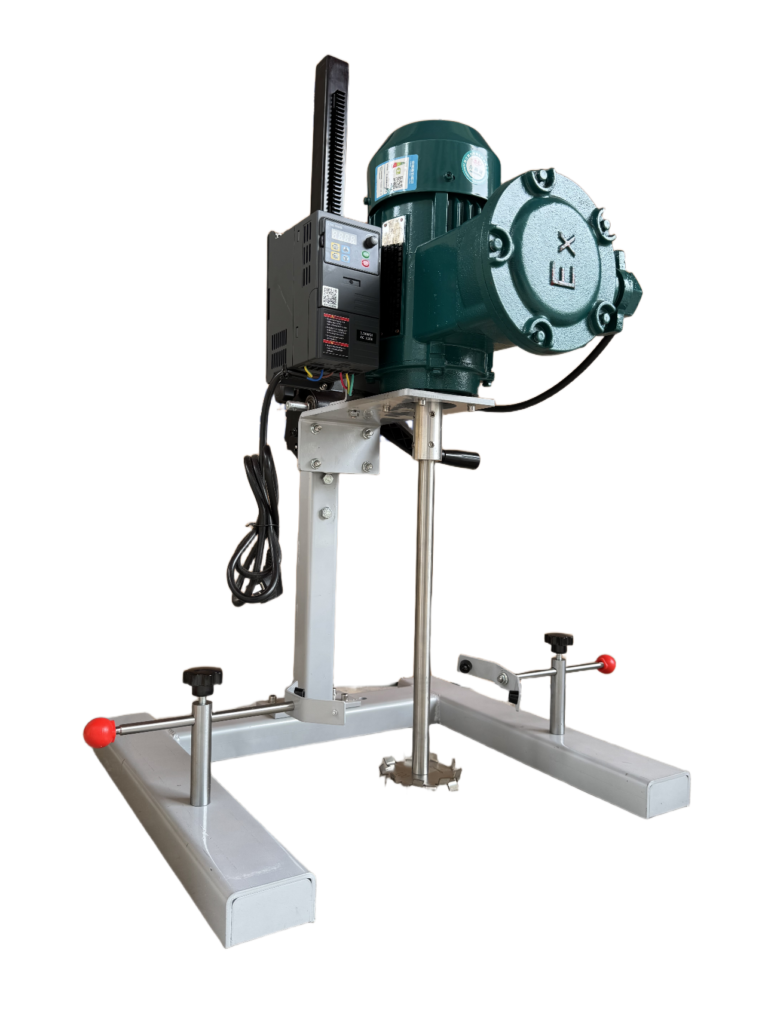
| Solvent-based paint | Equipment and facility safety review based on the actual solvent and hazardous-area requirements |
High viscosity needs torque and bulk flow. Simply increasing rpm may create heat without moving the whole batch. YAKU can review a geared or multi-shaft mixing solution when a standard disperser is not enough.
5. Compare YAKU Models by Real Batch Need
The figures below are published model references, not guaranteed paint-processing capacities. Actual working volume depends on viscosity, density, solids, disc size, vessel dimensions, speed, and the required result.
| Model | Published reference | Possible scale-up role |
|---|---|---|
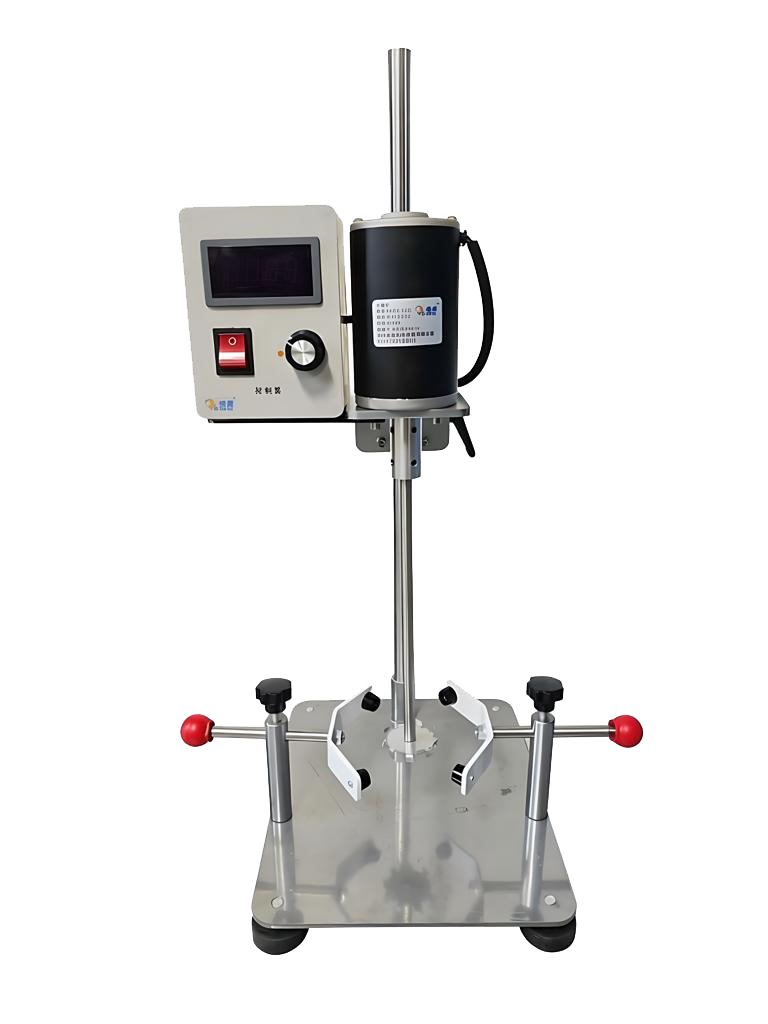
| YKFS-350T Chuck Type | 350 W, 0-4000 rpm, up to 5 L water reference | Formula tests, color samples, and frequent shaft changes |
| FS-1.1 Electric Lift | 1.1 kW, 0-3000 rpm, published 25 L maximum container capacity | Pilot work and compatible small paint batches |
| YKFS-1.5 Manual Lift | 1.5 kW, 0-3000 rpm, published capacity up to 50 L depending on viscosity | Small production where more drive power is required |
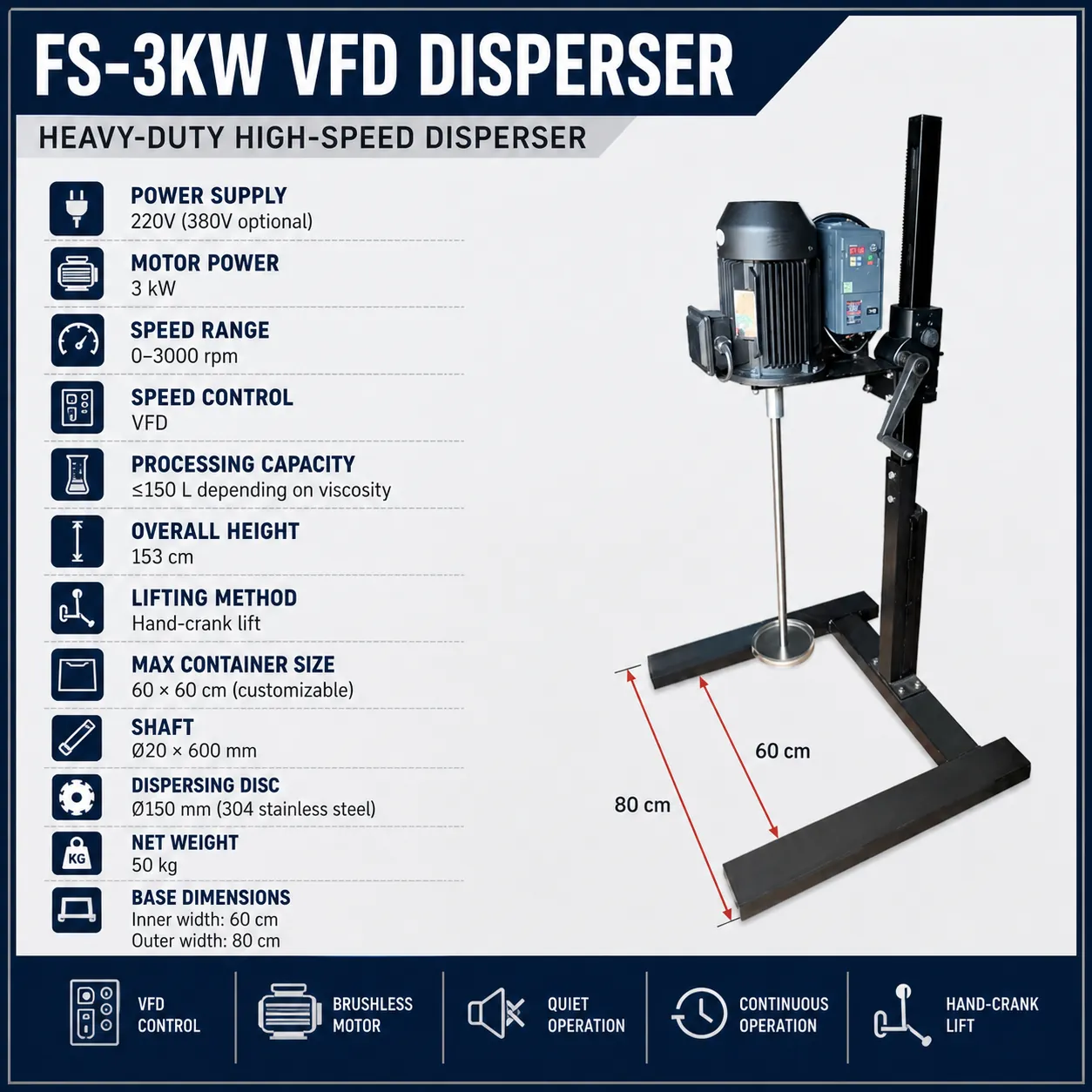
| FS-3KW Variable-Speed | 3 kW, 0-3000 rpm, published capacity up to 150 L subject to process conditions | Compatible small-to-medium production batches |
Information Needed for Model Selection
- Water-based or solvent-based formulation
- Starting and maximum viscosity
- Minimum and maximum working volume
- Solids content and powder addition rate
- Vessel diameter, height, and opening
- Required fineness and current batch time
- Voltage, phase, frequency, and installation country
If viscosity is unknown, use the liquid viscosity guide or send a short flow video.
6. Protect Cash by Measuring Cost per Saleable Batch
The cheapest purchase price does not always create the lowest production cost. Track what happens during a complete batch:
- Operator time for weighing and charging
- Mixing and dispersion time
- Cleaning and color-change time
- Material left in the vessel or on the tools
- Rejected or reworked paint
- Packaging time and waiting time
A smaller machine that produces repeatable saleable batches with fast changeovers may be a better first investment than a large machine that is difficult to clean or cannot handle your minimum batch.
For budgeting, review the main factors that affect a high-speed disperser quote.
7. Use a Simple 90-Day Scale-Up Plan
Weeks 1-2: Fix the Process
Record the formula, order of addition, speed stages, mixing time, temperature, batch volume, and quality checks. Repeat the same batch until the result is stable.
Weeks 3-4: Run a Pilot Batch
Increase volume in a controlled step. Watch circulation, powder wet-out, temperature, motor load, air entrainment, fineness, viscosity, and cleaning time.
Month 2: Measure Real Demand and Daily Output
Track actual orders by color, product type, and package size. Calculate how many saleable batches you need each day and how much time is lost between batches.
Month 3: Upgrade the Confirmed Bottleneck
Buy the next machine or accessory only after the data shows what is limiting output. This could be a larger disperser, an extra vessel, a mill, a filling machine, or simply a faster cleaning setup.
Common Low-Budget Scale-Up Mistakes
- Buying a large tank before confirming minimum and maximum batch sizes
- Choosing only by motor power or maximum rpm
- Using the same rpm as the laboratory machine without reviewing disc diameter
- Expecting a disperser to replace a mill when true particle-size reduction is required
- Ignoring cleaning time and product loss between colors
- Buying standard electrical equipment for a solvent or classified environment
- Automating an unstable formula or process
Frequently Asked Questions
What is the most important first machine for a small paint business?
For many flowable water-based paint processes, a correctly sized variable-speed high-speed disperser and compatible vessel are practical starting points. Final selection still depends on viscosity, solids, batch size, and required fineness.
Can I use the same paint formula when I increase the batch size?
The formula may remain the same, but the operating procedure usually needs verification. Addition rate, speed, disc size, mixing time, temperature, and liquid depth can behave differently in a larger vessel.
Should I buy the largest disperser I can afford?
Not automatically. A large machine may not process your minimum batch correctly and may increase cleaning time, floor-space needs, and electrical requirements. Select from the real batch range.
When does paint production need a mill?
Consider milling when the required particle size or fineness cannot be achieved by powder wet-out and de-agglomeration with a disperser alone. Confirm the target and test method before buying.
What if my paint becomes too thick for a high-speed disperser?
Do not solve the problem by rpm alone. High-viscosity material may need a geared low-speed shaft, anchor, or multi-shaft configuration to move the whole batch while the high-speed shaft provides dispersion.
Scale Up the Process, Not Just the Tank
The safest low-budget route is to build a repeatable process first, increase batch size in controlled steps, and spend money only where it removes a measured bottleneck. The right equipment may be a compact disperser, a larger variable-speed model, an extra vessel, a geared mixer, or a milling stage.
Send YAKU your paint type, viscosity, solids content, minimum and maximum batch volume, vessel dimensions, required fineness, voltage, and installation country. We can review a practical starting configuration instead of selecting from liters or motor power alone.