In the production of coatings, inks, and pigments, the dispersion process is the single most important factor determining product quality. It is much more than just mixing powder into liquid.
The goal is to input enough energy to break the attraction between pigment particles, turning “clumps” into fine, individual particles. This process directly affects the final product’s color intensity, gloss, and stability.
In this post, we’ll cover professional dispersion techniques across two key areas: Formulation and Equipment Operation. These tips will help you avoid common production pitfalls and achieve high-quality results every time.
1. The Three Essential Steps of Dispersion
A successful dispersion must follow these three steps. If you skip one, the quality will suffer.
- Wetting: The Foundation. Liquid raw materials must completely wrap around the pigment particles, replacing the air on their surface. If wetting is poor, the powder will clump regardless of how hard you stir.
- Mechanical Breaking: Breaking the Clumps. High-speed stirring creates impact force to shatter pigment clusters. Pro Tip: Ensure the peripheral speed of the dispersing disc is stable at 20–25 m/s to maximize impact.
- Stabilization: Protecting the Results. Once particles are scattered, they naturally want to clump back together. To prevent this, you must use high-quality dispersants and strict temperature control.
2. Core Operational Techniques
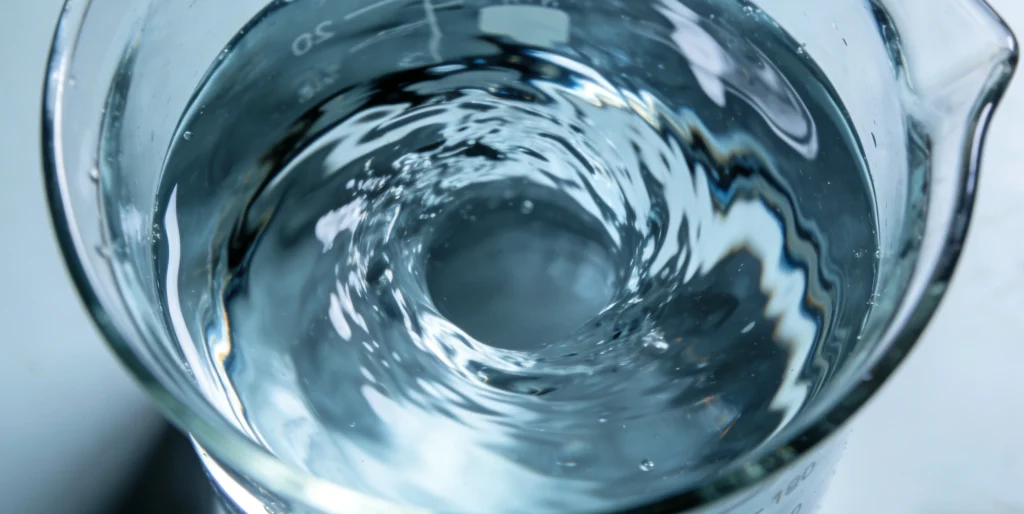
Look for the “Donut Effect”
The flow pattern in your tank is the best visual indicator of success. When the speed, viscosity, and blade position are perfect, the slurry forms a “donut” shape (or vortex), and you can see the center of the dispersing disc.
- The Golden Ratio: The diameter of the dispersing disc should be 1/2.5 to 1/3 of the tank’s diameter for even energy distribution.
Master the Viscosity
- Too Thin: The impact force won’t reach the particles efficiently.
- Too Thick: The slurry won’t flow well, causing local overheating and straining the motor.
- Strategy: Start with a high concentration (thicker) to maximize mechanical shearing. Once the particles are fully dispersed, dilute the mixture to your final required viscosity.
Precision Temperature Control
Stirring creates heat. If the temperature gets too high, solvents evaporate and—more importantly—dispersants may detach from the particles, causing them to re-clump. Keeping the temperature stable is the secret to a professional finish.
3. YAKU Equipment Solutions: Professional Results Made Easy
At YAKU, we design equipment specifically to solve common issues like temperature spikes, air bubbles, and unstable speeds.
| Equipment / Accessory | Core Function | Practical Benefit |
| YAKU Dual-Layer Cooling Jacket | Bottom-in, top-out water circulation. | Keeps slurry below 50°C; prevents color fading and dispersant failure. |
| Vacuum De-foaming System | Negative pressure bubble removal. | Removes micro-bubbles for a smoother, high-gloss film. |
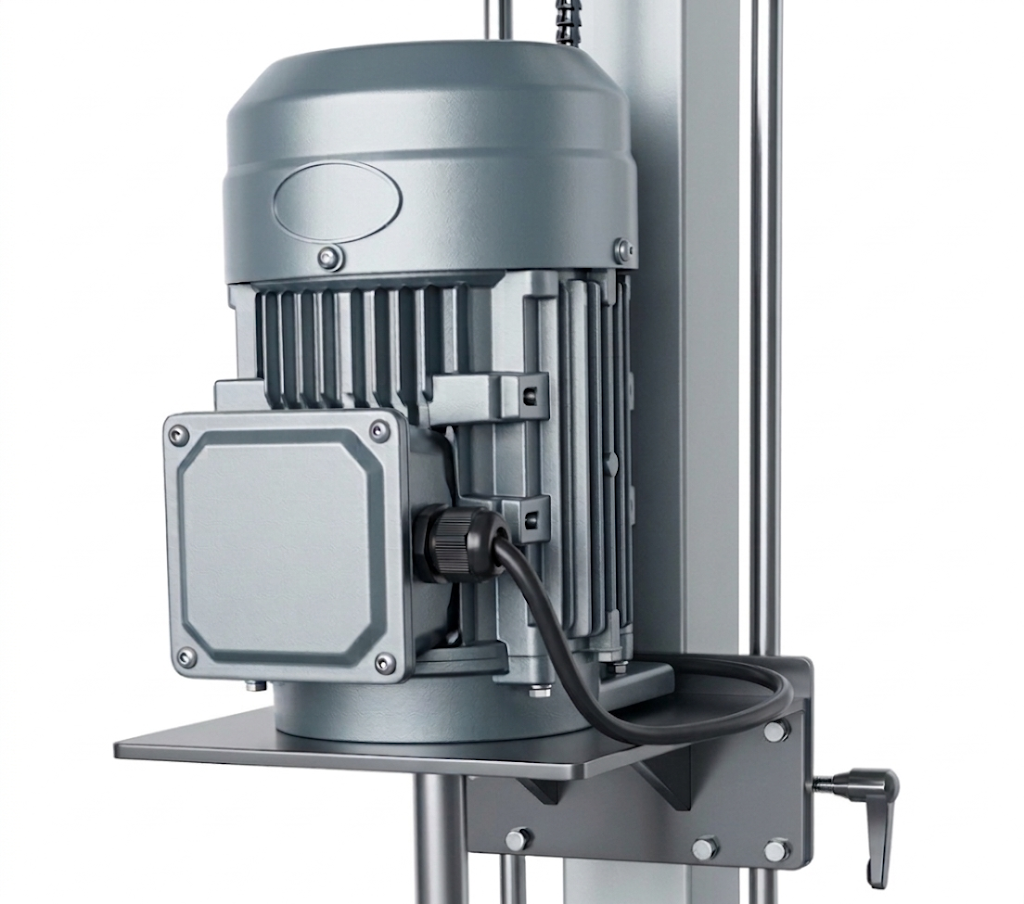
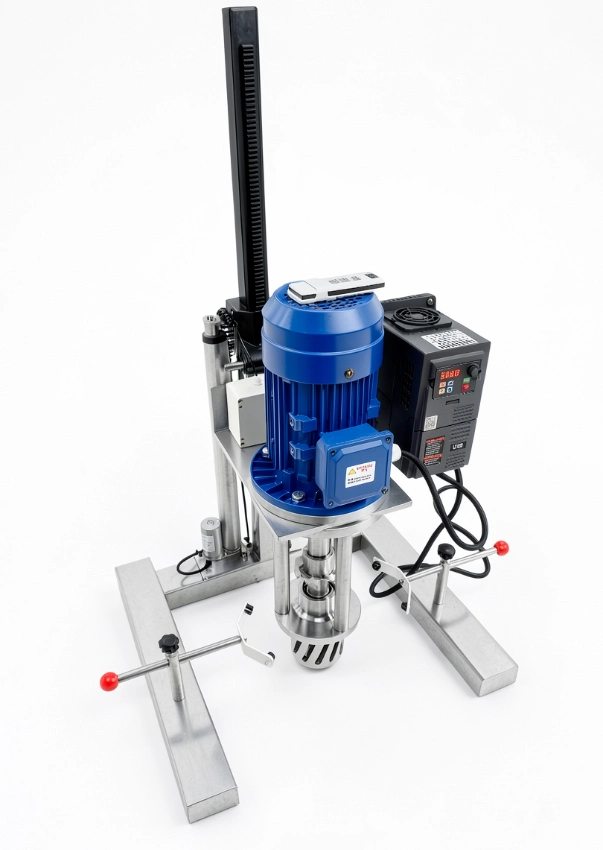
| FS-680 Silent Digital Disperser | Precise digital speed control. | Ensures stable impact force and allows for standardized production. |
4. Troubleshooting (FAQ)
Q: Why does my slurry look good at first but turn “grainy” the next day?
A: This is “re-agglomeration.” Either the temperature was too high during mixing (causing the dispersant to fail), or you didn’t use enough dispersant. Using a YAKU Cooling Jacket to stay under 50°C usually fixes this.
Q: How do I calculate if my disc speed (m/s) is correct?
A: It’s simple math:
- Multiply the Disc Diameter (mm) by the RPM (Rotations Per Minute).
- Multiply that result by 3.14.
- Divide by 60,000.If the result is below 18 m/s, your dispersion will be weak. You need to increase the RPM or use a larger disc.
Q: I can’t get rid of tiny bubbles in the mixture. What should I do?
A: High-speed mixing always pulls air into the liquid. The only 100% effective way to remove them—especially in thick slurries—is using a Vacuum Dispersion Tank.
Q: My lab samples are perfect, but the factory batch is different. Why?
A: You must maintain the same “ratio.” Ensure the height-to-diameter ratio of your large tanks matches your lab beakers. Most importantly, match the linear speed (m/s) of the disc, not just the RPM.