Table of Contents
Introduction
When you are processing volatile chemicals, solvents, or combustible dusts, an explosion-proof disperser isn’t just a regulatory checkbox—it is a critical investment that protects your facility and your team from catastrophic accidents. The stakes are simply too high to get this wrong.
However, navigating the complex world of hazardous area equipment can be a massive headache for engineers and procurement managers alike. You will inevitably run into two major acronyms: ATEX and IECEx. While both deal with explosive atmospheres, they are not entirely interchangeable.
In this guide, we are going to break down the crucial truths about these certifications so you can confidently source the safest equipment for your production line.
1. What Exactly is an Explosion-Proof Disperser?
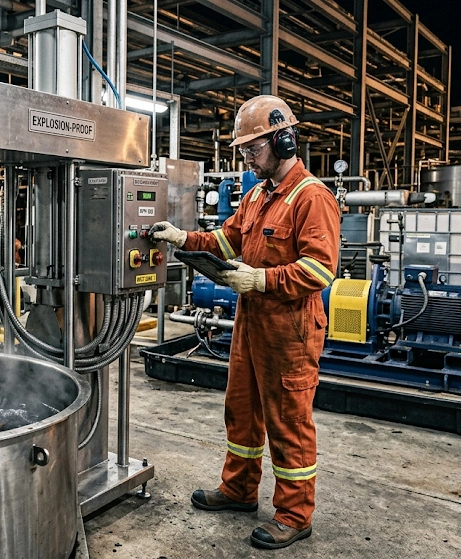
Let’s start with the basics. An explosion-proof disperser is a specialized industrial mixer designed specifically to operate safely in environments where explosive gases, vapors, or dust are present.
Standard motors and electrical panels generate heat and occasional sparks during normal operation. In a regular factory, this is harmless. In a solvent-based paint manufacturing plant, a single tiny spark can ignite the surrounding atmosphere.
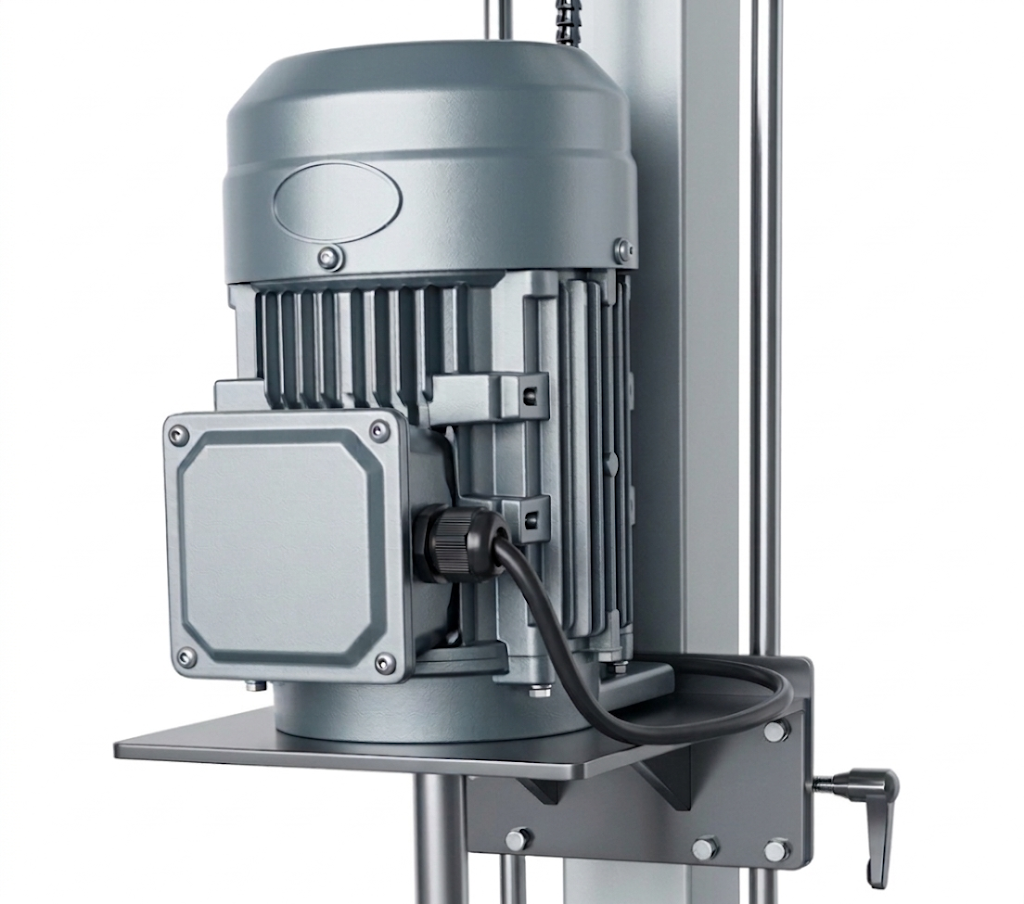
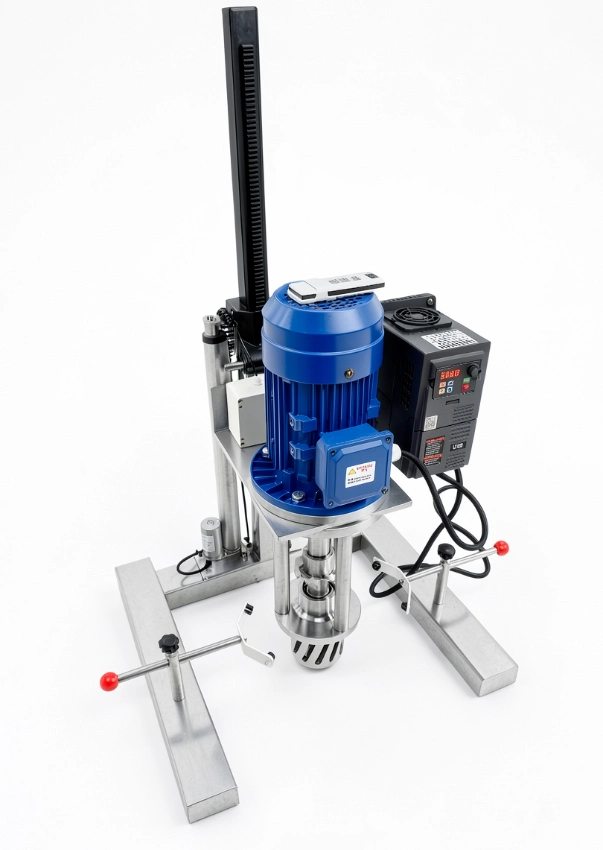
These specialized machines utilize heavy-duty, sealed enclosures that prevent internal sparks from escaping and igniting the outside air. If you are looking to understand the core mechanics behind high-speed mixing before diving into safety specs, it’s worth checking out how a standard Cowles disperser operates, as the explosion-proof variants build directly upon this highly efficient mechanical foundation.
2. ATEX Certification: The European Standard
If your manufacturing facility is located in the European Union, or if you are manufacturing equipment to be sold there, you must comply with ATEX.
ATEX (derived from the French Appareils destinés à être utilisés en ATmosphères EXplosibles) is a mandatory regulatory framework set by the EU. It places the legal responsibility squarely on the employer to classify hazardous areas into different “Zones” (like Zone 0, Zone 1, and Zone 2 for gases).
An ATEX-certified machine will undergo rigorous testing by a notified body to ensure it meets strict European safety directives. The downside? ATEX is highly localized. While respected worldwide, having an ATEX certificate doesn’t automatically mean your machine is legally compliant in North America or Asia.
3. IECEx Certification: The Global Benchmark
This brings us to IECEx. Created by the International Electrotechnical Commission, IECEx was born out of a desperate need to standardize explosion protection globally.
Unlike ATEX, which is a regional legal requirement, IECEx is a voluntary international certification scheme. Its primary goal is to facilitate international trade by eliminating the need for multiple national certifications. If a manufacturer builds a machine to IECEx standards, it theoretically meets the safety requirements of participating countries worldwide without needing redundant local testing.
Because IECEx testing is notoriously strict and uniformly applied by approved certification bodies, many global chemical giants prefer it for standardizing their global facilities.
4. Explosion-Proof Disperser: ATEX vs IECEx Differences
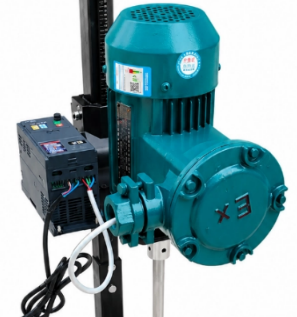
So, when you are looking at the spec sheet of an explosion-proof disperser, how do these two certifications actually differ?
First, the legal standing. ATEX is driven by law in Europe. IECEx is standard-driven and relies on a unified international testing protocol.
Second, the certification process. ATEX allows manufacturers to self-certify equipment for lower-risk areas (like Zone 2). IECEx does not allow self-certification under any circumstances; every single piece of equipment must be tested and approved by an independent third party.
Lastly, the documentation. An IECEx certificate is completely transparent and available online in a global database, allowing buyers to verify the exact status of the equipment instantly. ATEX documentation is typically kept by the manufacturer and the testing body.
5. Making the Right Choice for Your Facility
Choosing the correct equipment ultimately boils down to your location, your company’s internal safety policies, and your end market.
If you are exclusively operating within the UK or EU, an ATEX machine is perfectly sufficient and legally required. If you manage multiple facilities across different continents, investing in IECEx certified equipment will save you from massive regulatory headaches down the road.
Safety should never be an afterthought. Whether you are upgrading your current setup or designing a new hazardous production line, you should explore a comprehensive range of compliant industrial mixing products that meet stringent safety standards. Always consult with a certified safety engineer to assess your specific factory zones before finalizing a purchase.
Frequently Asked Questions (FAQ)
Can an explosion-proof disperser have both ATEX and IECEx certifications?
Yes, absolutely. Many top-tier manufacturers design their equipment to meet the requirements of both standards simultaneously, ensuring maximum global compliance and safety.
Are explosion-proof machines waterproof?
Not necessarily. While an explosion-proof disperser has heavily sealed enclosures to contain internal explosions and keep out explosive dust, it does not automatically have a high IP (Ingress Protection) rating for water jets. Always check the specific IP rating if washdowns are required.
How often should my explosion-proof equipment be inspected?
International safety standards generally recommend a visual inspection every few months, and a detailed, close inspection by a qualified hazardous-area technician at least once every three years. Regular maintenance is vital, as a damaged enclosure compromises the explosion-proof rating.
References & Further Reading
- European Commission: Equipment for potentially explosive atmospheres (ATEX)
- International Electrotechnical Commission: IECEx System Official Website
- Health and Safety Executive (HSE): ATEX and explosive atmospheres