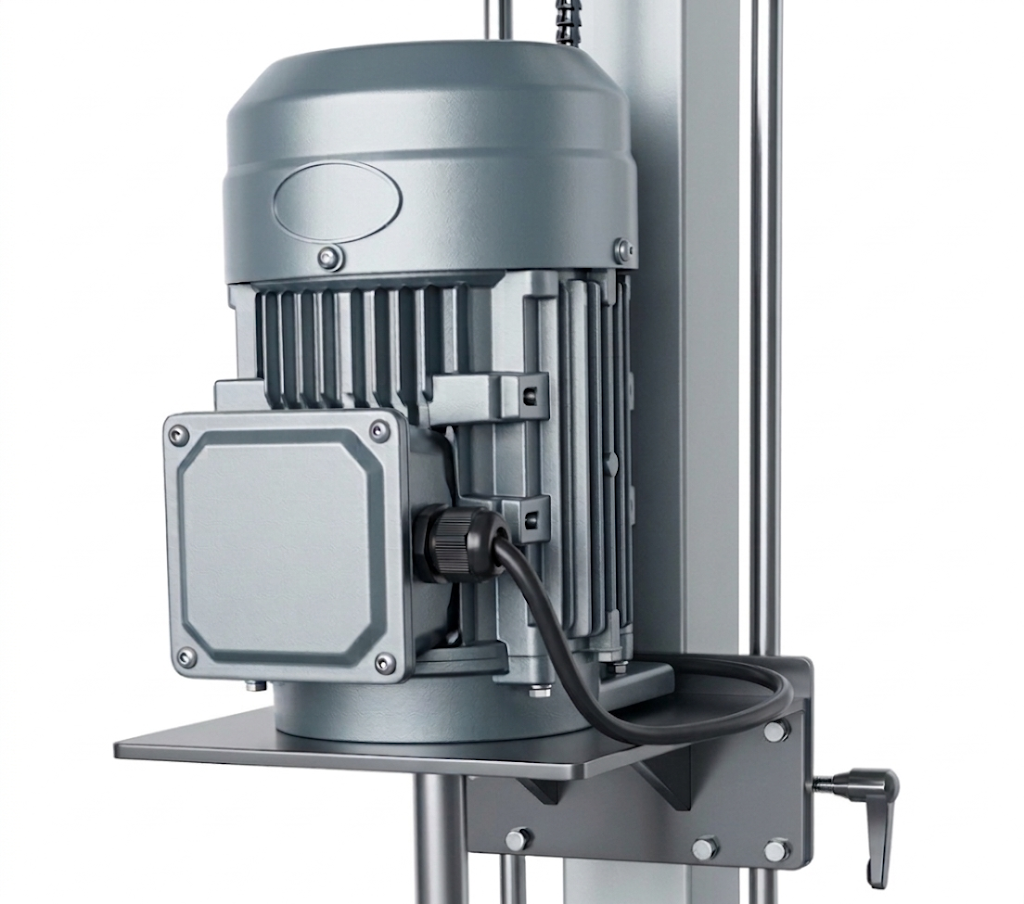
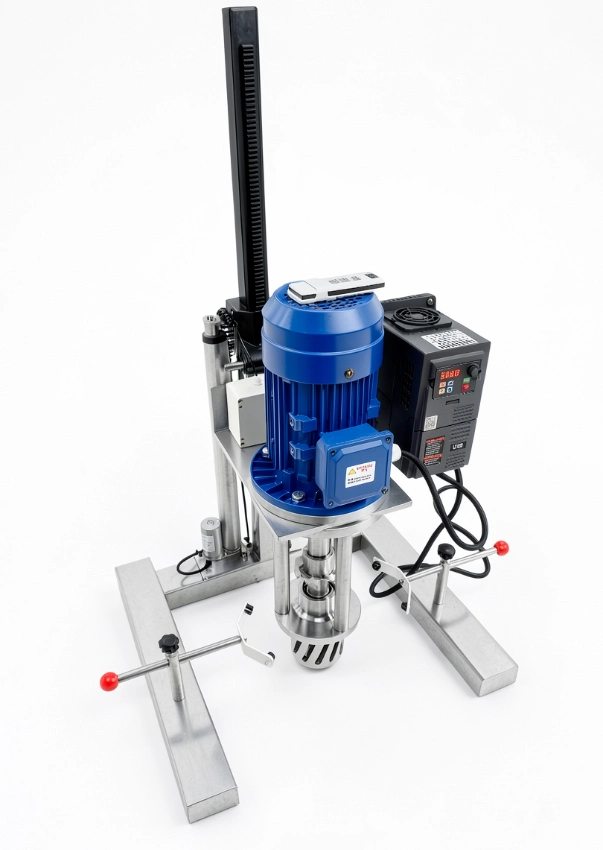
Whether you are developing specialty marine coatings, heavy-duty automotive primers, or thick architectural inks, standard mixers simply don’t have the torque. They leave pigment agglomerates unbroken, causing frustrating delays and ruined test batches.
In this article, we’ll explore what makes a machine truly capable of handling thick materials, how to evaluate your current setup, and practical ways to improve your daily lab routines without burning out your equipment.
1. Why Small Batch Dispersers for High-Viscosity Paints Are Essential
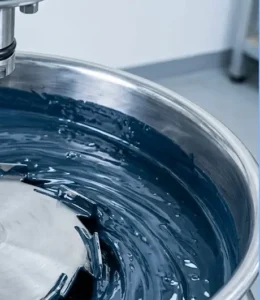
When you shift from water-thin liquids to thick pastes, the physical rules of mixing change completely. Standard mixers create a localized “hole” in thick materials, leaving the rest of the batch unmixed. This phenomenon is known as the “climbing effect” or the Weissenberg effect.
Dedicated small batch dispersers for high-viscosity paints are specifically engineered to combat this. They utilize intense mechanical shear force to break down pigment agglomerates. This ensures that every solid particle is evenly wetted and suspended in the resin vehicle.
Without adequate shear, your paint will suffer from poor color development, reduced gloss, and inevitable pigment settling over time.
2. Key Features of Small Batch Dispersers for High-Viscosity Paints
Not all lab mixers are created equal. When evaluating equipment for your R&D lab or pilot plant, you need to look past basic RPM ratings and focus on features built for heavy duty applications.
Powerful Torque and Heat Management
Speed is meaningless without torque. As your paint thickens, the resistance against the disperser blade skyrockets. A cheap motor will stall, or worse, overheat and pose a fire risk in your lab.
The best small batch dispersers for high-viscosity paints feature continuous-duty motors equipped with Variable Frequency Drives (VFD). This allows you to maintain a steady blade speed even as the batch viscosity increases during the pigment addition phase.
Optimal Cowles Blade Sizing
The secret to perfect dispersion lies in geometry. For thick paints, your Cowles blade diameter should typically be about one-third the diameter of your mixing vessel.
If the blade is too small, you get poor flow. If it’s too large, you risk overheating the batch due to excessive friction. It’s a delicate balance that requires highly adjustable equipment.
If you are unsure how to match blade sizes with motor power for your specific application, we highly recommend reading this detailed guide to selecting medium and small dispersers to ensure you make the right engineering choice.
3. Scaling Up Your High-Viscosity Process
One of the biggest headaches for formulation engineers is moving a successful lab recipe into pilot or full-scale production. What works in a 1-liter beaker often fails in a 50-liter drum.
To successfully scale up, you must maintain a constant “Tip Speed” (peripheral velocity). High-quality small batch dispersers for high-viscosity paints allow you to digitally monitor RPMs, making tip speed calculations straightforward and reliable.
Furthermore, maintaining the correct rheology and understanding fluid dynamics is critical. You can learn more about how viscosity impacts fluid flow by reviewing the comprehensive overview of Viscosity on Wikipedia.
Are you ready to eliminate trial-and-error in your lab? Upgrade your workflow and discover equipment built for the toughest formulations by checking out these industry-leading products.
4. Frequently Asked Questions (FAQ)
What defines a “high-viscosity” paint?
In the context of dispersion, high-viscosity generally refers to materials above 10,000 cps (centipoise). This includes heavy epoxies, structural adhesives, and highly filled elastomeric roof coatings.
Can I use a regular homogenizer instead of a disperser?
No. Homogenizers are excellent for creating emulsions (like mixing oil and water), but they lack the heavy-duty flow capabilities needed to move thick, sludgy paints. You specifically need small batch dispersers for high-viscosity paints equipped with sawtooth blades.
How do I prevent air entrapment when mixing thick paints?
Air entrapment is common with thick materials. To minimize this, adjust the blade height to avoid a deep vortex, and consider utilizing a vacuum-capable disperser to actively pull air out of the batch during the mixing process.
5. References
- Wikipedia: Dispersion (Chemistry) – An overview of the physical chemistry behind solid-in-liquid dispersions.
- Rheology School – Educational resources on fluid dynamics, shear stress, and managing complex paint behaviors.