Titanium Dioxide (TiO2) is the undisputed king of white pigments. It provides unmatched opacity, brightness, and durability in paints, coatings, cosmetics, and inks. However, any formulator knows the dark side of this brilliant white powder: it is notoriously difficult to disperse.
Because TiO2 particles are extremely fine and possess high surface energy, they naturally want to clump together into agglomerates. If you don’t know exactly how to disperse titanium dioxide in paint or water, you will face severe problems like “fish eyes,” poor hiding power, settling, and wasted expensive raw materials.
In this guide, we will walk you through the proven, step-by-step process to achieve a perfect TiO2 dispersion, the common mistakes to avoid, and the equipment you need to get it right every time.
Why is TiO2 So Hard to Disperse?
Before diving into the “how,” it is essential to understand the “why.” TiO2 powder contains microscopic air pockets. When added to a liquid vehicle (water or solvent), the liquid must entirely displace this air to “wet” the particles.
If the mechanical shear force is too low, or the chemical wetting agents are insufficient, the TiO2 particles remain clumped together. This not only ruins the smooth finish of your paint but also means you are effectively throwing money down the drain, as agglomerated TiO2 cannot provide its full whitening power.
The 4-Step Process to Disperse Titanium Dioxide (TiO2)
Achieving a stable, clump-free dispersion requires a perfect balance of chemical formulation (wetting agents) and mechanical force (a high-speed disperser). Here is the standard industry process:
Step 1: Prepare the Liquid Mill Base
Never add TiO2 powder directly to plain water or raw resin. First, add your liquid vehicle (water or solvent) into the mixing tank. Turn on your High-Speed Disperser at a very low speed (around 300-500 RPM).
Next, add your wetting and dispersing additives, defoamers, and pH adjusters. Mix these liquids for a few minutes until completely homogeneous.
Step 2: Create a Vortex and Add the TiO2 Slowly
With the liquid base ready, increase the disperser speed slightly until a “doughnut-shaped” vortex forms around the disperser shaft. The center of the vortex should ideally expose part of the disperser blade.
Crucial tip: Add the TiO2 powder slowly and steadily into the side of the vortex. Do not dump the entire bag in at once! Dumping causes massive clumps that encapsulate dry powder inside, which are nearly impossible to break apart later.
Step 3: High-Speed Mechanical Shearing
Once all the TiO2 is incorporated and the powder is wetted out, it’s time to break the agglomerates. Increase the disperser speed to high.
To disperse TiO2 effectively, your Cowles disperser blade must reach an optimal Tip Speed of 18 to 25 meters per second (m/s). At this speed, the blade generates immense mechanical shear and hydraulic turbulence, tearing the TiO2 clumps apart into primary particles.
Let the disperser run at this high speed for about 15 to 30 minutes, depending on the batch size and viscosity. (Note: Monitor the temperature. High-speed mixing generates heat, which can damage water-based formulations or evaporate solvents).
Step 4: Check the Fineness of Grind
How do you know if your TiO2 is fully dispersed? Never guess. Use a Hegman Gauge (Fineness of Grind gauge). Draw down a small sample of your mixture. For high-quality architectural paints, you typically want a Hegman reading of 6 to 7 (meaning particles are smaller than 15-25 microns). If there are still large scratches on the gauge, continue mixing or adjust your dispersant dosage.
Common Mistakes to Avoid When Mixing TiO2
- Wrong Blade Size: The diameter of your disperser blade should be about 1/3 of the tank diameter. If the blade is too small, it won’t move the material at the edges. (Read our guide on Disperser Blade Selection by Viscosity).
- Improper Blade Height: The blade should be positioned roughly 0.5 to 1 blade diameter off the bottom of the tank. If it’s too high, heavy TiO2 particles will settle at the bottom.
- Skipping the Lab Phase: Don’t formulate a new TiO2 paint directly in a 1000L tank. Always start with a Lab High-Speed Disperser to test your dispersant ratios and mixing times before scaling up.
The Right Equipment Makes All the Difference
You cannot disperse Titanium Dioxide with a simple agitator or a hand drill. The high surface area of TiO2 requires intense shear force that only a professional High-Speed Disperser can provide.
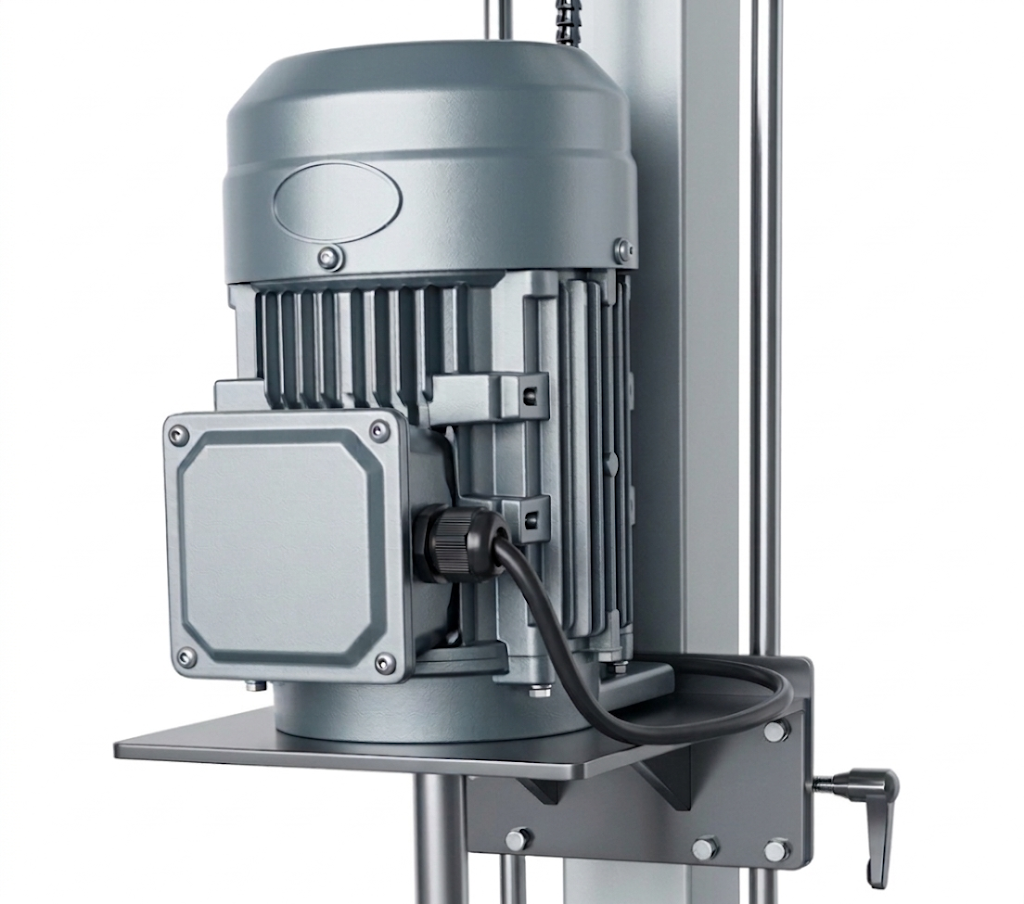
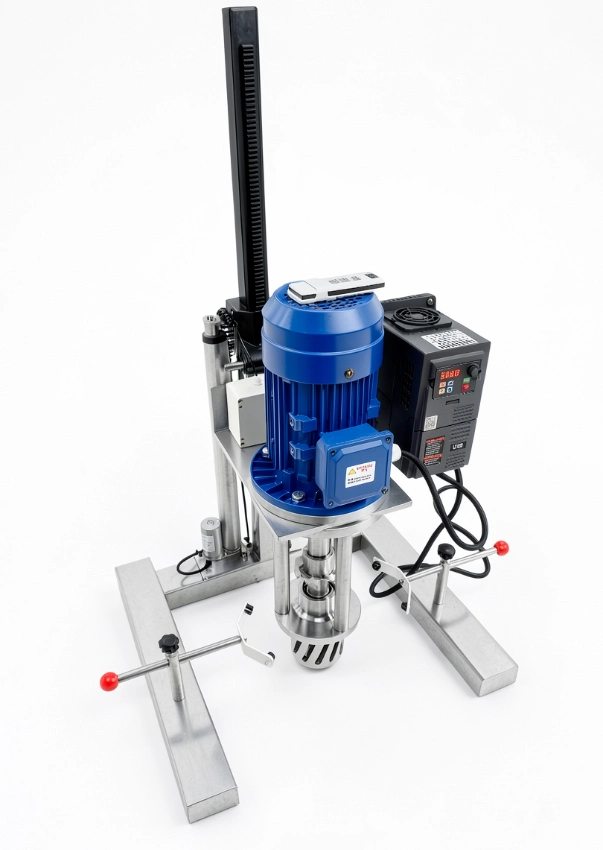
At YakuMixer, we manufacture top-tier dispersing equipment designed to handle stubborn pigments like TiO2 and Carbon Black:
- For R&D and Formulation: Our Lab Scale Dispersers offer precise RPM control, allowing formulators to calculate the exact tip speed needed to eliminate fish eyes and lumps.
- For High-End Coatings: Consider our Vacuum Dispersers, which remove trapped air bubbles during the mixing process, ensuring a perfectly smooth, high-gloss finish.
- For Mass Production: We offer robust industrial dispersers that maintain stable torque and shear force, even for high-viscosity, high-solid-content paint batches.
Conclusion
Learning how to disperse Titanium Dioxide (TiO2) efficiently in paint or water is a game-changer for any manufacturing process. By using the right chemical wetting agents, adding the powder slowly, maintaining the correct tip speed, and—most importantly—using a high-quality disperser, you can maximize the whitening power of your TiO2 and significantly reduce material waste.
Struggling with pigment agglomeration or looking to upgrade your mixing equipment? [Contact YakuMixer today] to find the perfect disperser for your lab or production line!