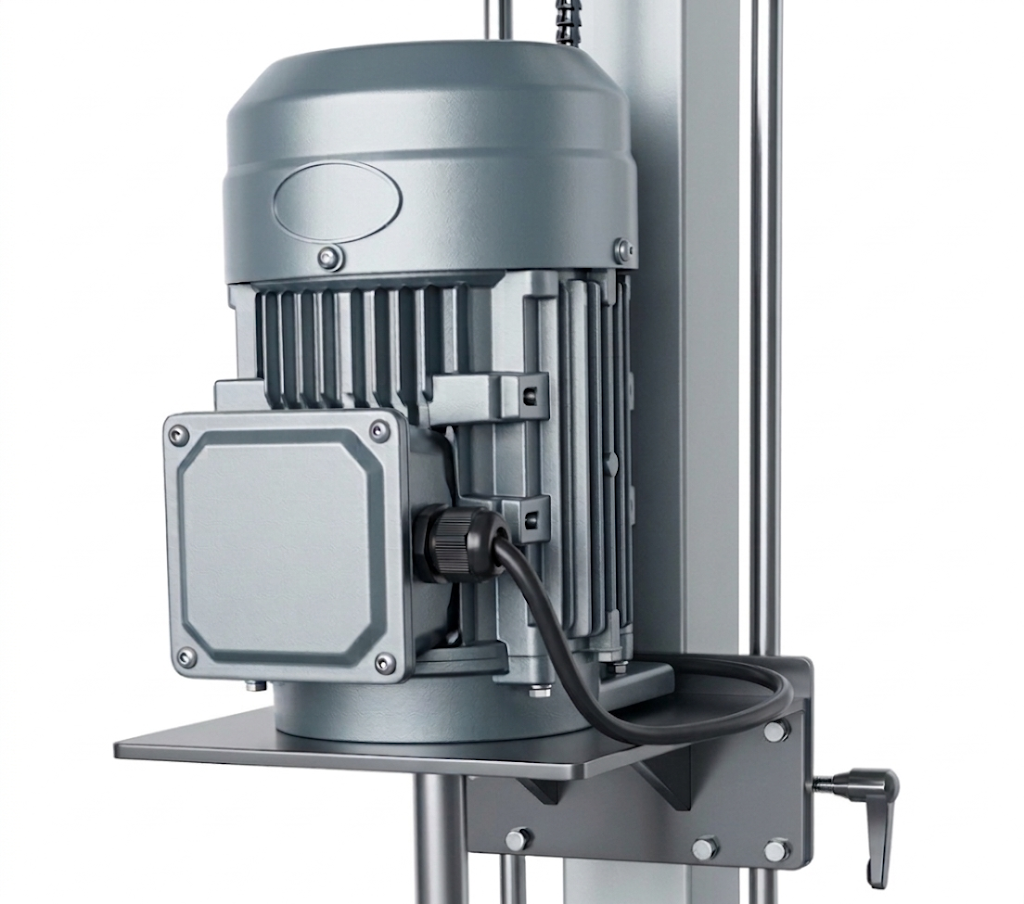
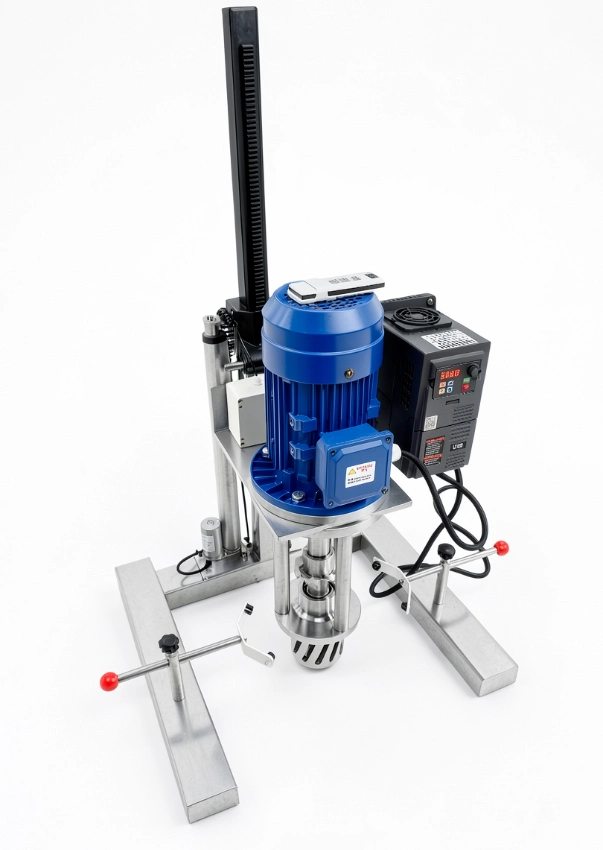
To mix polyurethane sealant evenly, the mixer must move material from the wall and bottom through the whole vessel. For a thick sealant, high speed alone is not enough. The process usually needs low-speed, high-torque mixing, a suitable impeller and vessel, controlled ingredient addition, and the correct temperature.
If bubbles remain after the material is uniform, vacuum degassing can be added. YAKU can review customized mixing solutions for laboratory and small-batch polyurethane sealant production from 0 to 100 L.
What Creates an Even Batch?
- The mixer has enough torque at the highest process viscosity.
- The impeller moves material from the wall, bottom and surface.
- The vessel and impeller match the minimum and maximum batch volumes.
- Fillers and additives are introduced at a controlled rate.
- Temperature stays within the required process range.
- Air is removed when the final product requires degassing.
- Samples from different vessel locations meet the same quality target.
Why Is Polyurethane Sealant Difficult to Mix Evenly?
Polyurethane sealant can change significantly during production. The starting liquid may flow easily, but the batch can become much thicker after fillers, thickeners or other ingredients are added. A mixer selected only from the starting condition may lose circulation later.
High Viscosity Resists Flow
In a low-viscosity liquid, material can move around the vessel with less resistance. A high-viscosity sealant may move only close to the impeller while material near the wall or bottom remains almost stationary.
Fillers Increase the Mixing Load
Powder addition can increase viscosity, density and motor load. Adding filler too quickly may create dry pockets or dense lumps that are difficult to incorporate.
Air Can Become Trapped
Thick material releases air slowly. Air introduced during powder charging or surface folding may remain in the finished sealant even after the ingredients appear uniform.
Temperature Changes Flow Behavior
Material temperature can affect viscosity and mixing behavior. Heat may come from the process, the surrounding environment or the ingredients. The required temperature window must come from the approved formulation and production procedure.
Choose the Mixing Method from Material Behavior
The material name does not determine the machine by itself. Two polyurethane sealants may need different mixers because their viscosity, filler content, batch size and required result are different.
| Material behavior or requirement | Practical equipment starting point | What must be confirmed |
|---|---|---|
| Flowable material requiring powder wet-out or de-agglomeration | Variable-speed high-speed disperser | Viscosity, solids, disc size, vessel geometry and required dispersion |
| Thick sealant that moves slowly or stops circulating | Customized low-speed, high-torque mixer | Peak viscosity, torque, impeller shape, wall and bottom movement |
| Material whose viscosity must be managed during processing | Temperature-control vessel with a suitable mixer | Required temperature range, heating or cooling medium and process time |
| Uniform material that still contains unwanted air | Compatible vacuum mixing or degassing configuration | Foaming behavior, vacuum requirement, vessel seal and process sequence |
| Very thick or non-flowing material | Customized high-torque configuration review | A standard high-speed disperser should not be assumed suitable |
Key point: A high-speed blade can work on material near the blade, but it cannot produce an even batch if the rest of the sealant does not circulate. Thick material usually needs torque and whole-vessel movement before it needs more rpm.
How to Mix Polyurethane Sealant Evenly
1. Select from the Maximum Process Viscosity
Do not size the mixer from the thin starting liquid. Use the highest expected viscosity after fillers and additives have been introduced. This is normally the stage that demands the most torque and creates the highest risk of poor circulation.
If you do not know the viscosity, use the YAKU viscosity guide and provide a short video showing how the material flows.
2. Match the Impeller to the Vessel
The mixer must move material across the vessel, not only around the shaft. Impeller diameter, shape, bottom clearance, wall clearance, shaft length, vessel diameter and working depth all affect circulation.
For high-viscosity sealant, YAKU can review a customized low-speed, high-torque mixing structure. The final impeller and dimensions should be confirmed from the actual material and vessel rather than selected from a generic capacity number.
3. Keep the Batch within the Effective Working Range
A 100 L container does not mean every mixer can process 100 L of sealant. The usable batch depends on viscosity, density, solids, impeller size, free space, motor load and vessel proportions.
The minimum batch is equally important. If the liquid level is too low, the impeller may not be immersed correctly or may draw air. YAKU reviews small-batch configurations from laboratory quantities up to 100 L according to the real working range.
4. Add Fillers at a Controlled Rate
Do not add powder faster than the mixer can incorporate it. Excessive addition can create floating powder, dry pockets and dense lumps. A staged addition gives each portion time to enter the moving material.
The exact addition order depends on the formulation. Follow the approved production method and safety data rather than applying one universal sequence to every polyurethane system.
5. Use Temperature Control When the Formula Requires It
A temperature-control vessel can help keep the material within its required processing range. This may make viscosity and batch behavior easier to control, but temperature should never be changed simply to make mixing easier without checking the formulation.
When requesting a temperature-control vessel, provide the starting temperature, required working range, heating or cooling medium, expected batch time and material-contact requirements. See YAKU tanks and vessels for configuration options.
6. Apply Vacuum after Circulation Is Correct
Vacuum degassing helps remove unwanted air from a compatible sealed process. However, vacuum does not correct poor mixing by itself. The sealant must first move through the vessel evenly.
Vacuum level, mixing speed, material expansion, foaming behavior, vessel seal and processing time must be reviewed together. YAKU can include vacuum degassing in a customized small-batch solution when required.
7. Verify Uniformity with Multiple Samples
Do not judge the batch only from the surface. After the machine has been safely stopped, take samples from agreed locations such as the top, middle, bottom, center and wall side.
Compare the properties that matter to the product, such as viscosity, color, density, filler distribution, air content or another approved quality test. The batch is uniform only when the required results are consistent across the selected sample points.
What Are Dead Spots and How Do You Prevent Them?
A dead spot is an area where material moves too slowly to exchange effectively with the rest of the batch. Common locations include the vessel wall, bottom, corners, surface and areas outside the impeller’s circulation path.
Typical signs include dry filler on the wall, different viscosity between top and bottom samples, long mixing time, or unmixed material discovered during discharge.
- Use enough torque for the thickest stage of the batch.
- Match the impeller diameter and shape to the vessel.
- Check wall, bottom and surface movement instead of watching only the center.
- Stay within the confirmed minimum and maximum working volumes.
- Control filler addition so the mixer is not buried under dry powder.
- Verify the result with samples from several locations.
Never reach into or scrape a running mixer. Stop the machine and follow the facility’s isolation procedure before inspecting the vessel or mixing tool.
How to Select a Small-Batch Mixer for 0-100 L
For an accurate recommendation, send information about the complete process rather than asking only for a 20 L, 50 L or 100 L machine.
| Information to provide | Why it matters |
|---|---|
| One-component or two-component system | Clarifies the formulation and production sequence |
| Starting and maximum viscosity | Determines torque and circulation difficulty |
| Minimum and maximum working volume | Helps match the impeller, vessel and shaft position |
| Filler type, solids content and addition rate | Affects load, wetting and lump formation |
| Vessel diameter, height and bottom shape | Controls clearance and overall flow pattern |
| Required temperature range | Defines the temperature-control vessel requirement |
| Vacuum and final bubble requirement | Defines whether degassing must be included |
| Target quality and current problem | Shows whether the main issue is uniformity, air, dispersion or capacity |
| Voltage, frequency and installation country | Required for the electrical configuration |
If written viscosity data is unavailable, send a short material-flow video, the current mixing method and photos or dimensions of the container. YAKU can use these for an initial review and identify what still needs confirmation.
Common Mistakes in Polyurethane Sealant Mixing
- Choosing the mixer from liters or motor power alone
- Using starting viscosity instead of maximum process viscosity
- Increasing rpm when the real problem is insufficient torque
- Watching the surface and assuming the bottom is also mixed
- Adding filler faster than the material can circulate
- Changing temperature without confirming the formulation limits
- Expecting vacuum to solve a circulation problem
- Checking only one sample location
Frequently Asked Questions
What type of mixer is best for high-viscosity polyurethane sealant?
A low-speed, high-torque mixer is a practical starting point when the material is too thick to circulate around a standard high-speed disc. Final impeller and motor selection depend on peak viscosity, batch size, vessel geometry and required uniformity.
Can a high-speed disperser mix polyurethane sealant evenly?
It may suit a flowable formulation that circulates correctly and requires powder wet-out or de-agglomeration. It should not be assumed suitable for thick or non-flowing sealant.
Why does my sealant mix in the center but remain still near the wall?
The mixer is creating a local active zone without enough whole-vessel circulation. Review torque, impeller type and diameter, wall clearance, vessel shape, working volume and maximum viscosity.
Do I need temperature control?
Use temperature control when the approved formulation requires a defined process range or when process heat changes viscosity and consistency. Provide the required temperatures and heating or cooling medium for configuration review.
When should I use vacuum degassing?
Consider vacuum when unwanted air remains after the batch is mixed uniformly. Vacuum is a separate requirement from circulation and must be matched to the material’s foaming behavior and the sealed-vessel process.
Can YAKU customize a mixer for a 0-100 L batch?
YAKU can review customized small-batch configurations including low-speed high-torque mixing, a temperature-control vessel and vacuum degassing. Final capacity and components are confirmed from the material and process data.
Request a Polyurethane Sealant Mixing Review
The right mixer should keep the complete batch moving at its highest viscosity, maintain the required temperature and remove air when vacuum degassing is needed.
Send YAKU your polyurethane system type, viscosity, filler content, working volume, vessel dimensions, required temperature, vacuum requirement, voltage and a material video. We will review a practical configuration for your 0-100 L laboratory or small-batch process.