A practical guide to mixing, hydration, and getting a smooth batch every time.
You add CMC powder to water, and within seconds it turns into slimy lumps. Some feel like jelly on the outside. Break one open, and there’s still dry powder in the middle.
This is one of the most common headaches in glue, coating, food, and pharma production. The good news: it’s a mixing problem, and it has a fixed solution.
Why CMC Forms Clumps in Water
CMC absorbs water fast, almost the moment it touches it. The outer layer of each particle turns into a gel within seconds.
That gel layer blocks water from reaching the dry powder trapped inside. You get lumps that look wet outside but are still dry inside. Adding the powder too fast makes this worse, since more particles clump together before any water can reach them.
Thicker grades of CMC and higher concentrations make this problem worse too, since more powder is competing for the same water at the same time.
Dispersing and Dissolving Are Not the Same Thing
Your batch can look finished long before it actually is. There are really two stages happening.
Dispersing means spreading the dry powder evenly through the water, with no dry clumps left. Dissolving means the powder has fully absorbed water and thickened the liquid the way it’s supposed to.
A batch can look smooth and dispersed within a few minutes, but still isn’t fully dissolved yet. If you package or use it too early, the viscosity can keep changing after the fact.
A Simple Process That Works
- Start with the right amount of water. Leave enough room in the tank, since the mix will thicken as it hydrates.
- Start mixing before you add any powder. Adding CMC into still water is one of the most common causes of clumping.
- Add the CMC slowly. A steady, thin stream works far better than dumping it in all at once.
- Mix at higher speed to break up clumps. This is the step that actually tears any early clumps apart before they can seal shut.
- Slow down and let it hydrate. Looking done isn’t the same as being done. Give it time at a lower speed to fully thicken.
- Check the final result. Look for a smooth texture, no floating specks, and a viscosity that matches your target.
The Best Mixing Method for CMC
Not every mixing tool handles CMC the same way. Here’s how the common options compare.
| Method | Clump Risk | Best For |
|---|---|---|
| Manual stirring | High | Very small test samples only |
| Low-speed mixer | Medium | Simple, low-concentration recipes |
| Small high-speed disperser | Low | Small-batch production and R&D |
| Industrial high-shear mixer | Very low | Thick or difficult, high-viscosity systems |
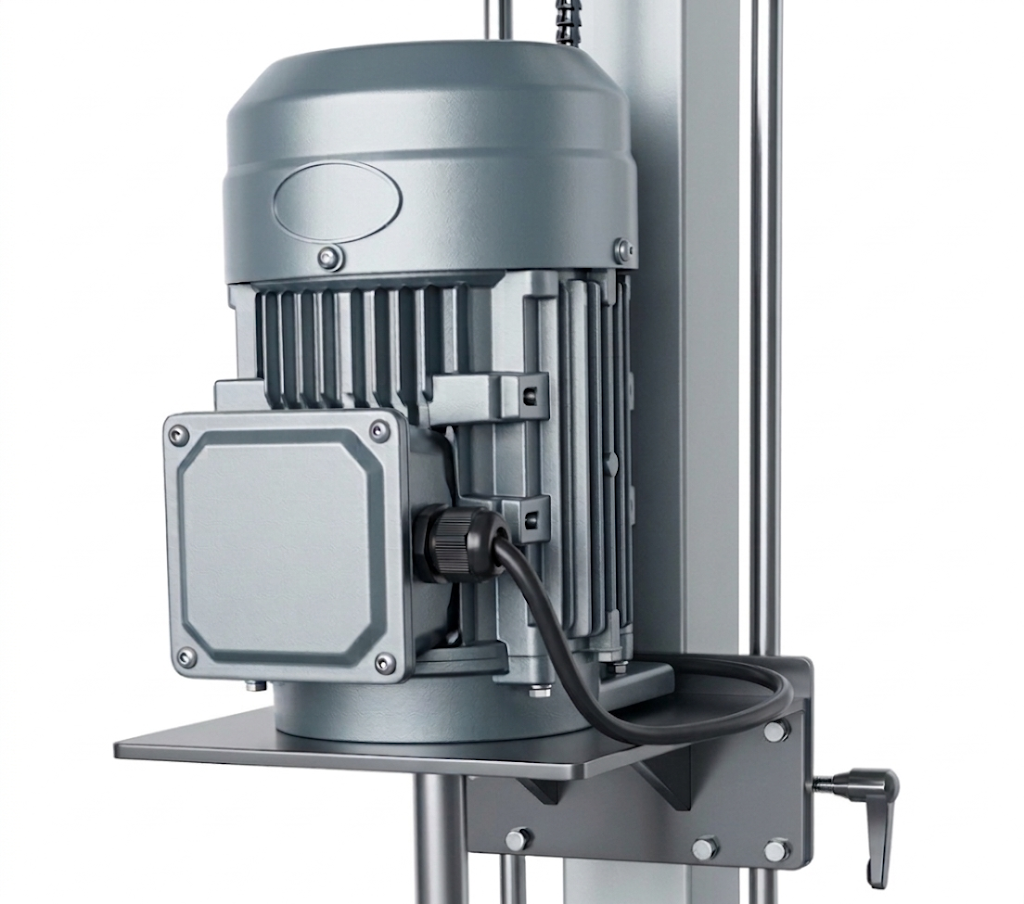
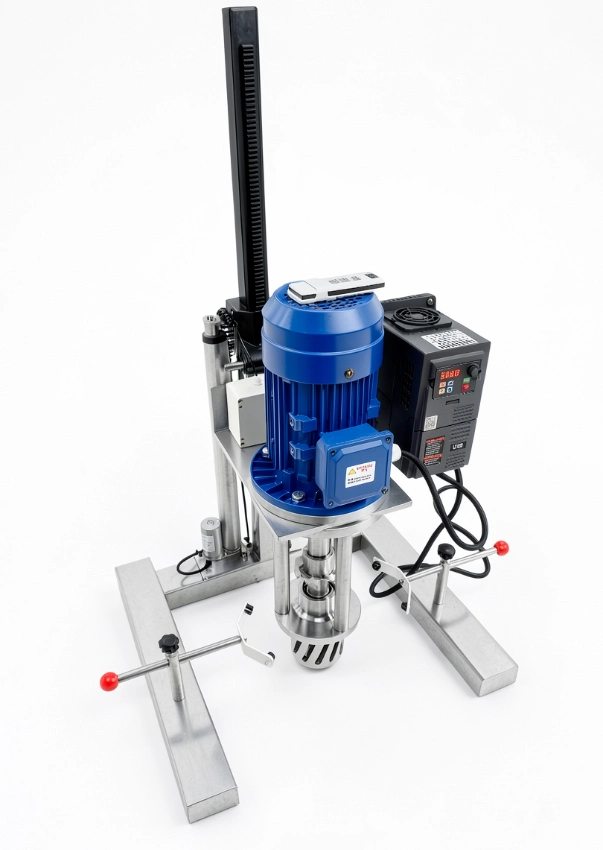
For most small factories, a small high-speed disperser is the sweet spot. Strong enough to prevent clumping, without the size and cost of a full industrial line.
How to Set Your Mixing Speed
There’s no single correct speed that works for every recipe. Your CMC grade, concentration, batch size, and blade all change what works best.
A simple approach that works for most recipes: start slower while adding the powder, increase speed to break up any clumps, then reduce speed again during hydration so you don’t trap extra air. Test this on a small sample first, write down what works, then repeat it every batch.
If your recipe is on the thicker side, this blade selection guide can help you match the right blade shape to your viscosity.
Common CMC Mixing Problems and Fixes
- Fish eyes form: Powder was added too fast, or into still water. Start mixing first, add powder slowly.
- CMC settles at the bottom: Usually means it wasn’t fully dispersed. Increase mixing speed or mixing time.
- Mix is too lumpy: Try adding the powder more slowly, and mix at a higher speed while adding it.
- Viscosity is lower than expected: May not be fully hydrated yet. Give it more rest time before checking again.
- Mixing takes too long: Often a sign your equipment isn’t creating enough shear. A stronger disperser usually cuts this down significantly.
- Foam appears during mixing: Common at high speed. Try a slightly lower speed once the powder is fully added, or add a small amount of defoamer.
What to Look for in a Disperser for CMC
A few things matter more than others when picking equipment for CMC:
- Variable speed control — so you can slow down for hydration and speed up for breaking clumps
- A digital display — so you can repeat the exact same setting every batch
- The right blade — different blades handle thin versus thick CMC solutions differently
- Tank size that matches your batch — oversized or undersized tanks both make mixing less consistent
If you’re not sure what size fits your production volume, this sizing guide walks through how to match the model to your batch.
Where CMC Is Used
CMC shows up across a lot of small-batch industries, and clumping causes the same headache in every one of them.
- Paint and coatings: used as a thickener to control flow and texture
- Adhesives: helps control tack and consistency batch to batch
- Food production: stabilizes texture in sauces, drinks, and baked goods
- Pharmaceutical formulations: used as a binder or thickening agent
Common Questions
Can CMC be mixed directly into water?
Yes, but adding it slowly while the water is already being mixed makes a big difference. Dumping it in all at once, into still water, is the most common cause of clumping.
Why does CMC form fish eyes?
The outside of each particle absorbs water almost instantly and turns into a gel layer. That layer then blocks water from reaching the dry powder still trapped inside.
What RPM is best for mixing CMC?
There’s no single correct number. It depends on your CMC grade, concentration, batch size, and equipment. Most producers start slower during powder addition, increase speed to break up clumps, then slow down during hydration.
How long does CMC take to hydrate?
Dispersion can look finished in a few minutes, but full hydration usually takes longer. Checking viscosity after a rest period is the most reliable way to confirm it’s ready.
Can a high-speed disperser mix CMC?
Yes. It’s one of the most reliable ways to break up CMC clumps quickly for small and medium batch production.
What’s the difference between dispersing and dissolving CMC?
Dispersing means spreading the dry powder evenly through the water. Dissolving means it has fully absorbed water and thickened the liquid. A batch can look dispersed but still not be fully dissolved yet.
Small Wrap-Up
Getting CMC smooth comes down to three things: adding the powder slowly into moving water, using enough shear to break up clumps, and giving it enough time to fully hydrate.
Need a small or medium disperser for CMC mixing? Send us your batch size and recipe, and we’ll help you find a setup that stays consistent every time.