I. Introduction: Why is Choosing the Right Equipment So Important?
The Pain Point
Many factories face the same headaches when upgrading their production lines. Powders clump together and refuse to dissolve. Emulsions separate after sitting for a few days. More often than not, these issues happen because the wrong mixing equipment was chosen.
Clarifying the Concepts
People often use the words “mixing,” “dispersing,” and “homogenizing” interchangeably. However, in industrial fluid dynamics, they represent entirely different levels of processing.
The Goal
In just three minutes, this article will help engineers and purchasing managers understand the core differences between these three machines. You will learn how to accurately match the right equipment to your actual production needs.
II. Mixer: The “All-Rounder” for Macro Mixing
Working Principle
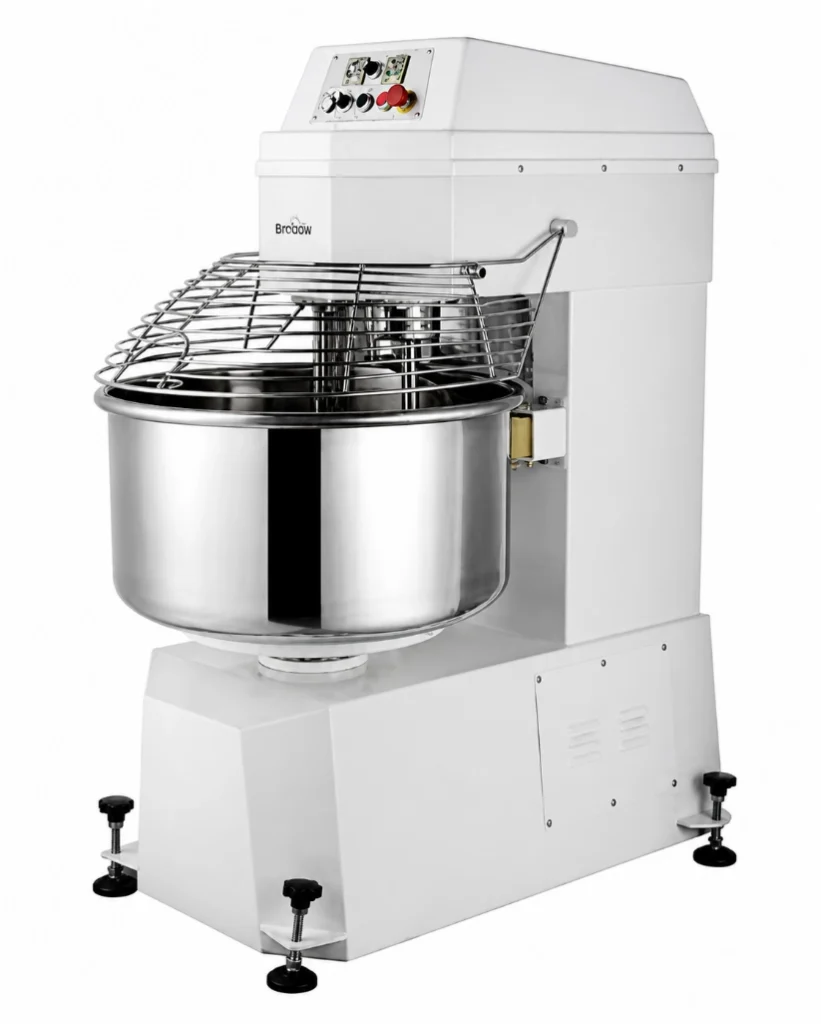
Mixers use agitator blades (like anchor, paddle, or frame types) to create a large-scale fluid turnover inside the tank. They operate at low speeds but generate high torque.
Core Function
The main goal is macro-uniformity. Mixers promote heat transfer, prevent suspended solids from settling, and speed up the dissolving process of soluble solids.
Pros & Cons
- Advantage: Extremely versatile. Mixers can handle everything from water-thin liquids to thick, high-viscosity dough (like dual planetary mixers).
- Limitation: The shear force is very low. A mixer cannot break apart stubborn powder clumps.
Typical Applications
Dishwashing liquid, sugar water preparation, batter mixing, and simple acid-base neutralization reactions.
III. Disperser: The “Icebreaker” for Agglomerates
Working Principle
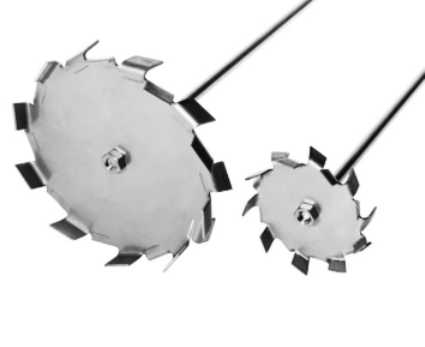
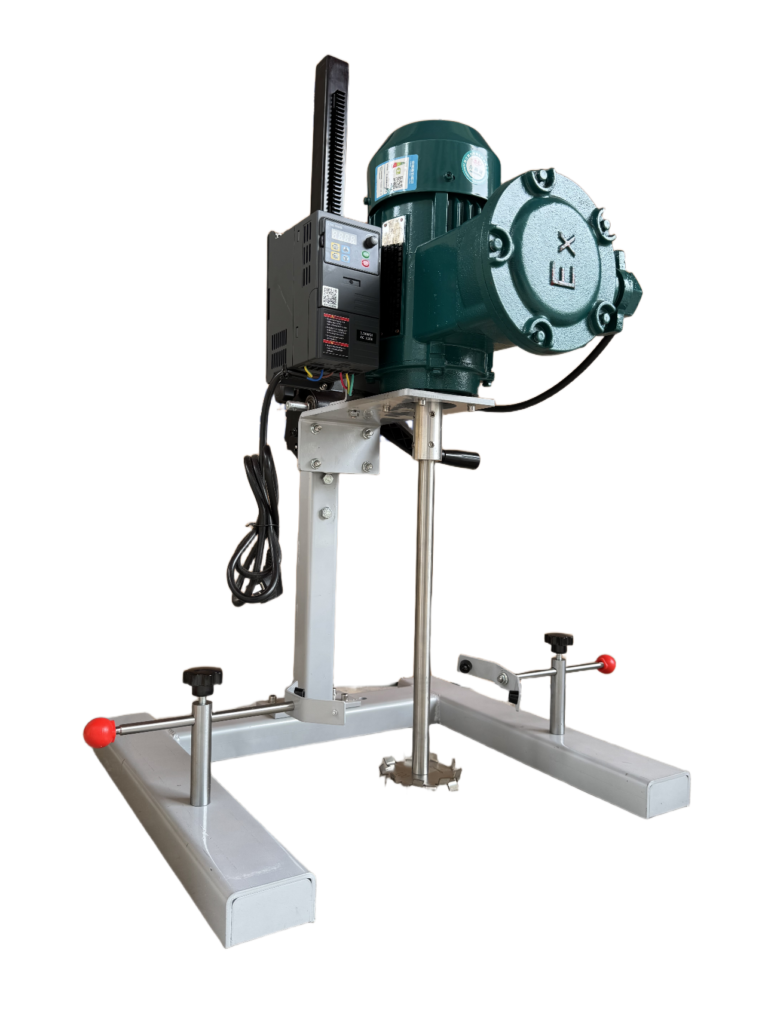
Dispersers rely on a high-speed serrated dispersing disc. The tip speed usually reaches 15 to 25 meters per second. This creates intense shear force, friction, and turbulence within the material.
Core Function
It forcefully breaks down hard-to-dissolve solid powders and distributes them evenly into liquids (solid-liquid dispersion). It effectively completes the “wetting” and de-agglomeration of powders.
Pros & Cons
- Advantage: Highly efficient at breaking the van der Waals forces that cause powders to clump together.
- Limitation: It has a limited effect on ultra-fine liquid-liquid emulsification. It cannot reach nanoscale fineness.
Typical Applications
Paints, inks, color pastes, automotive primers, and lithium battery slurries.
IV. Homogenizer: The “Precision Scalpel” for Micro Emulsification
Working Principle
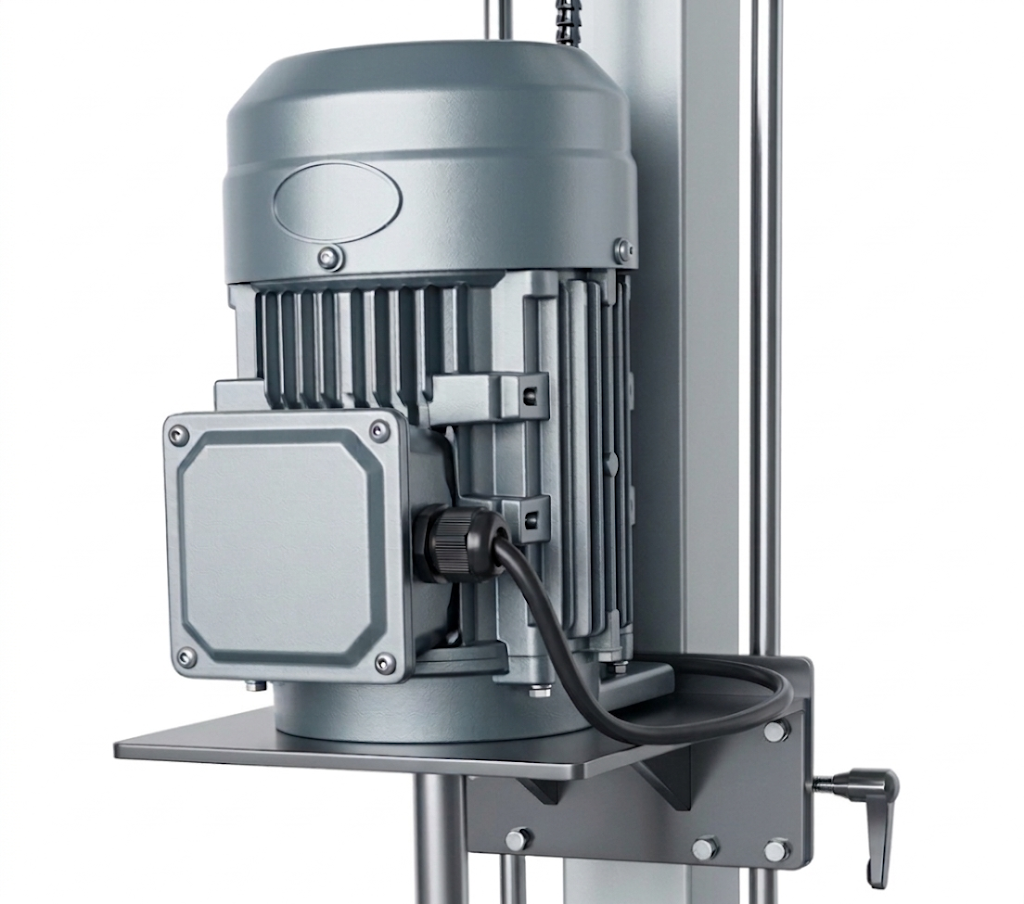
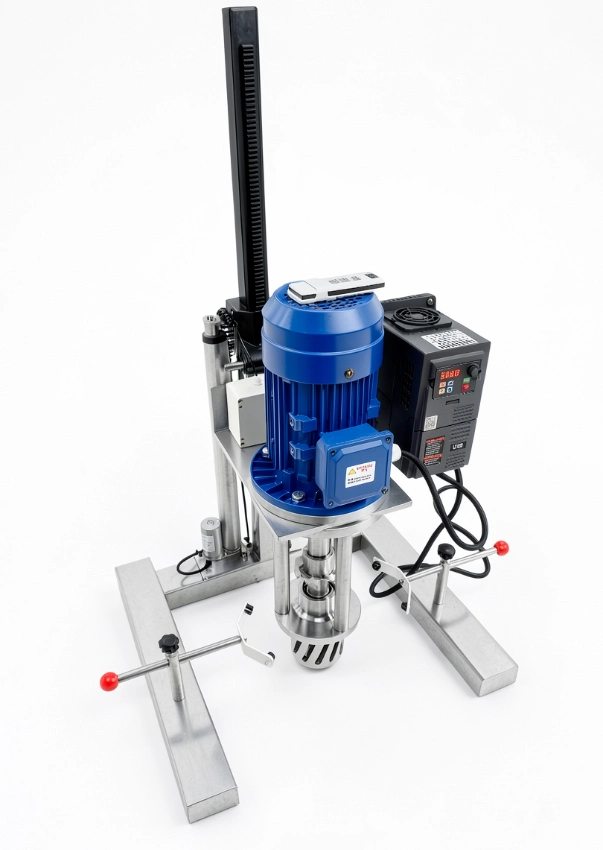
Homogenizers use the narrow gap between a fast-spinning rotor and a stationary stator (high-shear homogenizer), or a high-pressure pump (high-pressure homogenizer). This subjects the material to ultra-high-frequency mechanical tearing and hydraulic shear.
Core Function
It forcefully blends two immiscible liquids (like oil and water) together. It refines droplets or particles down to the micron or even nanoscale, creating incredibly stable emulsions.
Pros & Cons
- Advantage: Effectively prevents material separation. It dramatically improves the product’s texture, absorption rate, and shelf life.
- Limitation: High energy consumption. The equipment can be easily damaged if used with extremely high-viscosity materials or large, hard solids.
Typical Applications
Skincare lotions, mayonnaise, milk homogenization, vaccines, and pharmaceutical preparations.
V. Core Parameters & Capabilities Comparison Table
Here is a quick breakdown of the differences. Save this table for fast reference!
| Comparison Dimension | Mixer | Disperser | Homogenizer |
| Core Action | Macro tumbling & blending | Strong shear & breaking clumps | Extreme shear & micro-refining |
| Speed & Shear Force | Low speed / Weak shear | High speed / Medium-high shear | Ultra-high speed or pressure / Extreme shear |
| Material Target | Liquid-liquid, soluble solid-liquid | Hard-to-dissolve solid-liquid | Immiscible liquid-liquid (Emulsification) |
| Target Fineness | Millimeter level (Macro uniform) | Tens of microns level | Micron to nanoscale |
| Energy & Maintenance | Lower | Medium | Higher |
VI. Ultimate Selection Guide: A 3-Step Decision Tree
Step 1: Look at the material state.
- Mixing soluble powder with water? Choose a Mixer.
- Mixing oil and water so they never separate? Choose a Homogenizer.
- Driving dry pigments into a wet resin? Choose a Disperser.
Step 2: Look at the fineness requirements.
- Just need it to look visually uniform? Mixer.
- Need a smooth finish with no visible particles? Disperser.
- Need it silky smooth like milk with long-term stability? Homogenizer.
Step 3: Consider combined processes.
In real-world manufacturing, this is rarely a multiple-choice question with only one answer. Advanced production lines often use a combination: Mixer (pre-mixing) + Disperser (de-agglomeration) + Homogenizer (fine refining). Alternatively, many factories invest in an all-in-one High-Shear Vacuum Emulsifying Disperser.
VII. Conclusion
The Final Word
There is no absolute “best” machine in the world. There is only the best machine for your specific process and material viscosity.
Take Action Today
Don’t guess with your production line. We encourage you to contact our technical engineers with your specific material traits—viscosity, solid content, and fineness requirements. Bring your materials in for a free testing and sampling session, and let real data validate your equipment choice!