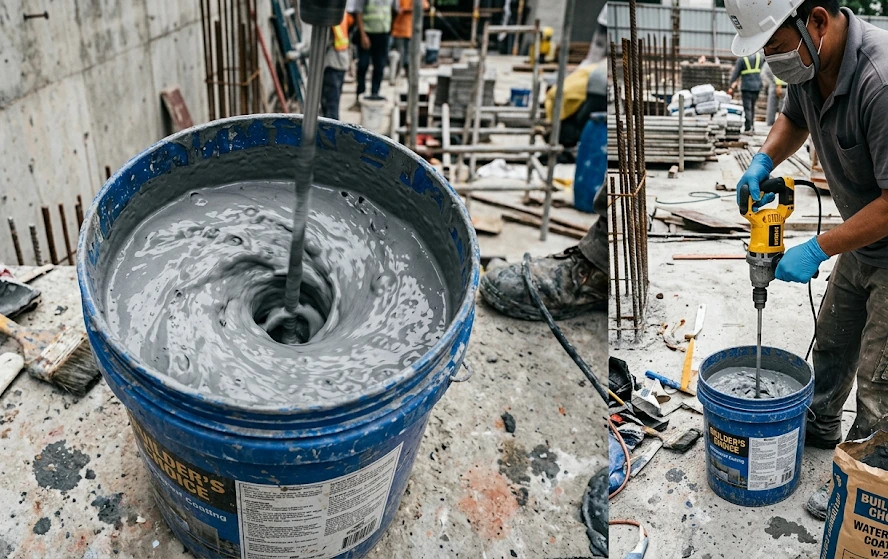
Even the best waterproof cement mix ratio can fail if the mixing process is flawed. Poor dispersion of additives, entrapped air, and inconsistent batch quality are common headaches that compromise waterproofing performance. This guide tackles the real‑world mixing problems users face and shows how professional‑grade equipment solves them.
Why Mixing Matters for Waterproof Cement
Waterproof cement relies on evenly distributed hydrophobic agents, crystalline admixtures, or polymers to block water pathways. If these additives cluster or fail to disperse, you get weak spots that leak. Moreover, air bubbles create capillary channels that defeat waterproofing. Proper mixing eliminates these issues.
Top 5 Mixing Challenges (and How to Fix Them)
1. Uneven Dispersion of Additives
Problem: Powder additives form lumps or settle at the bottom.
Solution: Use high‑shear dispersers that create intense turbulence. Vacuum dispersers combine mechanical dispersion with deaeration for lump‑free mixes.
2. Air Entrainment
Problem: Mixing incorporates air bubbles that become leakage paths.
Solution: Mix under vacuum. A vacuum disperser removes air during mixing, producing dense, bubble‑free cement paste.
3. Batch‑to‑Batch Inconsistency
Problem: Manual mixing leads to varying quality between batches.
Solution: Automate with precision‑controlled dispersers. Programmable settings ensure repeatable results.
4. Viscous Mix Handling
Problem: Polymer‑modified mixes become too thick to mix thoroughly.
Solution: Use dispersing discs designed for high viscosity. Yaku’s dispersing discs come in various tooth configurations to handle everything from low‑viscosity slurries to paste‑like mixes.
5. Scaling Up from Lab to Production
Problem: Small‑scale test mixes don’t translate to large batches.
Solution: Validate recipes with lab dispersers that simulate production conditions. Once optimized, scale confidently.
7 Actionable Mixing Techniques for Waterproof Cement
Implement these techniques to solve mixing problems and elevate your waterproof cement quality:
Technique 1: Vacuum Deaeration
Mix under vacuum (‑0.08 to ‑0.1 MPa) to remove dissolved and entrapped air. This is critical for pond and pool applications where any bubble can become a leak path.
Technique 2: Controlled Shear Rate
Start mixing at low speed (300‑500 rpm) to wet the powder, then increase to high shear (1500‑3000 rpm) for dispersion. Avoid excessive speed that heats the mix and accelerates setting.
Technique 3: Additive Incorporation Sequence
Add liquid additives with the mixing water. For powder additives, pre‑disperse them in a small amount of water before adding to the main batch. This prevents clumping.
Technique 4: Disc Selection
Use a toothed disc for low‑viscosity mixes and a turbine disc for high‑viscosity pastes. Choose the right disc for your mix consistency.
Technique 5: Mixing Time Optimization
Over‑mixing can entrain air; under‑mixing leaves streaks. Test with a lab disperser to find the sweet spot (usually 3‑8 minutes for 20 L batches).
Technique 6: Temperature Control
Keep mix temperature below 30 °C. Use a water‑jacketed mixing vessel if needed. High temperatures reduce working time and can cause premature setting.
Technique 7: Equipment Maintenance
Worn discs reduce mixing efficiency. Regularly inspect and replace dispersing discs and parts. Clean equipment immediately after use to prevent cement buildup.
Real‑World Example: How a Pool Builder Solved Leakage Issues
A pool construction company struggled with recurrent leaks despite using a premium waterproof cement. The culprit? Air bubbles from improper mixing. After switching to a Yaku vacuum disperser, they achieved bubble‑free mixes. Leak callbacks dropped by 90%, and the crew saved time because the mixes were easier to apply.
Choosing the Right Mixing Equipment
Not all mixers are suitable for waterproof cement. Look for:
- Vacuum capability – essential for deaeration.
- Variable speed control – to adjust shear rate.
- Dispersing disc options – to match mix viscosity.
- Lab‑scale validation – to test formulations before full production.