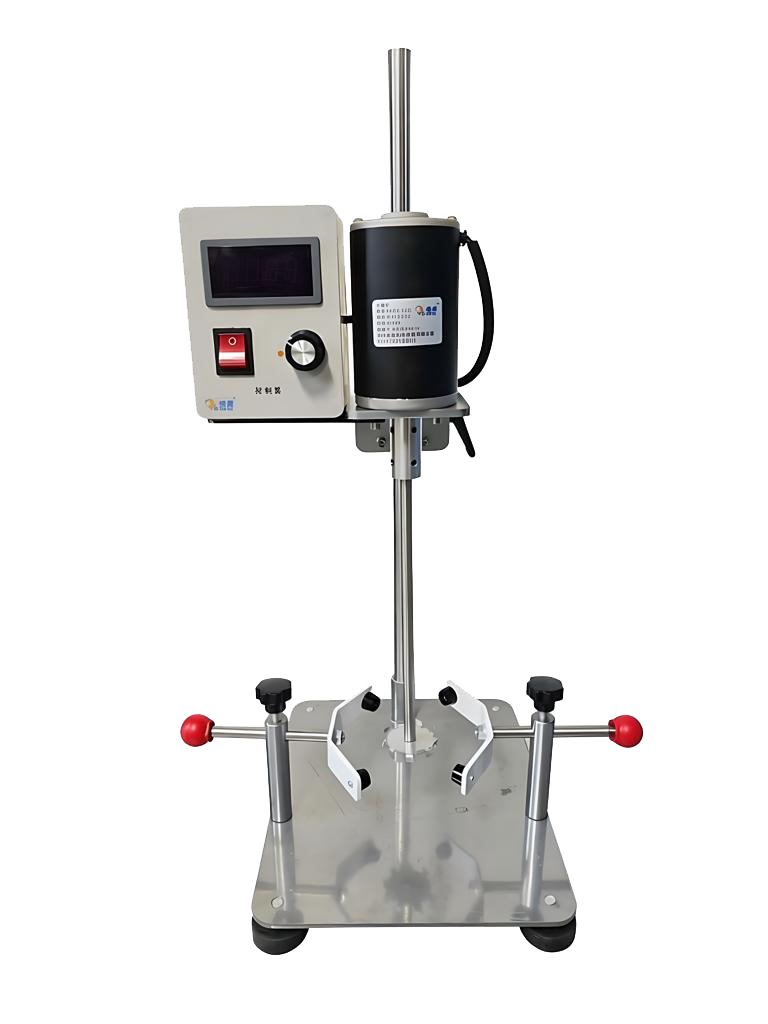
If you run an R&D lab, a custom ink workshop, or a specialty coatings facility, you already know the rhythm: your team spends 10 minutes dispersing a perfect batch — then 30 to 45 minutes scrubbing the blade, shaft, and vessel for the next color change.
That hidden bottleneck is quietly burning through your payroll and turning away profitable orders. The good news? A modern easy-to-clean lab disperser can slash that cleaning time to under 5 minutes per changeover — freeing up 40+ hours of labor every month.
In this guide, we break down the real cost of manual cleaning, the two engineering features that make fast changeovers possible, and what to look for when you’re ready to upgrade.
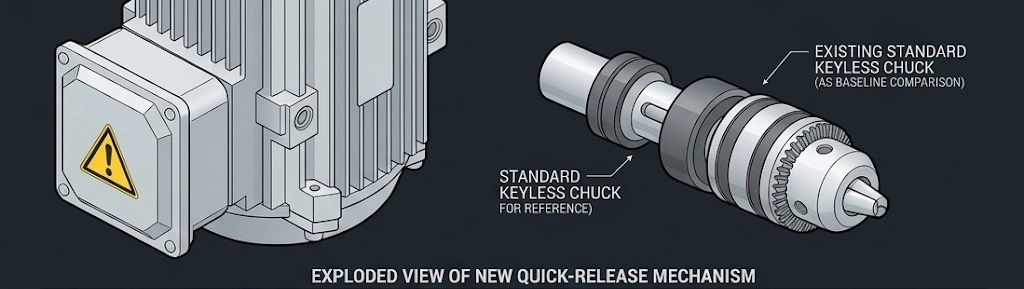
Table of Contents
- 1. The Real Cost of Manual Cleaning
- 2. Financial Comparison: Traditional vs. Easy-Clean Disperser
- 3. 2 Design Features That Enable 5-Minute Changeovers
- 4. Choosing a Reliable Equipment Partner
- 5. Frequently Asked Questions
- 6. References
1. The Real Cost of Manual Cleaning
Small and mid-size businesses survive on speed. Custom orders, short runs, and frequent color changes are your daily reality. But traditional lab mixers were not built for that pace.
Older machines feature deep threads, hidden crevices, and fixed blade assemblies that trap pigment and resin. Here is what that costs you:
- Cleaning time per batch: 30–45 minutes of scrubbing, soaking, and drying.
- Lost production: If you change formulations 4–5 times per day, that’s 2.5 to 3.75 hours of daily downtime — not mixing, just cleaning.
- Labor waste: Your highly trained technicians are standing at a sink instead of developing new products or fulfilling orders.
- Missed revenue: Every hour of cleaning downtime is an hour you could have spent on billable batches.
As skilled lab labor costs continue to rise, especially in Western markets, you are not just cleaning a machine — you are burning through hard-earned margin.
2. Financial Comparison: Traditional vs. Easy-Clean Disperser
Let’s put real numbers behind the problem. The table below compares a standard lab mixer with a YAKU easy-clean lab disperser across key operational metrics:
| Operational Metric | Traditional Lab Mixer | YAKU Easy-Clean Lab Disperser |
|---|---|---|
| Tools Required for Cleaning | Wrenches, screwdrivers (complex & slow) | Tool-free / quick-release design |
| Cleaning & Color Change Time | 30–45 minutes | Under 5 minutes |
| Daily Downtime (5 color changes) | 2.5–3.75 hours | ~25 minutes |
| Monthly Labor Saved | Baseline | 40+ hours recovered |
| Cross-Contamination Risk | High (pigment trapped in crevices) | Near-zero (mirror-polished surfaces) |
| Team Morale | Frustrated by repetitive scrubbing | Focused on R&D and production |
The ROI: Pays for Itself in Under 90 Days
Every dollar you spend on equipment must earn its way back. Here is the math:
- Saving 35 minutes per changeover × 5 changes per day = ~2.9 hours saved daily.
- Over a 22-day work month, that’s 64+ hours of reclaimed productivity.
- At a fully loaded lab technician rate of $25–40/hour, you save $1,600–$2,560 per month in labor alone.
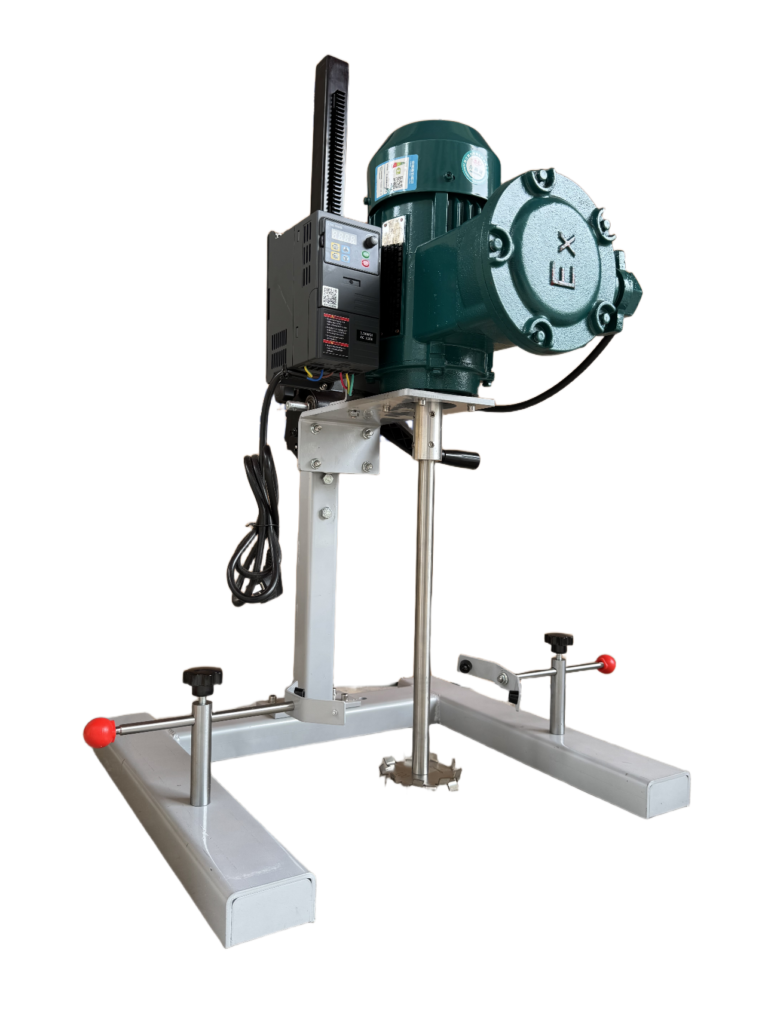
- A YAKU FS-350 lab disperser starts at $689. The FS-1.1 with explosion-proof rating starts at $2,180. Either way, payback is under 90 days.
After that, every minute saved is pure profit.
3. 2 Design Features That Enable 5-Minute Changeovers
The difference between a 45-minute scrub and a 5-minute rinse comes down to two engineering decisions.
Feature 1: Quick-Change Key System (Tool-Free Blade Removal)
Older machines require wrenches and screwdrivers to swap blades. The bolts are often caked with dried resin, making each removal a chore.
YAKU dispersers use a quick-release key system. Insert the dedicated key, twist once, and the blade pops out in under 5 seconds. No hidden threads, no seized bolts — and no pigment traps.
This alone cuts blade removal and re-installation from 10–15 minutes down to under 30 seconds.
Feature 2: Zero-Residue Mirror Polishing (SS316L Stainless Steel)
Low-grade stainless steel is porous at a microscopic level. Thick resins, pigments, and cream bases adhere to these tiny crevices, requiring aggressive scrubbing with solvents and brushes.
YAKU disperser shafts and blade hubs are precision-machined from SS316L stainless steel with a mirror-polished finish (Ra ≤ 0.4 μm). At this level of smoothness:
- Thick pastes and viscous resins slide off rather than stick.
- A simple rinse with water or mild solvent removes 95%+ of residue.
- No steel wool or abrasive pads needed — which also protects the surface finish over years of use.
The SS316L material also meets FDA material compliance guidelines for food-contact and pharmaceutical applications, making it suitable for sensitive formulations.
4. Choosing a Reliable Equipment Partner
Buying lab equipment from an overseas manufacturer requires trust. Beyond the machine itself, you need assurance that support will be there when you need it. Here is what YAKU provides:
- CE Certification: All YAKU medium and lab-scale mixing systems are fully CE-certified, meeting European safety and electromagnetic compatibility requirements.
- Material Compliance: All wetted parts are manufactured from verified SS316L / SS304 stainless steel, compliant with FDA material guidelines.
- 2-Year Warranty: Industry-leading warranty coverage that far exceeds the typical 12-month standard.
- 24-Hour Video Technical Support: Our engineering team responds within one business day with live video assistance for any operational or setup question.
- Explosion-Proof Options: For labs handling volatile solvents (acetone, toluene, xylene), YAKU offers ATEX-rated EX motor configurations. Learn more about explosion-proof disperser certification.
Ready to explore the full range? Browse all lab dispersers or request a quick quote.
5. Frequently Asked Questions
Can an easy-clean lab disperser handle high-viscosity materials without slipping?
Yes. The quick-lock mechanism uses a heavy-duty industrial design. It securely holds blades during high-speed dispersion of viscous coatings, cosmetics, and resins — even at maximum RPM.
Will the mirror-polished surface scratch during cleaning?
No — because you won’t be scrubbing. The mirror-smooth SS316L finish prevents material adhesion in the first place. A simple rinse removes 95%+ of residue. Steel wool and abrasive pads are unnecessary and should be avoided to preserve the finish.
What if I lose the quick-change key?
Don’t worry. Every machine ships with a spare key. We also maintain inventory for immediate express shipping if you need a replacement.
Can I use strong cleaning solvents on the shaft and blade?
Yes. All wetted components are made from chemically resistant SS316L stainless steel. Water, alcohol, acetone, and common industrial cleaning solvents will not cause corrosion.
Can I use a fume hood instead of an explosion-proof disperser for solvent work?
No. A fume hood removes vapors from the room, but it cannot prevent sparks generated by a standard motor from igniting solvent vapors at the source (inside the mixing vessel). If you work with low-flash-point solvents, you need an EX-rated disperser. See our explosion-proof disperser guide.
How does this compare to a vacuum disperser for removing air bubbles?
Cleaning speed and deaeration are separate challenges. An easy-clean design minimizes downtime between batches, while a vacuum disperser actively removes trapped air during mixing. Many labs benefit from both capabilities — YAKU’s vacuum models incorporate the same easy-clean features described here.