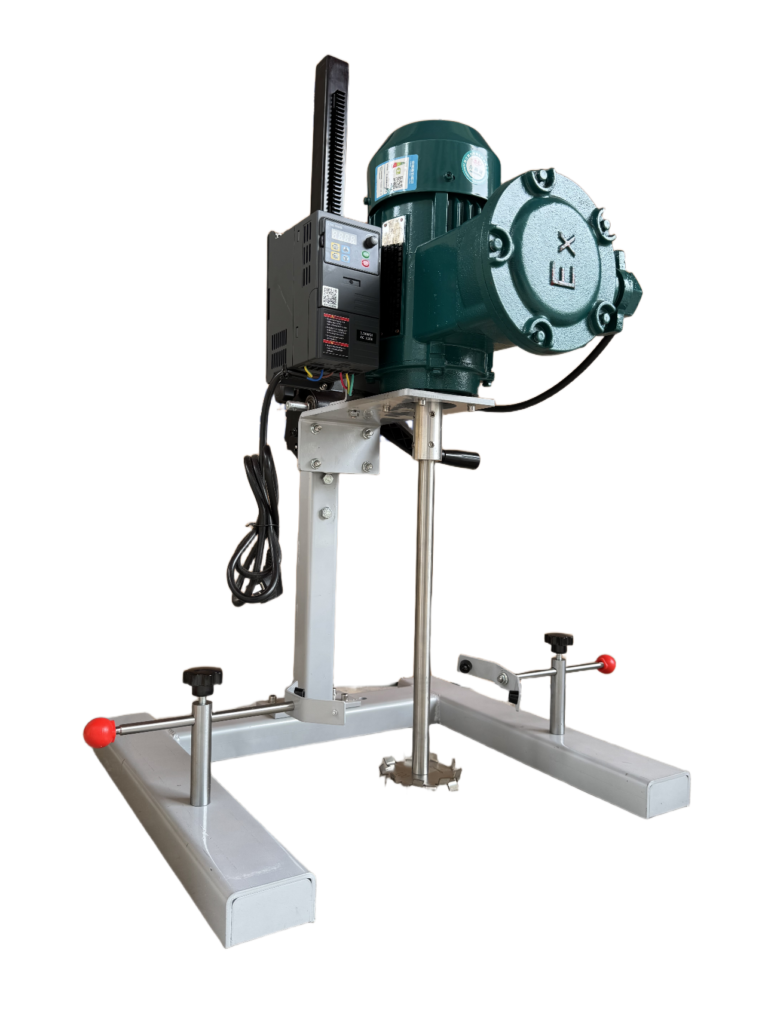
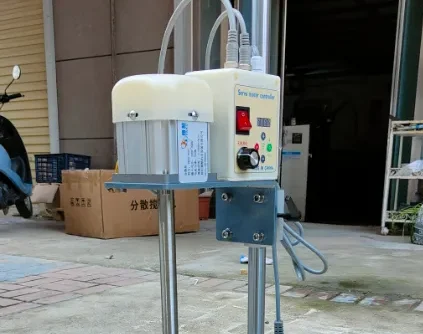
Investing in a small to medium high-speed disperser is not like buying standard office supplies. It is a highly technical procurement that directly impacts your laboratory’s R&D accuracy and your pilot plant’s production stability.
Many buyers make the mistake of making purchasing decisions based solely on a quotation sheet—comparing Watts, RPMs, and prices. But as engineering experts, we know that the true quality of a disperser is hidden in the details that most spec sheets don’t show.
Before you issue a Purchase Order to any supplier, ask them these 5 critical questions. Their answers will immediately tell you if you are dealing with a premium source manufacturer or a corner-cutting assembly workshop.
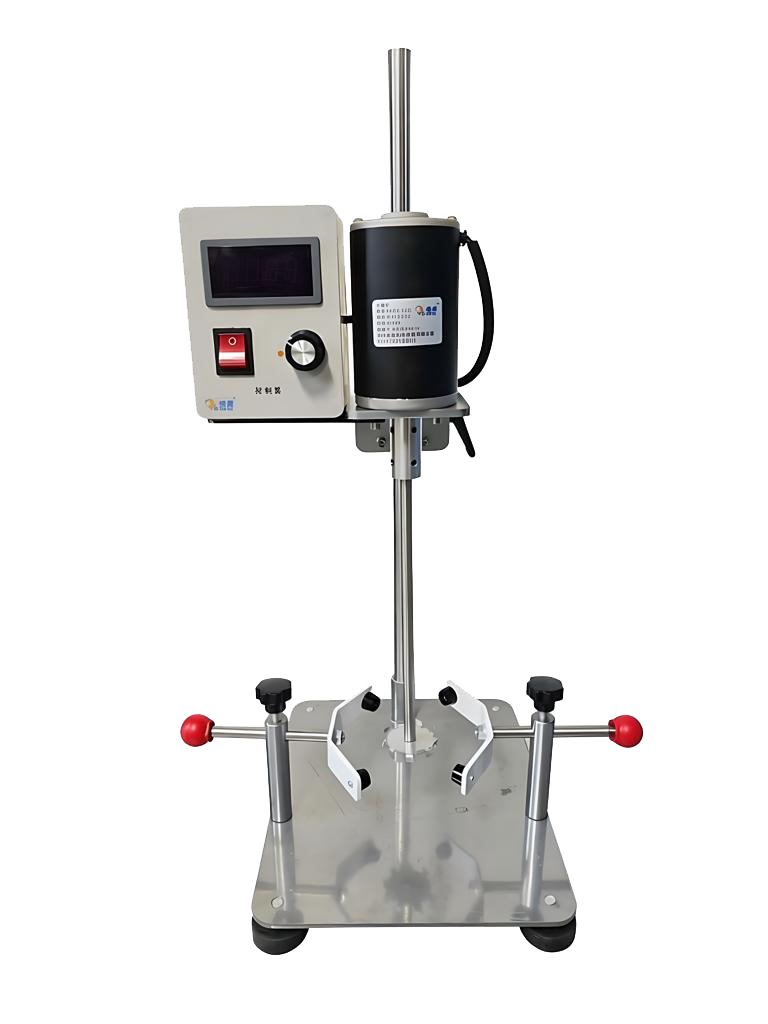
Question 1: “What is your shaft runout tolerance, and how do you guarantee high-speed stability?”
Why it matters: A disperser operates at high speeds (up to 3000+ RPM). At this speed, even a millimeter of imbalance can cause severe vibration. Cheap machines will literally “walk” across the floor or shake violently, causing deafening noise, premature bearing failure, and safety hazards.
The Expert Answer You Want: A professional manufacturer will talk about concentricity. They should confirm that their main shafts are CNC-machined and dynamically balanced. They should also explain that they use a heavy-duty, thickened base structure (cast iron or thick steel plates) to absorb vibrations.
Pro Tip: Ask the supplier for an unedited video of the machine running empty at maximum RPM. The machine should run smoothly with a coin able to stand on its base.
Question 2: “Is your motor a 100% pure copper wire motor, and what brand of VFD do you use?”
Why it matters: Many suppliers offer “budget” dispersers by using aluminum-wire motors or low-grade Variable Frequency Drives (VFD/Inverters). When processing highly viscous materials, you often need the machine to run at a lower speed but with high torque. Cheap VFDs cannot provide sufficient torque at low speeds, causing the motor to stall, overheat, or burn out within months.
The Expert Answer You Want: The manufacturer must guarantee a pure copper core motor (which dissipates heat better and lasts longer). Furthermore, they should use internationally recognized or top-tier domestic VFD brands that ensure precise speed control and consistent low-speed torque without overheating.
Question 3: “Are the wetted parts strictly SUS304/316L, and what is the surface finish?”
Why it matters: Cross-contamination is the biggest nightmare in coatings, cosmetics, and battery slurry R&D. If the shaft or dispersion disk is made of low-grade stainless steel or simply coated, chemical solvents will corrode it rapidly. Rust and chipped plating will fall into your expensive formulas.
The Expert Answer You Want: The supplier must confirm that all “wetted parts” (parts touching the material) are solid SUS304 or SUS316L stainless steel. More importantly, ask if the shaft is mirror-polished or precision-ground. A rough surface makes the machine incredibly difficult to clean between batches, leading to color or chemical contamination.
Question 4: “Can you customize the electrical system for my country’s specific voltage and Ex-proof standards?”
Why it matters: The electrical grid in China (220V/380V, 50Hz) is different from the USA (110V/480V, 60Hz) or other regions. Simply using a plug adapter for heavy machinery is dangerous and will destroy the VFD. Moreover, if your lab handles solvent-based paints, you need a true explosion-proof (Ex-proof) system.
The Expert Answer You Want: A true source manufacturer won’t just say “yes.” They will ask you for your specific local voltage and phase requirements. If you need Ex-proof equipment, they will explain that not only the motor but also the control cabinet, switches, and wiring must meet strict anti-spark standards (such as ATEX or Class I Div 1/2).
Question 5: “Are your dispersion disks proprietary, or can I use standard replacements?”
Why it matters: The dispersion disk (impeller) is a consumable part. Over time, the sawtooth edges will wear down, losing their shearing efficiency. Some manufacturers intentionally design proprietary shafts so you are forced to buy replacement disks exclusively from them at a huge markup.
The Expert Answer You Want: A customer-focused manufacturer will use standard international sizing for the shaft threads and flanges, allowing you to easily source replacement disks locally if needed. They should also maintain a long-term inventory of spare parts and ship them to you via express air freight when needed.
Conclusion: The YAKU Difference
At the end of the day, a good machine is the sum of perfectly executed details. When you ask the 5 questions above, you separate the true craftsmen from the mass-producers.
At YAKU Machinery, we are proud to be a direct manufacturer in China that invites these tough questions. We believe that making a great disperser means obsessing over the details.
From ensuring ultra-high shaft concentricity for vibration-free operation, to using premium pure copper VFD motors, to hand-polishing our 304/316L stainless steel shafts—we don’t cut corners. Whether you need a standard 110V lab mixer or a fully customized explosion-proof pilot disperser, our engineering team builds it to last.
Ready to talk to the experts?
Don’t settle for a machine that looks good only in pictures. 👉 [Click here to contact the YAKU engineering team today]. Bring us your toughest questions, request a live video trial, and let us build the perfect disperser for your formulas!