Why it settles, why the color looks dull, and how to fix both.
You mix your red paint, and it looks fine. A few days later, the color has settled at the bottom of the bucket. You stir it again, and it’s still not as bright as it should be.
This is one of the most common complaints with red iron oxide. The good news: it’s almost always a mixing problem, not a pigment problem.
Why Red Iron Oxide Is Harder Than It Looks
Red iron oxide is heavy. Much heavier than water. If it isn’t broken down and spread out well, it sinks to the bottom over time. That’s the settling you keep seeing.
The powder also likes to clump before you even start mixing. If those clumps don’t fully break apart, your red looks weaker and duller than it should, even though you used the right amount of pigment.
Not All Red Iron Oxide Is the Same
Here’s something worth knowing before you buy new equipment. Regular red iron oxide, the kind most small paint shops use, mixes well with a good high-speed disperser.
But there’s a special type called transparent or nano-grade iron oxide, mostly used for wood stains and see-through color effects. This type needs a bead mill, not a disperser, because the particles are much smaller and packed much tighter.
If you’re using standard red iron oxide for wall paint, primer, or general coatings, a disperser is almost always the right tool. If you’re not sure which grade you have, check with your pigment supplier before you invest in new equipment.
A Simple Process That Works
You don’t need a complicated recipe. You need the right order.
- Start with water and a dispersing agent. Mix these together first, before adding any pigment.
- Add the red iron oxide slowly. Pour it in a little at a time while mixing, not all at once. Dumping it in fast just creates more clumps.
- Mix at high speed until it’s smooth. This is the step that actually breaks the clumps apart. Keep going until you can’t feel any grit when you rub a drop between your fingers.
- Check the color and let it sit. A well-mixed batch stays smooth and doesn’t separate after a day or two.
How much dispersing agent to use isn’t a fixed number. It depends on your pigment brand and your recipe. Test a small batch first, then repeat the same amount every time once it works.
Common Problems and Quick Fixes
- Pigment settles at the bottom: Usually means it wasn’t broken down fully during mixing, or needs more dispersing agent.
- Color looks dull or weak: Clumps are hiding inside the mix. Longer or stronger mixing usually fixes this.
- Paint gets thick over time: Often too much pigment for the amount of dispersing agent used. Try adjusting the ratio.
- Foam on top after mixing: Try adding the pigment more slowly, or add a small amount of defoamer.
If pigment settling keeps coming back as a problem, this guide on preventing pigment settling goes deeper into fixing it for good.
Setup for Small-Batch Production
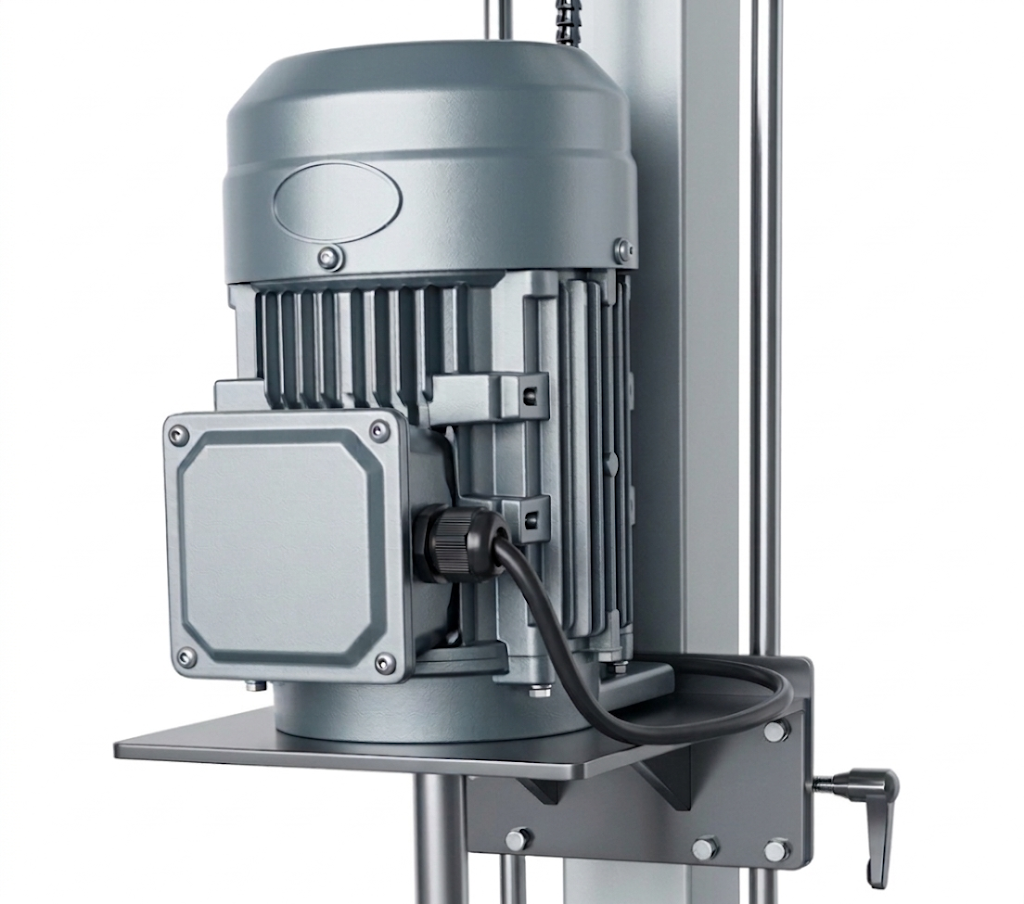
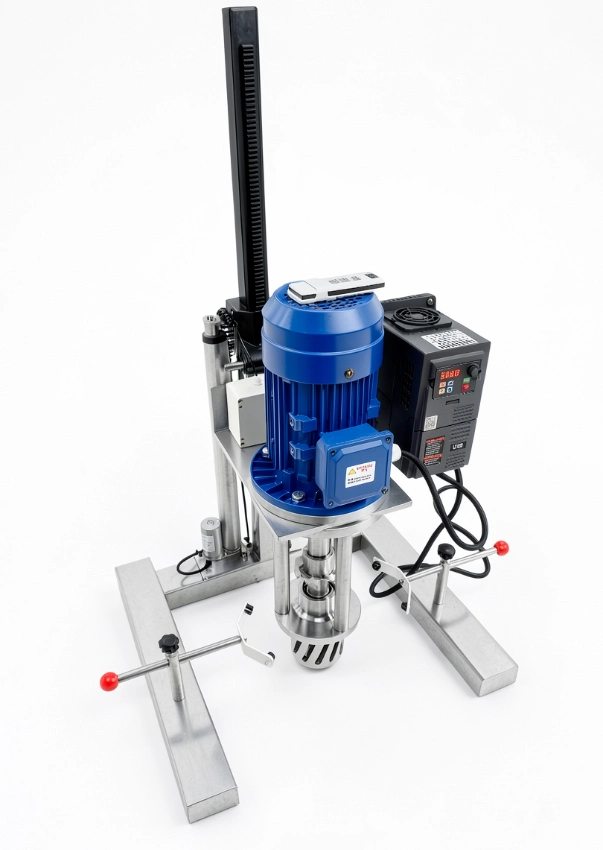
Most small paint shops making red iron oxide batches don’t need a huge machine. A variable-speed disperser, sized for 5 to 20 liters, covers most small production runs.
A digital display matters here more than people expect. Once you find the speed and time that gives you a smooth, stable batch, you can repeat those exact numbers every time. No more guessing, and no more batches that come out a little different from the last one.
If you’re moving from lab testing into small production, this sizing guide can help you pick the right tank size and disc for your batch volume.
Common Questions
Can red iron oxide be mixed directly into water?
Yes, but adding a dispersing agent first makes a big difference. Without it, the pigment clumps more and settles faster.
Why does my red iron oxide keep settling, even after mixing well?
This usually means the pigment wasn’t fully broken down during mixing, or there isn’t enough dispersing agent to keep the particles apart over time.
What speed should I use to mix iron oxide?
There’s no single right number. It depends on your batch size, your pigment, and your equipment. The safest approach is to test a small sample first and find the setting that gives you a smooth result, then repeat it.
Can a small high-speed disperser handle water-based red iron oxide paint?
For regular red iron oxide, yes. Only the transparent or nano-grade version needs a bead mill instead.
Small Wrap-Up
Settling and dull color aren’t pigment problems. They’re mixing problems. Break the clumps down fully, keep your dispersing agent ratio consistent, and repeat the same settings every batch.
Not sure your current setup can handle red iron oxide well? Send us your recipe and batch size, and we’ll help you find settings that stay consistent every time.