If you run a paint or coatings business, you already know the headaches that come with it.
Labor costs keep climbing. Mixing takes too long. Every time you run a new color sample, the shop floor ends up covered in pigment. Batches that use the exact same formula somehow come out with slightly different color or viscosity. Pigment clumps, cleanup takes forever, and customers notice when something’s off between one batch and the next.
So you start looking at equipment. The big-name European machines do the job, but the price tag and the ongoing maintenance costs are hard to justify for a small or mid-size operation. Waiting weeks for a spare part isn’t exactly convenient either.
Here’s the thing: you don’t need the biggest, most expensive disperser on the market. You need the right one for your product, your batch sizes, and your process. Let’s break down what that actually means.
What a High-Speed Disperser Actually Does
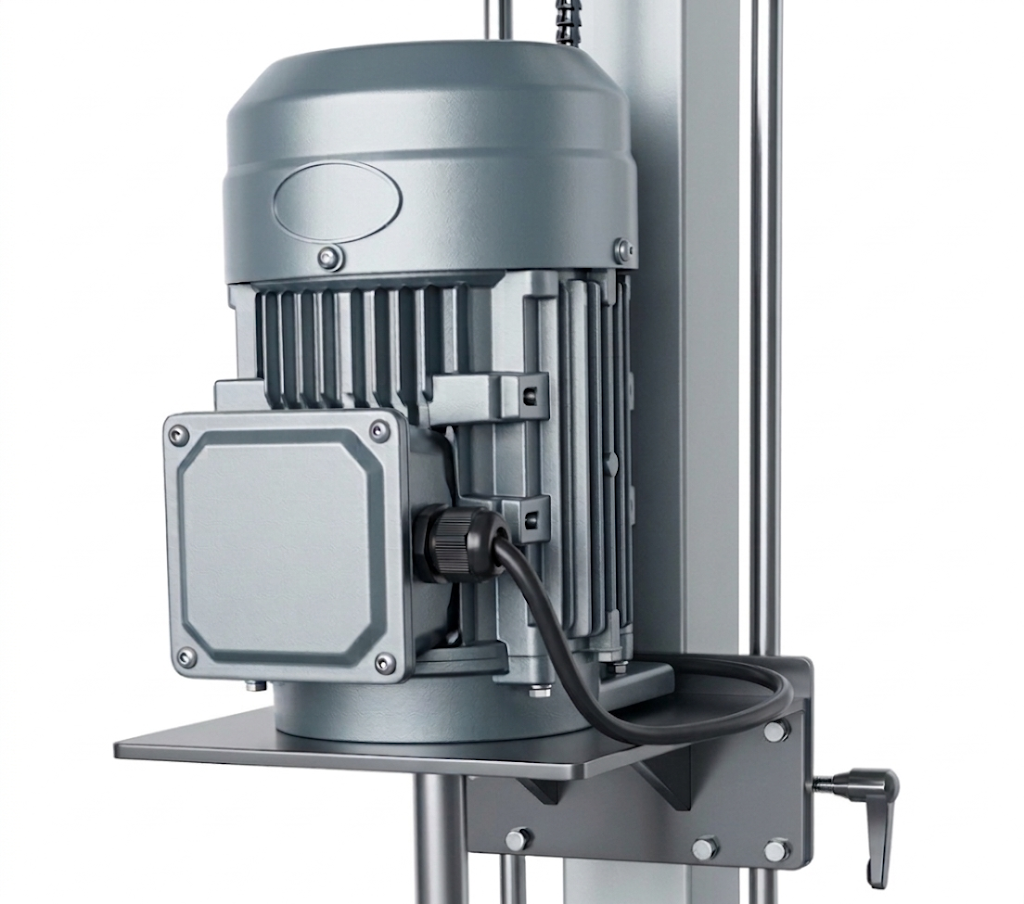
A high-speed disperser works by spinning a blade at high speed to create a vortex in the liquid. That vortex generates shear force, which breaks apart pigment clumps and blends everything – pigments, powders, resins – into a smooth, consistent mix.
It’s a core piece of equipment across a wide range of products: waterborne coatings, industrial coatings, architectural paints, anti-corrosion coatings, wood finishes, automotive paints, printing inks, and adhesives. Basically, if your process involves mixing powder into liquid, a disperser is probably part of your setup already, or should be.
Why “Right for the Job” Beats “Cheapest” or “Most Powerful”
A lot of buyers start by comparing price tags and motor horsepower. That’s understandable, but it’s not really the question that matters. What actually determines whether a disperser works well for you comes down to a few things:
Color consistency. Your customers care about whether the color holds up, whether there’s any settling after storage, and whether one batch looks different from the last.
Production speed. A disperser that actually does its job well means fewer reworks and better use of your equipment and your team’s time.
Batch-to-batch reliability. Same formula, wrong equipment, and you can end up with fineness, viscosity, or gloss that shifts from one run to the next. That’s the kind of inconsistency that costs you customers.
Total cost over time. The purchase price is just the starting point. Maintenance, replacement parts, downtime, and labor add up fast. The cheapest machine on paper isn’t necessarily the cheapest one to own.
Four Things to Check Before You Buy
1. Match it to your viscosity
Low-viscosity products – waterborne coatings, thin primers, liquid paints – depend more on dispersion speed, blade design, and batch capacity. High-viscosity products, like high-solids or thick industrial coatings, need more attention paid to motor power, torque, build quality, and how sturdy the mixing shaft actually is.
2. Size it to your actual batch volume
Bigger isn’t automatically better. Oversize the equipment and you’re wasting energy and floor space. Undersize it and you’re constantly playing catch-up on production. The right call is to size around your real batch volume and where your output is headed over the next year or two, not just where you are today.
3. Pick the right disperser blade
Standard sawtooth blades, high-shear blades, and specialty-material blades all serve different purposes, and different formulas call for different blade designs. This part gets overlooked more than it should, but it has a real impact on how well your product actually disperses.
4. Choose a lift mechanism that fits your setup
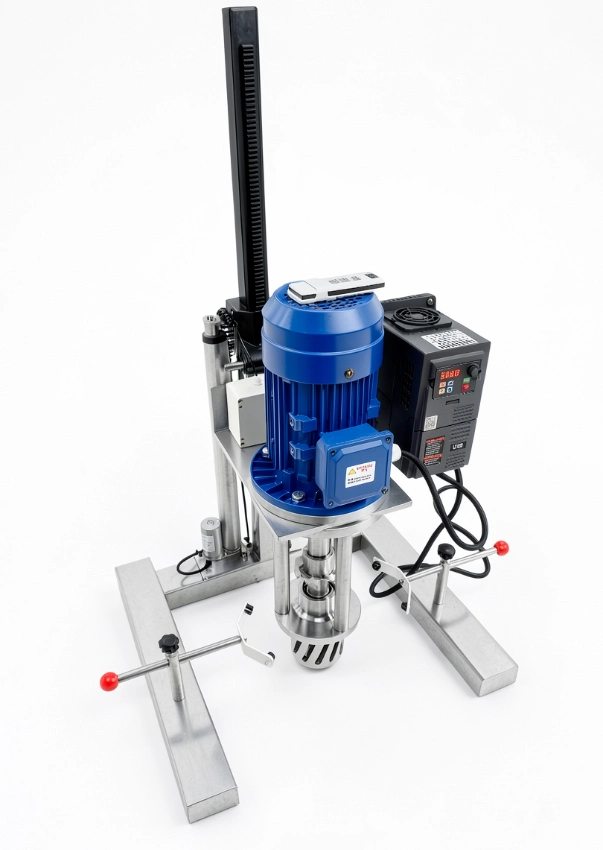
Manual lift works fine for smaller equipment. Hydraulic lift suits larger, heavier-duty production environments. Electric lift is a good middle ground for small and mid-size shops that want efficiency without added complexity. And if you’re working with solvent-based coatings or need explosion-proof equipment, pneumatic lift is usually the way to go. The point is, your setup should match your actual shop floor – not just copy what another factory down the road is running.
Waterborne vs. Solvent-Based: Do They Need the Same Equipment?
Not quite.
Waterborne coatings put more emphasis on dispersion efficiency, viscosity control, foam control, and how easy the equipment is to clean. Solvent-based coatings shift the priority toward explosion-proof design, electrical configuration, and sealing performance.
If your shop works with solvent-based products, the motor and electrical components need to be configured to meet explosion-proof requirements. This isn’t a detail to skip over – make sure it’s part of the conversation with your equipment supplier from day one.
Common Production Problems (and What’s Usually Behind Them)
Uneven pigment dispersion – Often comes down to the wrong blade size, insufficient speed, not enough dispersion time, or the order ingredients are added. Adjusting speed, switching blades, or tweaking the process usually solves it.
Too much foam during production – Usually caused by running speed too high, the blade sitting at the wrong height, or a formula that’s just naturally prone to foaming. Slowing things down or adjusting blade position often helps.
Noticeable vibration during operation – Worth checking whether the shaft is balanced, the blade is installed correctly, and the equipment base is stable. Sometimes it just comes down to having the wrong equipment for the job in the first place.
Motor overload – High viscosity, underpowered motor, or an oversized blade can all cause this. It usually points back to a mismatch in equipment selection.
Do Small and Mid-Size Paint Shops Really Need a Full Automated Line?
Not necessarily.
If your output is still growing, you make a wide range of products, batch sizes vary, and budget is limited, jumping straight into a large automated production line often means a big upfront cost, equipment that sits underused, and expensive changes down the road when things don’t quite fit.
A more practical approach is modular equipment you can scale as you grow: a high-speed disperser, mixing tanks, filtration equipment, and filling equipment, added piece by piece as your production actually calls for it. That’s the approach we build around at yaku – solve the problem you have now, then scale from there.
What to Have Ready Before You Talk to a Supplier
Getting an accurate recommendation starts with sharing the right details. Before reaching out, it helps to have these on hand:
- Product type
- Viscosity range
- Batch size
- Raw materials used
- Whether flammable solvents are involved
- Target dispersion fineness
- Number of batches per day
- Facility voltage
- Current equipment on-site
- Budget range
Sharing this upfront gets you a far more useful answer than just asking “how much does one cost?”
Why It’s Worth Comparing Fit, Not Just Price
Two suppliers can both quote you a “1000-liter machine” and still hand you completely different equipment. Effective working volume, viscosity compatibility, blade selection, motor power, speed, and process requirements all factor in – it’s not just a number on a spec sheet.
A good supplier can also customize around your actual setup: tank dimensions, lift height, explosion-proof configuration, materials, specialized blades. And just as important is what happens after the sale – how fast you can get replacement parts, whether there’s real installation and operating support, and whether someone picks up the phone when something goes wrong.
FAQ
What kinds of paint can a high-speed disperser handle? Waterborne coatings, industrial coatings, architectural paints, wood finishes, inks, and most other products that need high-speed mixing and dispersion.
How do I know what motor power I need? It depends on your production volume, product viscosity, formula characteristics, and blade size – there’s no single number that fits every operation.
Can a disperser handle high-viscosity coatings? Yes, but the motor power, shaft design, and blade all need to be matched to your actual viscosity.
How much does a disperser cost? Price depends on capacity, motor power, materials, lift mechanism, explosion-proof requirements, and any customization. It’s best to share your specific needs and get a quote based on that, rather than going off a general price range.
What should a small paint shop look for? Start with your batch size, product type, production frequency, and where you expect your output to be in a year or two. A modular setup you can expand over time is usually a smarter investment than buying more machine than you currently need.
If you’re looking for the right high-speed disperser for your production – whether that’s waterborne coatings, industrial coatings, or a high-viscosity product line – send us your product type, batch size, viscosity range, and whether solvents are involved.
Our engineers will recommend a setup that actually fits your production, not just whatever’s easiest to sell you.
At the end of the day, the price on the spec sheet is just one number. What really matters is whether the equipment keeps your quality consistent, keeps production moving, and keeps your long-term costs down.