Choose a High-Speed Disperser Based on Your Process
Selecting a small or medium high-speed disperser should begin with your material, batch volume and target result—not with motor power or maximum RPM alone.
Send YAKU your material type, viscosity, working capacity, vessel dimensions, voltage and safety requirements. We can use this information to recommend a suitable machine configuration for laboratory testing, pilot production or small-batch manufacturing.
Quick High-Speed Disperser Selection Guide
The following capacity ranges are starting points for comparison. Final selection depends on viscosity, powder loading, vessel geometry, dispersing disc diameter and required processing time.
| Working Batch | Typical Use | Starting Equipment Category | Important Checks |
|---|---|---|---|
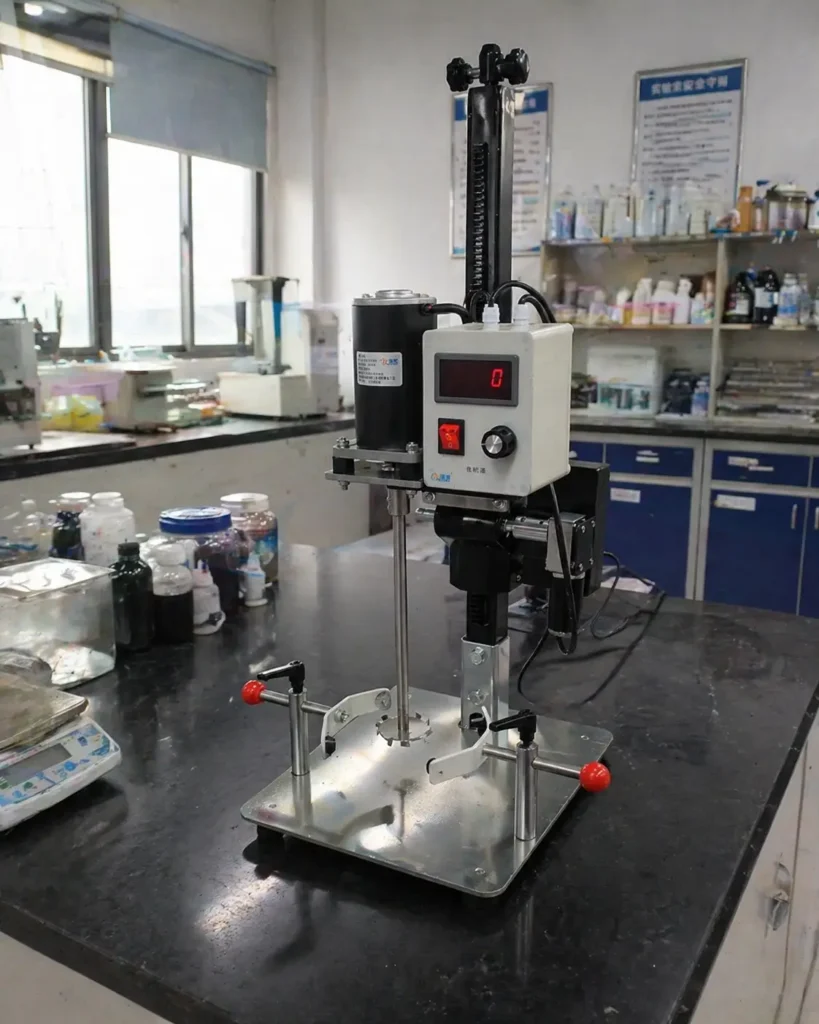
| 1–5 L | Formulation tests, quality control and small samples | Compact laboratory disperser | Speed control, removable shaft, disc options and vessel clearance |
| 5–30 L | R&D, pilot testing and frequent small batches | Laboratory or pilot disperser | Motor torque, lifting method, working time and viscosity range |
| 30–100 L | Pilot scale-up and small production | Floor-standing inverter disperser | Power, frame stability, vessel fixing, lifting stroke and electrical supply |
Important: Working capacity is not the same as the total vessel volume. The material must have enough room for circulation, powder addition and safe operation. Confirm the actual minimum and maximum working levels before ordering.
1. Confirm That a High-Speed Disperser Is the Right Machine
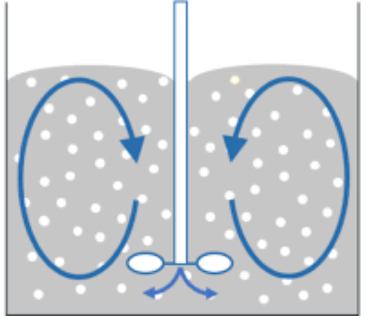
A high-speed disperser is commonly used to wet and distribute powders in liquids, break soft agglomerates, prepare formulations and produce a repeatable premix.
However, it is not automatically the correct machine for every process. Very high-viscosity materials may require additional low-speed mixing or a multi-shaft system. Applications that require fine particle grinding may need a bead mill, sand mill or another milling stage after initial dispersion.
If you are comparing equipment types, read our high-speed disperser and mixing equipment comparison guide.
2. Start With Material Viscosity
Viscosity affects circulation, motor load, shaft torque and the ability of the dispersing disc to move material through the vessel.
Low-viscosity liquids may circulate easily, but successful powder wetting still depends on disc size, speed and feed method. As viscosity increases, the machine requires more torque and the flow pattern becomes increasingly important.
Do not describe a material only as “thin,” “medium” or “thick.” Whenever possible, provide:
- Starting viscosity before powder addition
- Maximum viscosity during processing
- Final target viscosity
- Viscosity unit, test temperature and measurement method
If you do not know the viscosity, see our guide on how to determine liquid viscosity.
3. Determine the Real Working Batch Size
Provide both the minimum and maximum amount you expect to process. A machine selected only for the largest batch may not work efficiently when the vessel contains a much smaller amount of material.
The supplier should check whether the dispersing disc remains correctly submerged and whether the machine can maintain circulation at both working levels.
For every application, provide:
- Minimum working volume
- Maximum working volume
- Vessel internal diameter
- Vessel height
- Available opening at the top of the vessel
- Whether one mixer will be used with several vessel sizes
4. Compare Motor Power, Torque and Speed Range
Maximum RPM should not be used as the only measure of disperser performance. A small disc and a large disc running at the same RPM do not produce the same tip speed, circulation or motor load.
Motor selection should account for:
- Material viscosity and density
- Powder concentration
- Dispersing disc diameter
- Required processing time
- Maximum expected motor load
- Required operating schedule and number of batches per day
Ask the supplier to explain the proposed power and speed range for your actual material instead of choosing the machine with the highest advertised RPM.
5. Select the Dispersing Disc and Shaft
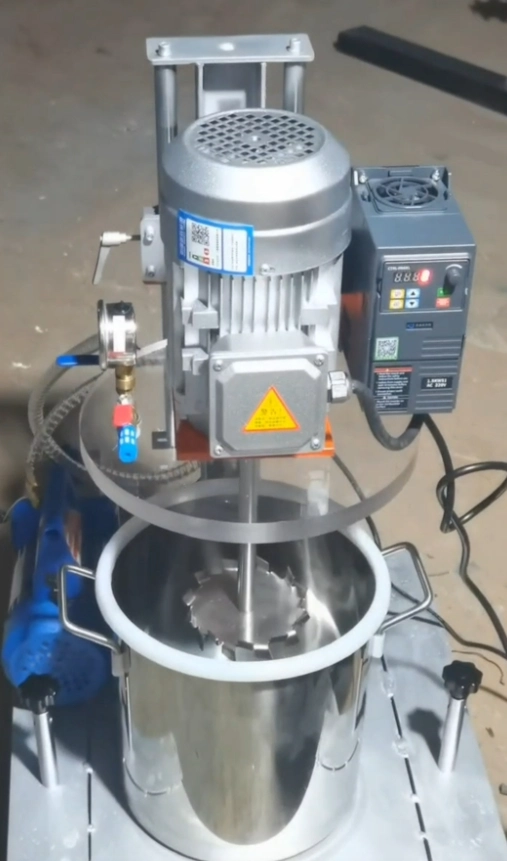
The dispersing disc affects powder wetting, flow pattern and shear. Disc selection should be matched to the vessel, working level, viscosity and desired process result.
Before ordering, confirm:
- Disc type and diameter
- Shaft diameter and usable length
- Maximum and minimum blade height
- Method used to attach or remove the disc
- Whether additional disc sizes are available
- Material used for product-contact parts
For more information, read our dispersing disc and Cowles blade selection guide.
6. Choose the Appropriate Lifting Method
The lifting system determines how the shaft and disc are raised for vessel replacement, cleaning and maintenance.
| Lifting Method | Suitable For | Points to Confirm |
|---|---|---|
| Manual lifting | Occasional laboratory use and limited budgets | Lift effort, locking method and available stroke |
| Hand-crank or assisted lifting | Regular laboratory work with controlled positioning | Adjustment range, stability and ease of cleaning |
| Electric lifting | Frequent vessel changes and repeated daily operation | Travel limit, controls, lifting speed and safety stops |
| Pneumatic lifting | Applications with a suitable compressed-air supply | Air pressure, load capacity and site requirements |
Do not select a lifting method only by price. Consider how often the vessel will be changed, how the shaft will be cleaned and the height available in the workshop.
7. Confirm Wetted Materials and Cleaning Requirements
The shaft, disc and any other product-contact components must be compatible with the formulation. Stainless steel grade alone is not enough to confirm suitability.
Discuss the following requirements with the supplier:
- Required stainless steel grade or other contact material
- Corrosion risk from solvents, acids, alkalis or salts
- Required surface finish
- Whether the shaft and disc must be removable
- Cleaning procedure and changeover frequency
- Cross-contamination or sanitation requirements
Food, pharmaceutical and cosmetic applications may have additional requirements for surface finish, sealing, documentation and cleaning. These requirements should be confirmed before the machine is manufactured.
8. Evaluate Frame Stability and Vessel Fixing
A disperser operating at high speed must remain stable throughout the batch. Machine weight alone does not prove stability. Frame design, base dimensions, shaft alignment, bearing condition, disc balance and vessel fixing all matter.
Before purchasing, ask the supplier to confirm:
- How the vessel is positioned or clamped
- The recommended vessel size range
- The maximum permitted disc diameter
- The operating limits for the shaft and lifting system
- Whether a no-load and load test can be provided before shipment
9. Determine Whether Explosion Protection Is Required
Solvent-based paints, inks, coatings and other materials may release flammable vapor. Equipment selection must be based on the hazardous-area classification and applicable rules at the installation site.
An explosion-proof motor alone does not automatically make the complete machine suitable for every hazardous area. The motor, electrical controls, switches, wiring method and installation must be reviewed as a complete system.
Provide the supplier with:
- Material name and safety data sheet
- Solvent type and flash point when applicable
- Hazardous-area classification
- Required explosion-protection marking or certification
- Local electrical and installation requirements
Read our explosion-proof disperser selection guide and have the final installation reviewed by a qualified local professional.
10. Confirm Voltage, Frequency and Electrical Supply
Provide the exact power supply available at the installation site before production begins. Do not provide only the country name because industrial facilities may use different electrical systems.
- Voltage
- Frequency
- Single-phase or three-phase supply
- Plug or wiring requirements
- Required electrical enclosure
- Local control and safety requirements
11. Compare Maintenance and Total Cost
The lowest purchase price is not always the lowest long-term cost. Compare the machine configuration, included accessories, spare-part availability, cleaning time and expected maintenance requirements.
When comparing quotations, ask:
- Which motor, inverter and control components are included?
- Which discs, shafts, vessels or clamps are included?
- Which parts are considered consumable or replaceable?
- How can replacement parts be ordered?
- What inspection and testing are completed before shipment?
- Which documents, manuals and electrical diagrams are supplied?
Information to Prepare Before Requesting a Quote
A detailed inquiry helps the manufacturer select a configuration more accurately and reduces repeated questions.
| Required Information | Example |
|---|---|
| Material and application | Water-based coating with pigment powder |
| Minimum and maximum batch | 10–30 L working volume |
| Starting and final viscosity | Include unit and test conditions |
| Powder type and percentage | Pigment, filler, gum or other additive |
| Vessel dimensions | Internal diameter, height and opening |
| Required process result | Powder wetting, premixing or agglomerate reduction |
| Wetted-part material | Selected according to material compatibility |
| Lifting preference | Manual, assisted, electric or pneumatic |
| Electrical supply | Voltage, frequency and phase |
| Safety requirements | Hazardous-area and explosion-protection information |
Why Work With YAKU?
YAKU manufactures laboratory, small-batch and medium-capacity high-speed dispersers in Zhengzhou, Henan, China. Available configurations include different motor powers, speed controls, lifting methods, shafts, dispersing discs, wetted materials and electrical supplies.
Instead of selecting a machine from capacity alone, our team can review your process information and recommend a configuration based on the material, viscosity, batch volume, vessel and operating requirements.
You can also compare our current laboratory dispersers and high-speed disperser configurations.
Frequently Asked Questions
What size high-speed disperser do I need?
The correct size depends on both the minimum and maximum working volume, material viscosity, powder concentration, vessel dimensions and processing time. Total vessel capacity alone is not enough for model selection.
Is higher RPM always better?
No. RPM must be considered together with disc diameter, material viscosity, motor load and circulation. Excessive speed can increase air entrainment, heat generation, vibration and equipment load.
How do I choose motor power?
Motor power should be calculated from the material, viscosity, batch volume, powder loading, disc size and required operating conditions. Avoid selecting power from batch volume alone.
Should I choose SUS304 or SUS316L?
The contact material should be selected from the formulation’s corrosion and contamination requirements. Provide the material composition or safety data sheet so compatibility can be reviewed.
Do I need an explosion-proof disperser?
You may need an appropriate explosion-protected configuration when flammable vapors or hazardous dust are present. The final requirement must match the site’s hazardous-area classification and applicable local rules.
Can YAKU recommend a model before I order?
Yes. Provide your material, viscosity, batch range, vessel dimensions, electrical supply, lifting preference and safety requirements. The team can then review the application and prepare a more relevant quotation.
Get a High-Speed Disperser Recommendation
Send us your material type, viscosity, minimum and maximum batch volume, vessel dimensions, voltage and safety requirements. YAKU will review the application and recommend a suitable configuration for your process.