Disperser machines are quietly revolutionizing industries most people never think about. Last month, I visited a food production facility where workers were manually stirring jelly ingredients with hand drills. It took hours. The result? Inconsistent texture, wasted batches, frustrated operators. Then they switched to a proper disperser. What used to take three hours now takes twenty minutes. The jelly? Perfectly smooth every single time.
This isn’t an isolated story. Across food processing, cosmetics, pharmaceuticals, and specialty coatings, businesses are stuck with outdated mixing methods simply because they don’t know better equipment exists. That knowledge gap? It’s a massive opportunity for distributors willing to educate and serve these overlooked markets.
What Is a Disperser Machine and Why Does It Matter?
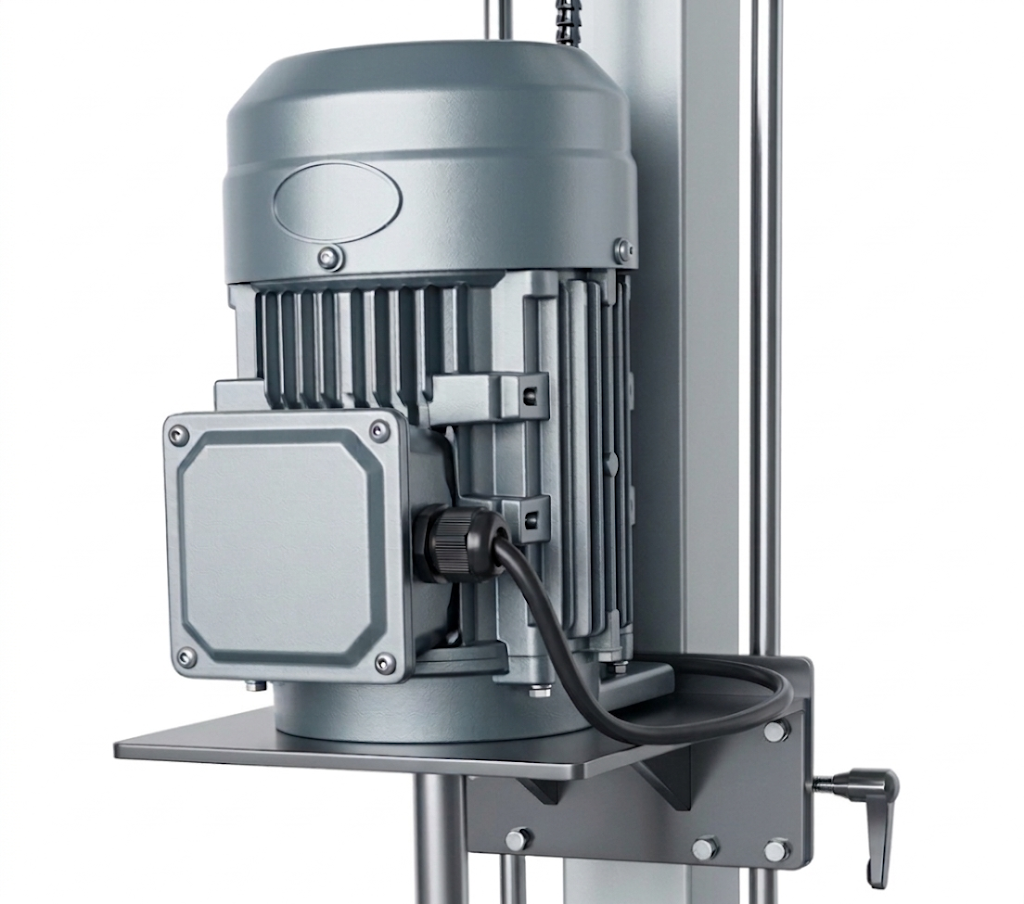
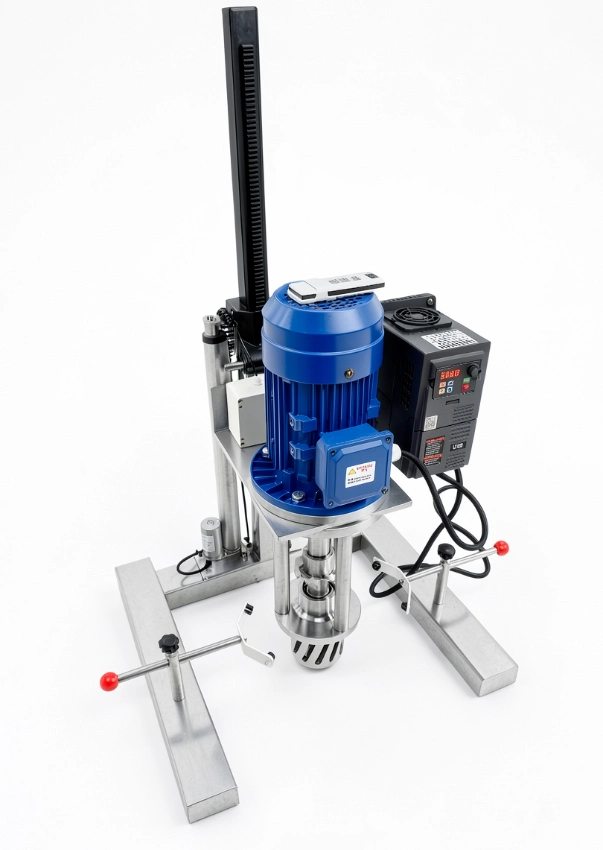
A disperser machine uses high-speed rotating blades to create intense shear forces. These forces break down agglomerates, disperse particles uniformly, and create homogeneous mixtures that manual stirring could never achieve. Think of it as the difference between stirring coffee with a spoon versus using a commercial blender—the results aren’t even comparable.
According to industry research, high-speed dispersers significantly reduce production time while improving product uniformity. The intense shear forces help break down agglomerates and reduce particle size, resulting in smoother, more consistent dispersions. For manufacturers, this translates directly to higher quality and lower costs.
Who Still Mixes Manually? (The Hidden Opportunity)
Here’s what surprised me: many industries that need dispersion technology don’t even know it exists. They’re not looking for “dispersers” because they’ve never seen one in action.
Food Processing: Beyond the Obvious
The jelly manufacturer I mentioned isn’t unique. Sauces, dressings, beverage emulsions, functional food additives—all require precise dispersion. A client making specialty sauces was using hand mixers. Their batch consistency varied wildly. After implementing a lab disperser for testing and pilot production, they cut mixing time by 60% and eliminated batch failures.
Food-grade dispersers with proper sanitary finishes meet FDA requirements. Yet many small-to-medium food producers haven’t discovered this equipment. They’re your target market.
Cosmetics and Personal Care
Creams, lotions, serums—every cosmetic product depends on proper emulsification and dispersion. Uneven pigment distribution ruins a product. Air bubbles in creams create customer complaints. High-shear dispersing solves these problems, but many formulators in emerging markets still use basic propeller mixers.
Specialty Coatings and Inks
Not every paint manufacturer is a giant corporation. Small batch producers—automotive touch-up paints, artistic coatings, industrial inks—need reliable dispersion. They often scale up from benchtop formulations. A compact disperser designed for pilot-scale production bridges that gap perfectly.
Battery and Advanced Materials
Battery slurry production requires precise dispersion of active materials. With the electric vehicle boom, smaller manufacturers and R&D facilities need equipment that handles high-viscosity materials with exacting precision. Corrosion-resistant dispersers designed for demanding environments serve this growing sector.
Pharmaceutical Intermediates
Drug formulation requires uniform particle distribution. While major pharma has sophisticated equipment, smaller operations producing intermediates, supplements, or specialty compounds often struggle with inadequate mixing. Laboratory dispersers designed for precision formulation fill this need.
Why Businesses Still Use Manual Methods
If disperser machines are so effective, why haven’t they penetrated these markets? Three reasons:
- They’ve never seen one. You can’t buy what you don’t know exists. Many small manufacturers inherited processes from previous generations.
- Perceived complexity. They assume industrial equipment requires specialized operators and expensive maintenance.
- Cost misconceptions. They believe professional dispersers cost tens of thousands. Entry-level units don’t.
This is where distributors add value. You’re not just selling equipment—you’re introducing solutions to problems people have accepted as “just how things are.”
Choosing the Right Disperser for Each Application
Not all dispersers serve every purpose. Matching equipment to application determines success.
For Food Applications
Stainless steel construction, food-grade finishes, easy cleaning. Variable speed control prevents product damage. Vacuum options remove unwanted air from sensitive emulsions. See YAKU’s food and beverage dispersers for sanitary-compliant options.
For Cosmetics and Personal Care
Shear control matters more than raw power. Gentle yet thorough mixing prevents aeration while achieving uniform dispersion. Precise temperature regulation protects sensitive actives.
For Industrial Coatings
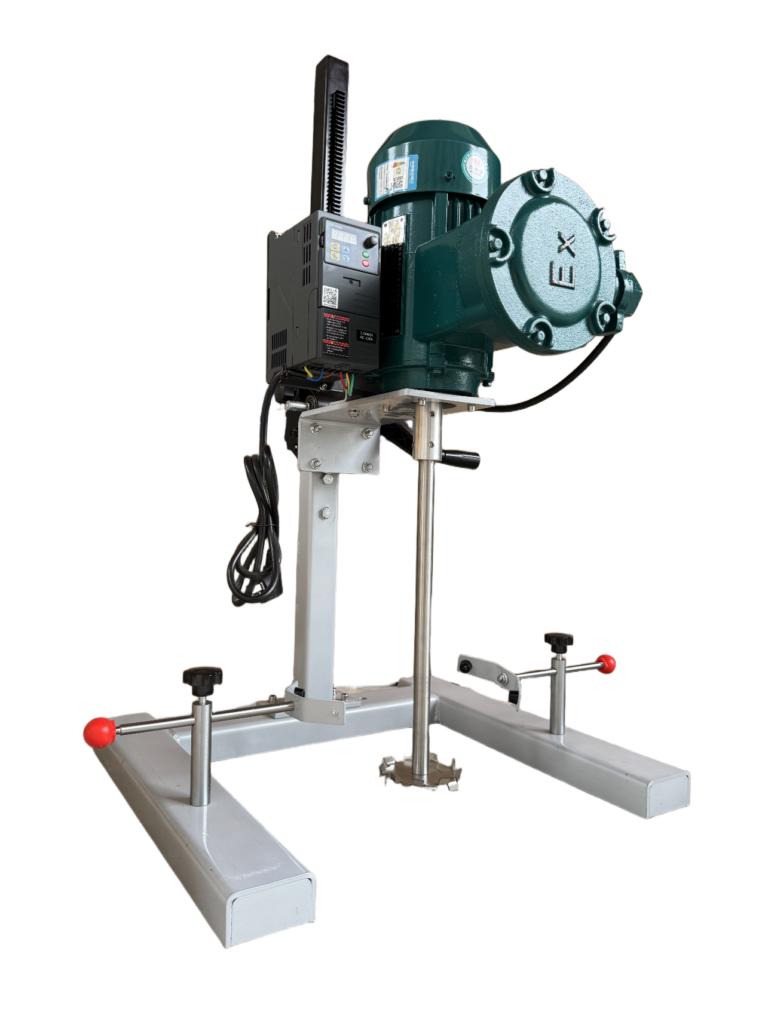
Higher viscosity handling. Explosion-proof options for solvent-based products. Rugged construction for demanding production environments. Check YAKU’s vacuum dispersers for applications requiring air removal.
For Laboratory and R&D
Compact footprint. Precise speed control. Versatility across different formulations. The lab disperser series from YAKU handles 1L to 10L batches with scientific precision.
The Real Economics: Manual vs. Machine
Let’s talk numbers. A facility producing 100kg batches manually:
- Manual mixing time: 2-3 hours per batch
- Operator fatigue: inconsistent results after 4-5 batches
- Batch failure rate: 8-12%
- Labor cost: dedicated operator for mixing station
With a proper disperser machine:
- Mixing time: 20-40 minutes per batch
- Consistent results regardless of volume
- Batch failure rate: under 1%
- Operator freed for other tasks
A mid-sized food producer calculated their disperser paid for itself in 14 months through labor savings and reduced waste. That’s without counting the value of consistent product quality.
Why YAKU for Industrial Dispersers
Not all disperser manufacturers understand the dealer relationship. YAKU does. They recognize that distributors aren’t just order-takers—they’re solution providers who understand local markets.
What sets YAKU apart:
- Right-sized equipment. Not every customer needs massive production units. YAKU specializes in lab and pilot-scale dispersers from 1L to 200L.
- Engineering support. When customers have unusual applications, YAKU provides technical consultation.
- Flexible options. Explosion-proof models for volatile solvents. Servo motor precision for sensitive applications. Vacuum systems for deaeration.
- Honest pricing. No inflated quotes expecting negotiation. Transparent costs from the start.
Their philosophy—”helping others succeed”—isn’t marketing fluff. It’s how they operate. When a dealer’s customer succeeds, everyone wins. Browse their complete disperser product line to find equipment matching your market.
How to Approach Untapped Markets
Selling dispersers to industries that don’t know they need them requires education, not hard selling:
- Identify the problem first. Ask about their mixing challenges. What takes too long? What never comes out right?
- Show, don’t tell. If possible, arrange demonstrations. One batch processed with proper equipment makes converts.
- Calculate their savings. Help them see the economics. Most operators underestimate their labor and waste costs.
- Start small. Laboratory dispersers let customers prove the concept before investing in production equipment.
The dealers succeeding with YAKU equipment aren’t pushing products—they’re solving problems they identified by listening.
Getting Started as a YAKU Dealer
The untapped markets are there. Food processors still mixing by hand. Cosmetic formulators accepting inconsistency as normal. Small coatings producers who’ve never seen proper dispersion equipment.
YAKU provides the equipment. You provide the market knowledge and customer relationships. Together, it’s a genuine opportunity—serving customers who need better solutions while building a profitable business.
Visit YAKU’s about page to learn about their manufacturing philosophy, then explore their technical blog for application insights you can share with potential customers.
The businesses stuck with manual mixing don’t need convincing—they need someone to show them a better way. That could be you.
Frequently Asked Questions
What industries benefit most from disperser machines?
Food processing, cosmetics, paints and coatings, pharmaceuticals, battery manufacturing, and specialty chemicals all require precise dispersion. Many smaller operators in these industries still use manual methods and represent untapped market potential.
How do I know which disperser size my customer needs?
Match disperser capacity to batch size. Laboratory units handle 1-10L for R&D. Pilot-scale equipment serves 10-50L batches. Production units cover 50-200L. YAKU offers consultation to match equipment to specific applications.
Are disperser machines difficult to operate?
Modern dispersers are designed for ease of use. Variable frequency drives allow precise speed control. Most operators learn proper technique within a day. YAKU provides operational guidance and documentation.
What maintenance do disperser machines require?
Regular cleaning after use, periodic inspection of seals and bearings, and blade replacement as needed. Proper maintenance extends equipment life significantly. YAKU supplies replacement dispersing discs and parts.
Can dispersers handle high-viscosity materials?
Yes, with proper motor sizing. High-torque models handle viscous materials like pastes and heavy creams. Specify viscosity ranges when ordering to ensure proper equipment selection.
References
Admix. “Rotosolver CX – High Shear Mixer.” https://www.directindustry.com/prod/admix/product-35796-2704999.html
Richman Sourcing. “Efficient Mixing and Dispersion: High-Speed Dispersers for Coatings in the Paint Industry.” https://www.richmansourcing.com/Efficient-Mixing-and-Dispersion-High-Speed-Dispersers-for-Coatings-in-the-Paint-Industry-id62078607.html
Quadro Liquids. “Industrial Mixing Machines for a range of applications.” https://www.quadroliquids.com/industries/
DirectIndustry. “Disperser mixer – All industrial manufacturers.” https://www.directindustry.com/industrial-manufacturer/disperser-mixer-154294.html
YAKU Mixer. “Custom Industrial & Lab High-Speed Disperser Manufacturer.” https://yakumixer.com/